

Products are selected by our editors, we may earn commission from links on this page.
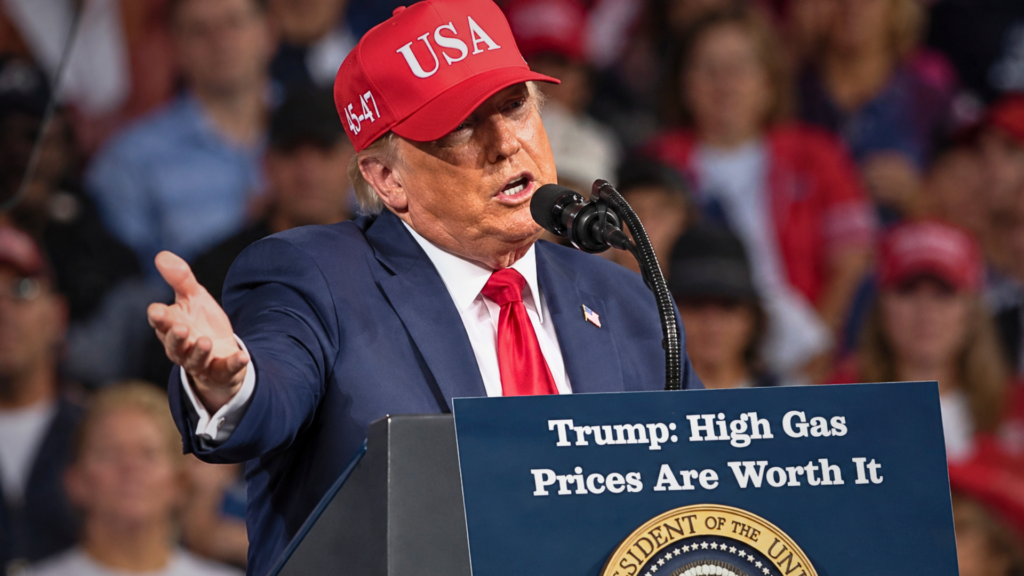
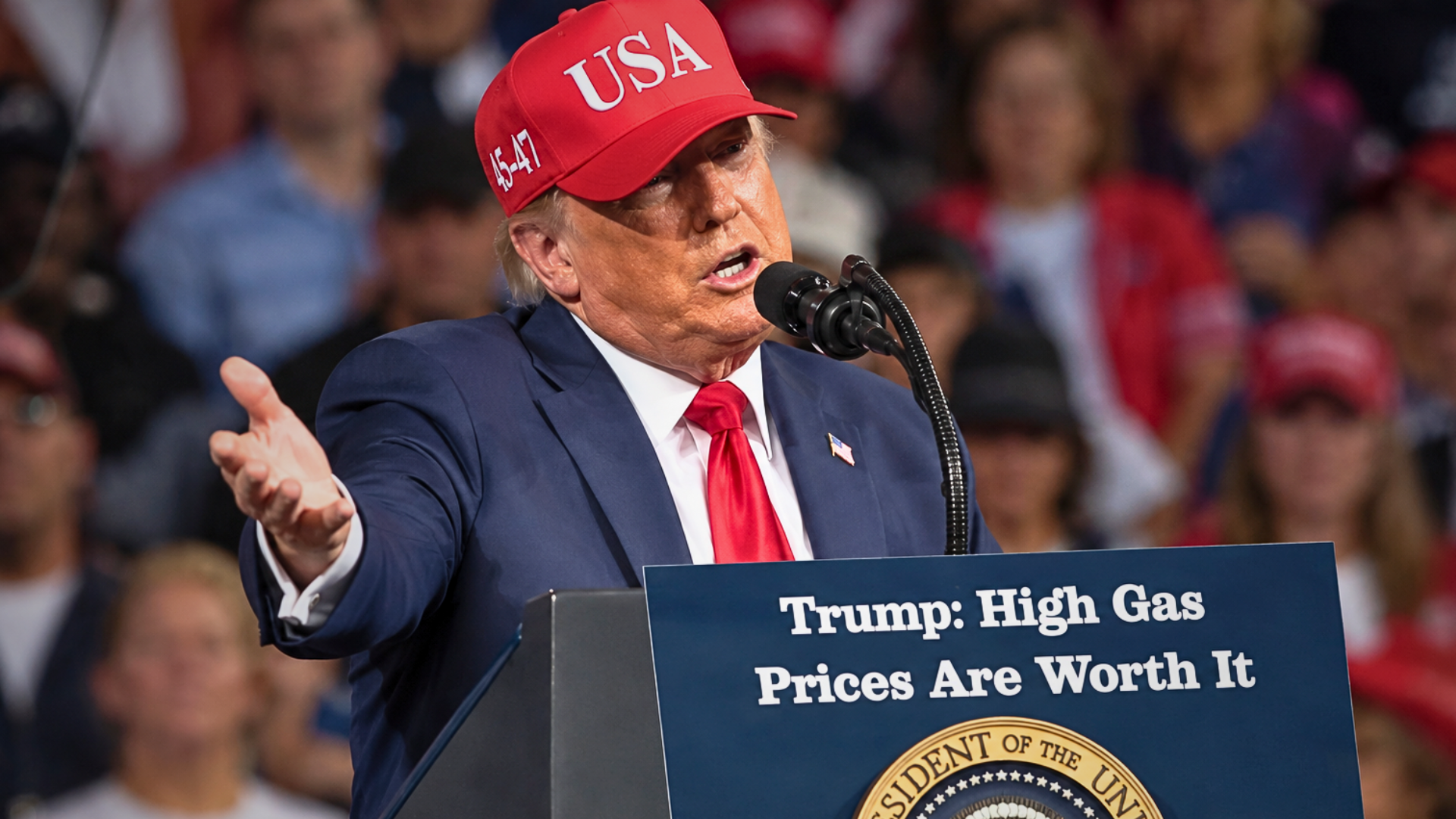
Most political leaders try to downplay pain their own policies might be causing voters, not describe it outright as a bargain worth accepting. President Trump did the opposite this week. Asked about gas prices climbing alongside the ongoing war with Iran, he called the added cost “a very inexpensive price to pay,” a phrase that landed very differently with the people actually paying it.
The national average for a gallon of gas reached $4.48 on Friday. That’s according to AAA. It’s up 17 cents in a week, 40 cents in a month, and $1.27 over the past year. Quinten Martinez, a 28-year-old Amazon delivery driver pumping gas in South Texas, described the calculation that now comes with every fill-up. “Is it going to be groceries this week?” he asked.
Trump addressed the issue directly while campaigning in North Carolina this week, playing down the financial impact on ordinary drivers. He said the cost was worth it even if it turned out to be significantly higher than it already is, framing the price increase as an acceptable trade-off for the war’s outcome. That framing arrives at a genuinely risky moment politically.
This article was created with the assistance of AI and reviewed by our editorial team for accuracy and clarity.
Seven Weeks Before the Midterms, Gas Prices Are the Thing Voters Actually See
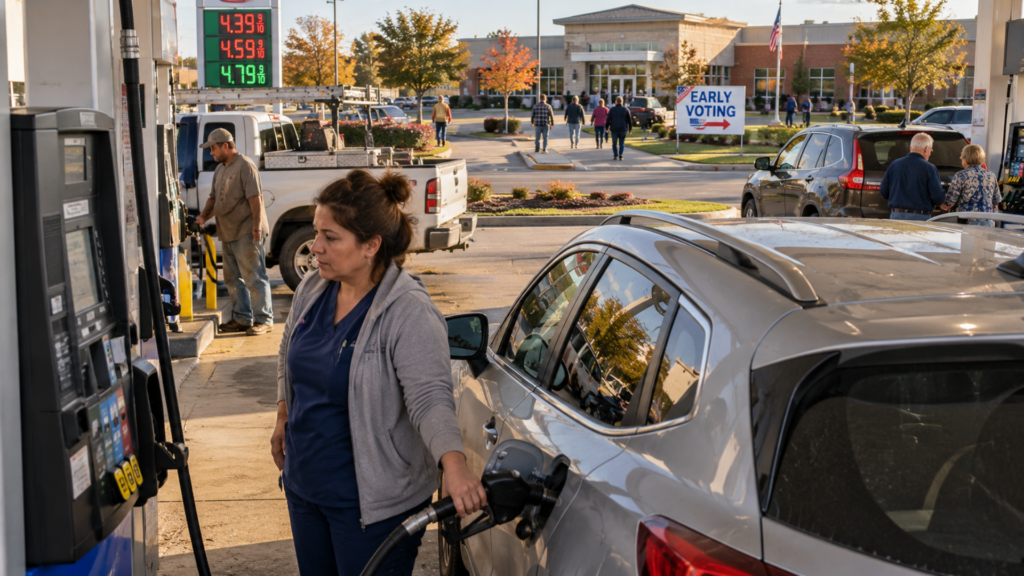
Early voting is already underway in some states. Roughly seven weeks remain until Election Day. Historically, the party holding the White House suffers real losses in midterm elections, and Republicans are heading into this one carrying extra weight: weak approval ratings for Trump, an unpopular foreign war, and an affordability crisis the administration had explicitly promised voters it would fix.
Gas prices carry a specific kind of political weight. Other economic indicators don’t hit the same way, according to Chris Wilson, a veteran Republican strategist. He described them as “one of the few economic indicators voters experience and see in real time,” noting that the price is literally staring drivers in the face multiple times a week, particularly for working- and middle-class voters already feeling squeezed elsewhere.
This frustration is not sorting neatly along party lines. That is exactly what makes it politically dangerous for Republicans specifically. Interviews with voters across several states this week turned up genuine disappointment from people who actually voted for Trump, not just from Democrats and independents who were already inclined to be critical of his administration.
‘He Hurt Himself’: Even Some Trump Voters Are Frustrated
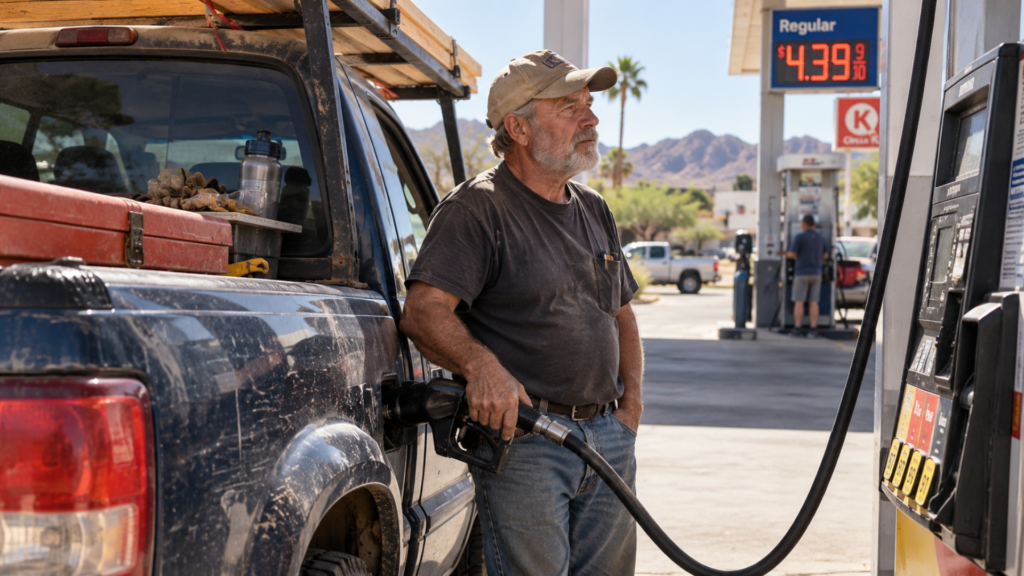
Dan Lloyd is a 63-year-old carpenter in Mesa, Arizona. He voted for Trump and still plans to vote Republican this fall. That did not stop real frustration from showing while he paid $4.39 a gallon to fill his pickup truck. “He hurt himself stepping into this,” Lloyd said, questioning promises about increased domestic oil supply that never seemed to translate into lower prices at the pump.
Other voters were considerably less forgiving. Alan Johnson, a 60-year-old engineer in Virginia, said the president seems to have no empathy for Americans struggling financially, and cast his midterm ballot for Democrats. Brittney Bivins, a teacher in Raleigh, North Carolina, described feeling disconnected from a president who “can afford the gas” himself. Not every voter agreed the issue mattered at all, though. Kristin Jimenez, a small business owner in Texas, said gas prices simply aren’t part of her calculation.
These individual accounts are anecdotal by nature. Taken together, though, they point toward something the polling data confirms with far more precision: a broad, bipartisan sense that the cost of this particular war is landing squarely on ordinary households, not somewhere abstract enough for most people to simply ignore.
61% Say Gas Prices Are a Major Problem. Two Years Ago, It Was 48%.
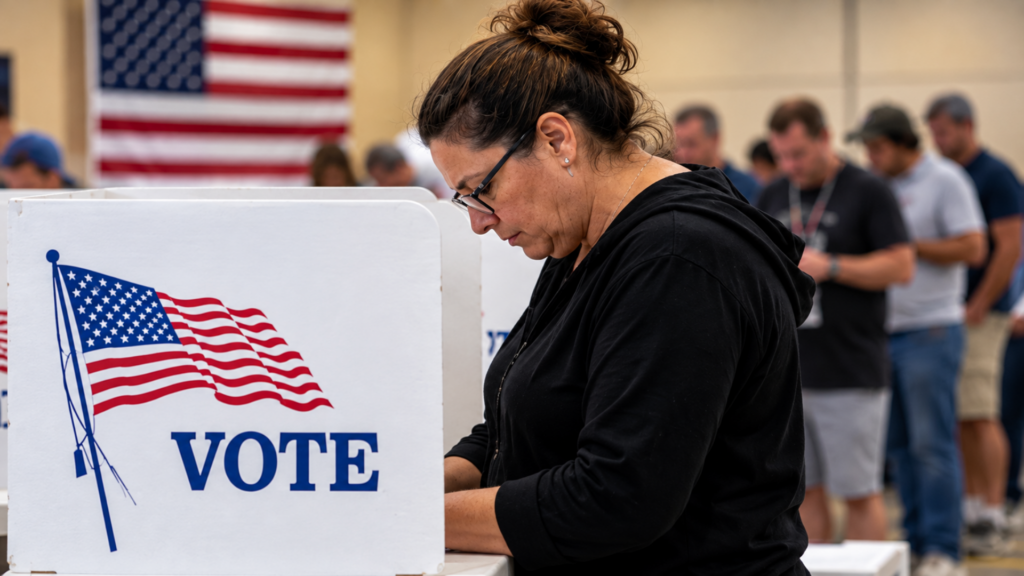
A Fox News survey released this week found 61% of voters describe gas prices as a major problem for their household. That’s up sharply from 48% just two years ago. The same poll found nearly two-thirds of voters, 63%, believe the administration has made the economy worse, up from 52% a year earlier, a group that notably includes a quarter of self-identified Republicans.
Nationwide, more than three times as many voters say they are falling behind financially as say they are getting ahead, according to the same survey. Democrats hold a real advantage here. By a 15-point margin, voters trust Democrats more than Republicans to handle inflation and prices right now. A separate NPR/PBS News/Marist poll released this week found a similar pattern, with voters favoring Democrats over Republicans specifically on gas prices by a 40% to 27% margin.
The actual political risk here probably isn’t that voters simply disagree with the war itself, since opinions on that split more predictably along party lines. It’s something narrower. “Inexpensive” is a word chosen by someone who isn’t the one deciding between groceries and a full tank this week. That gap in lived experience is showing up in interviews and in polling numbers at almost exactly the same moment voters are heading to the polls.