

Products are selected by our editors, we may earn commission from links on this page.
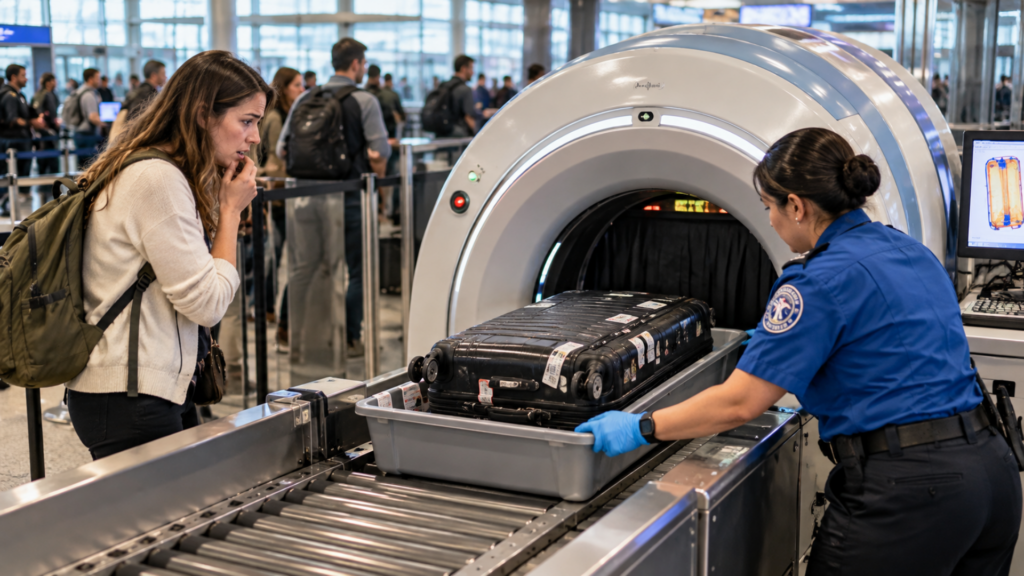
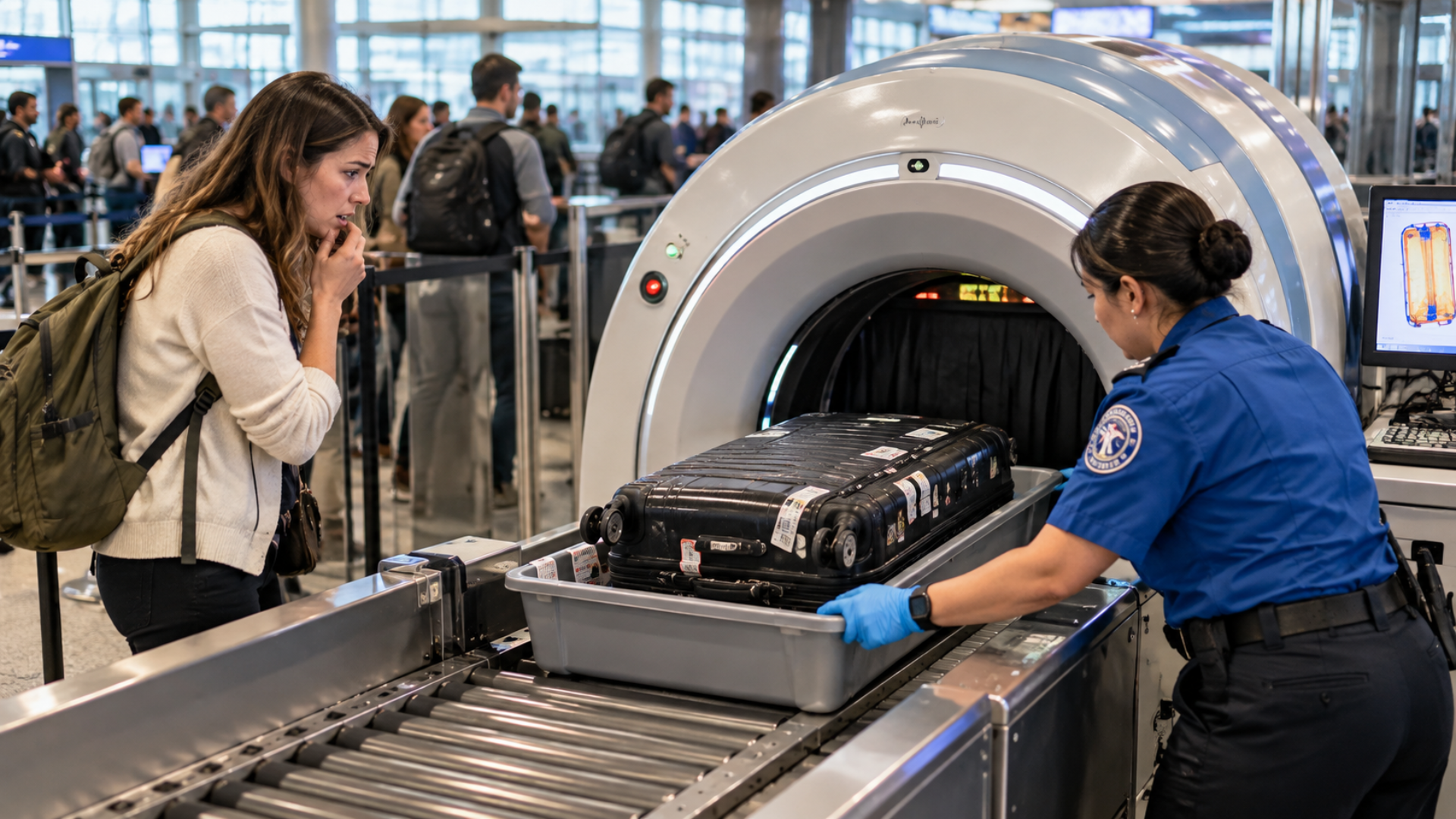
A carry-on that has flown without a hitch for years can still stall at the security checkpoint. The culprit is a machine built to speed travelers along: the Transportation Security Administration’s computed tomography (CT) scanner, which produces 3-D images of bag contents and is replacing older X-ray units airport by airport. As of July 6, the agency had 1,162 of them running at 296 airports. Travelers are discovering the catch one bag at a time.
TSA began piloting CT units in 2018 at a small group of airports, and the agency has been swapping out its X-ray fleet as money allows. Checkpoints now run a patchwork: some lanes hold the new machines, others keep the old ones, and the lane a traveler lands in decides which one greets the bag. Officers can spin each 3-D image on a monitor to inspect contents from every angle. One measurement separates the two generations of equipment.
The tunnel of a CT unit is 24.5 inches across and 16.5 inches high, and it runs less than an inch smaller than the opening on the older units it replaces. TSA spokesperson Daniel Velez has said the design is “necessary to accommodate the advanced imaging technology” packed inside the machine. The gap looks trivial on paper. For one kind of bag, it decides whether the trip through security goes smoothly.
This article was created with the assistance of AI and reviewed by our editorial team for accuracy and clarity.
Standard 22-Inch Carry-Ons Slide Through, Yet Bulky Wheels and Overstuffed Pockets Cause Trouble
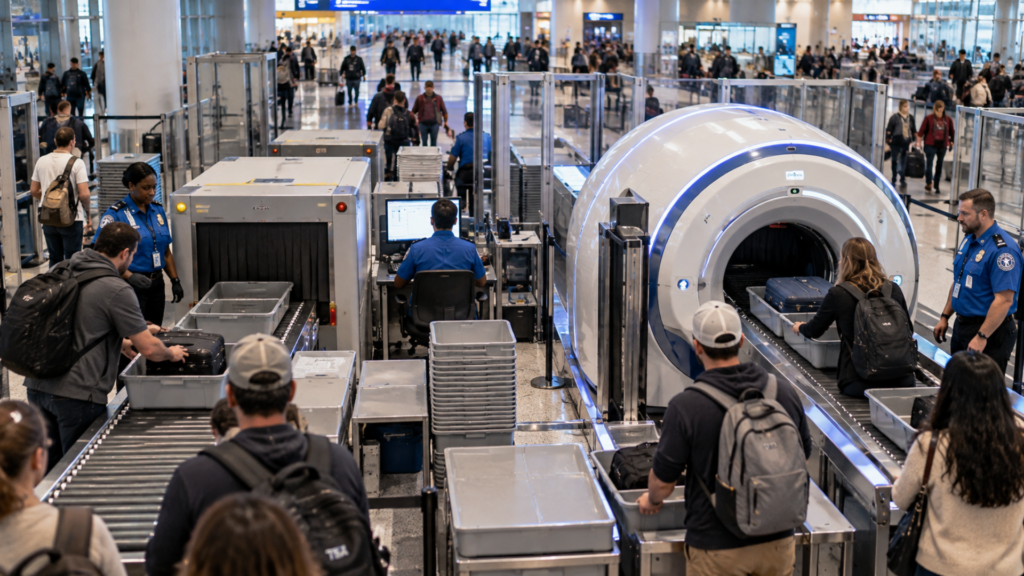
Most airlines cap carry-on bags at 22 by 14 by 9 inches, and a bag inside those limits clears the CT tunnel with room to spare. That covers the bulk of travelers. The trouble falls on suitcases that already stretch the airline’s rules, the kind that squeezed into overhead bins and past gate agents for years. What pushes a bag past the limit is easier to overlook than most travelers assume.
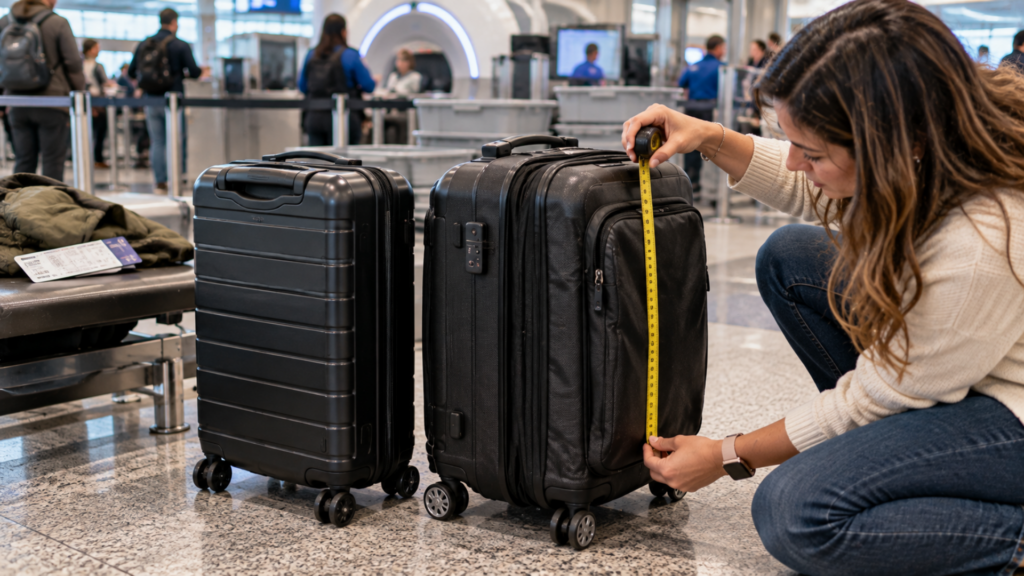
A tag listing a bag’s dimensions tells only part of the story. Bulky wheels, protruding handles and overstuffed exterior pockets can push a suitcase past the tunnel’s limits, and expandable designs change shape once they are packed to capacity. Frommer’s advises measuring a bag when it is full, since an empty case tells little. A suitcase that met every rule at home can carry extra inches to the airport. The moment of truth arrives at the mouth of the tunnel.
TSA has issued a plain instruction for travelers who suspect their bag is borderline: “we advise that travelers not force larger items into the tunnel,” a spokesperson told The Points Guy. Rough handling causes problems of its own. The agency has observed that shoving bins into the machine skews images and forces officers to restart screening. When a bag stops at the opening, the officer’s next move decides how the rest of the trip through security goes.
Bags That Miss the Tunnel Face Hand Screening, a Detour to an Older Lane or a Trip Back to the Check-In Counter
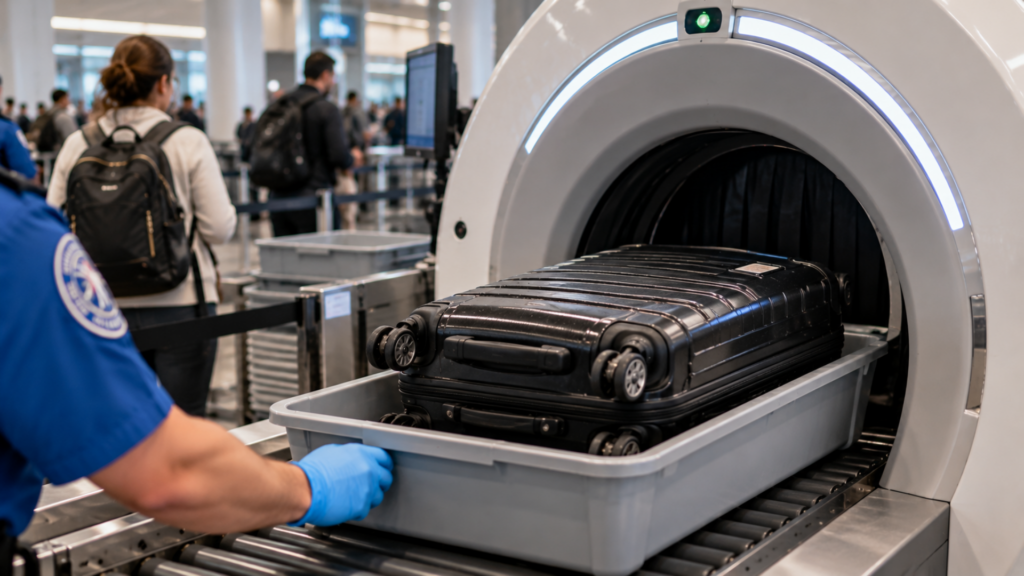
According to TSA, officers have two ways to keep an oversized bag moving. They can search it by hand, or they can direct the traveler to a lane that still runs older equipment. Both depend on what the checkpoint has on hand, and many airports operate a mix of old and new machines. Hand searches also add time to the process. A third outcome waits for travelers who find neither option available.
That third outcome is a return trip to the airline counter. TSA suggests that large carry-ons be checked, and Simple Flying, as cited by Frommer’s, reports that being sent back is becoming the default result at many CT checkpoints. Checking a bag can mean a fee and a wait at baggage claim after landing, two costs a carry-on is meant to avoid. Even a bag that fits faces one more requirement before it reaches the tunnel.
That requirement is a bin. TSA still requires every item in a CT lane, carry-ons and jackets included, to ride through inside a screening bin, and the machines do not accept luggage placed directly on the belt, Frommer’s notes. A suitcase must therefore fit in a bin before it can fit in the tunnel. TSA points to the rewards waiting for travelers who satisfy both.
Laptops Stay Packed and Fewer Bags Get Opened for Travelers Who Pack Within the Limits
For travelers whose bags fit, the tunnel pays off fast. Officers can rotate a 3-D image on screen to study an item from any side, which TSA says reduces how many carry-ons get pulled aside and opened. At many checkpoints, laptops and travel-size liquids can stay inside the bag, so the unpacking routine at the belt is fading. Checked bags have long received CT screening at airports, and carry-ons are now catching up.
That convenience once set TSA PreCheck apart, and the agency says the program keeps its own advantages: shorter lines and fewer demands to remove belts and light jackets, a spokesperson said. Shoes stopped being a standard requirement for most travelers in July 2025, and CT machines are also arriving in some PreCheck lanes. Screening keeps getting simpler for travelers who pack sensibly. Every gain on the list depends on a bag that clears the tunnel.
TSA’s advice is to pack to the airline’s listed size, and the new machines make that advice enforceable. A scanner tunnel applies one fixed measurement to every bag in every CT lane, so a carry-on that has squeaked by for years finally meets an inspector that cannot be talked past. The size on the airline’s website has always been the rule. At the checkpoint, it is now also the physical limit.