

Products are selected by our editors, we may earn commission from links on this page.
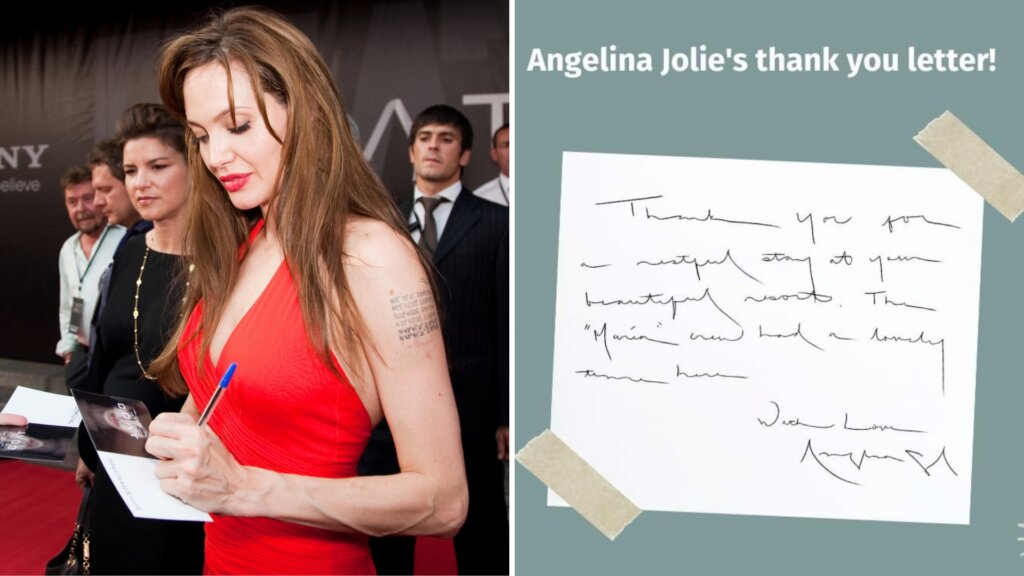
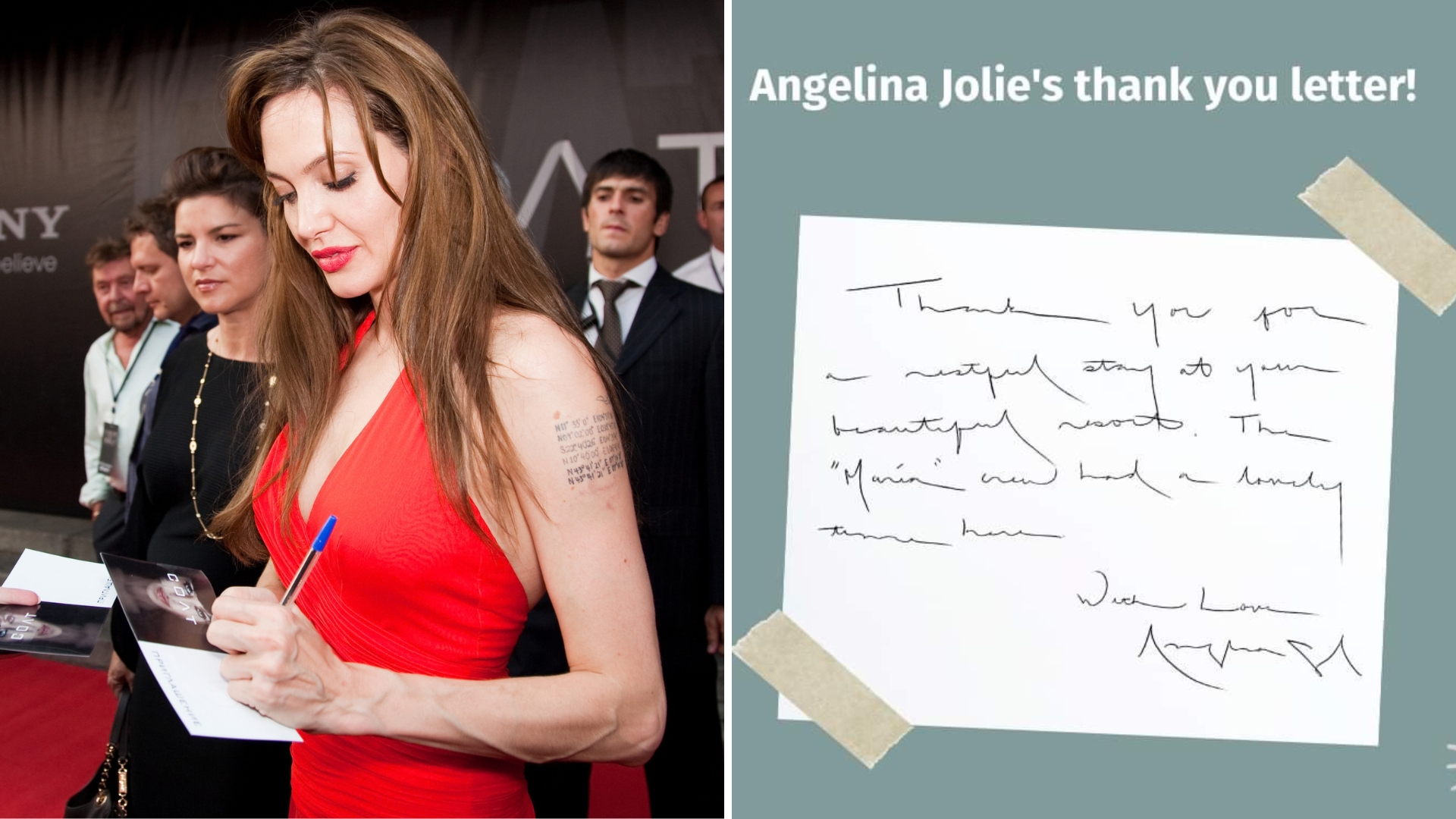
A post showing a handwritten message from Angelina Jolie has pulled in more than 8.4 million views on X, and the replies read like one giant squint. Some users insist every word is plain. Others cannot make out a single line. Jolie wrote the note in 2023 for the staff of a Greek resort, and it has since become an unplanned reading test for the entire internet.
Jolie penned the message while shooting Maria, the 2024 biopic about opera legend Maria Callas, and left it for the team at the Aldemar Olympian Village in Skafidia, where the cast reportedly stayed. The resort shared a photo of it on Facebook on October 24, 2023, as filming in Greece wrapped and the production headed to Budapest. Almost three years passed before anyone treated it like a puzzle.
Other stars have taken similar heat. Jacob Elordi’s line “be funny, when you can,” written for an Academy Awards promo video, drew jokes comparing his penmanship to a child’s crayon work. Jolie’s note has stirred a broader fight. Commenters now sort themselves by age: people raised on cursive call the message easy, while younger readers say it looks like code. The split points back to a classroom decision made more than a decade ago.
Keyboards Replaced Cursive Lessons After the 2010 Common Core Skipped Handwriting
American students once spent hours on looping, connected letters, and teachers graded the results. Then machines moved in. According to the Smithsonian’s National Museum of American History, typewriters reached classrooms during the 1930s, and computers followed by the late 1980s. Educators responded by stacking typing lessons on top of penmanship. Cursive kept its slot on the schedule, but it now shared the clock with a faster rival.
The decisive moment arrived with the Common Core State Standards, adopted in 2010. The benchmarks left handwriting out entirely and steered upper elementary students toward keyboarding. Many districts took the hint. A routine skill for generations slid off class schedules, and an entire cohort moved through school with, at most, a brief taste of cursive. Millions of them are the same people now squinting at Jolie’s loops.
Shawn Datchuk, a special education professor at the University of Iowa, told Yahoo that many K-12 students meet cursive only briefly, if they meet it at all. Zoe R. Smith, a University of Denver psychologist and a millennial, learned both cursive and typing in elementary school, yet only typing stayed with her after sixth grade. Smith says she decoded roughly half of Jolie’s note and guessed the rest from context.
New Jersey Third Graders Are Learning Cursive Again as More Than Two Dozen States Mandate It
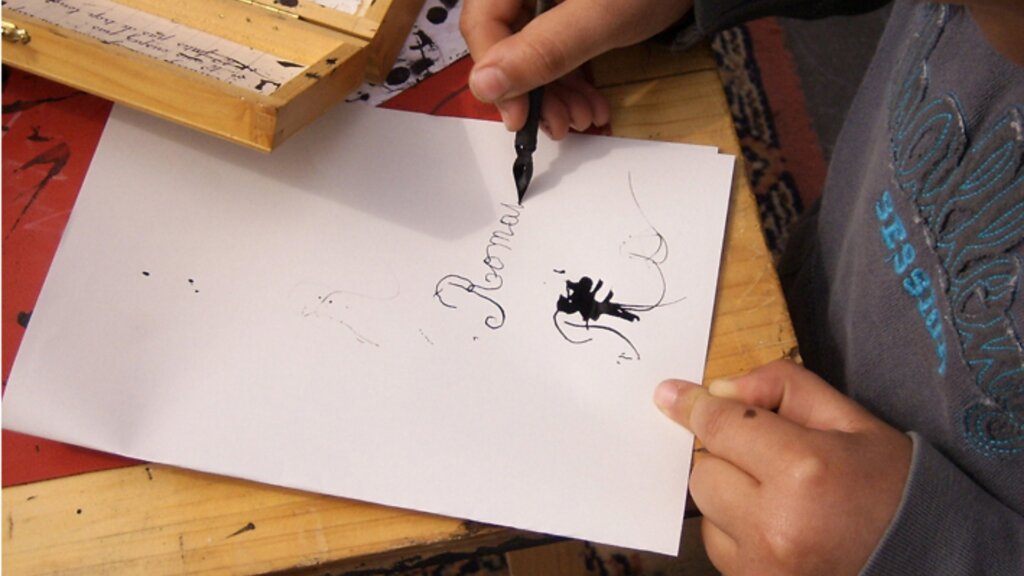
New Jersey’s reversal is the freshest example. Governor Phil Murphy signed a law on January 19, 2026, directing public schools to build cursive into the curriculum for grades three through five. Districts began following the mandate this school year, and students are expected to read and write cursive legibly by the end of fifth grade. Supporters cite cognitive benefits and the ability to read historical documents.
New Jersey joins a list that now exceeds two dozen states, according to recent local reporting. In Indiana, Republican state Senator Jean Leising has pushed a similar bill for more than a decade. She has argued that some teenagers cannot sign their own names on official paperwork, and she has pointed to survey results showing private schools teach cursive far more often than public ones.
Laws do not teach themselves. Mary Jean Tecce DeCarlo, a Drexel University literacy professor, wrote in an essay for The Conversation that many current teachers, and many future ones, never learned cursive themselves. Proper instruction can eat up about 70 minutes a week, she noted, in school days already stretched thin. She also calls the evidence behind the revival far less certain than supporters claim.
Handwriting of Any Kind Beats Typing for Memory, but Cursive’s Special Edge Remains Unproven
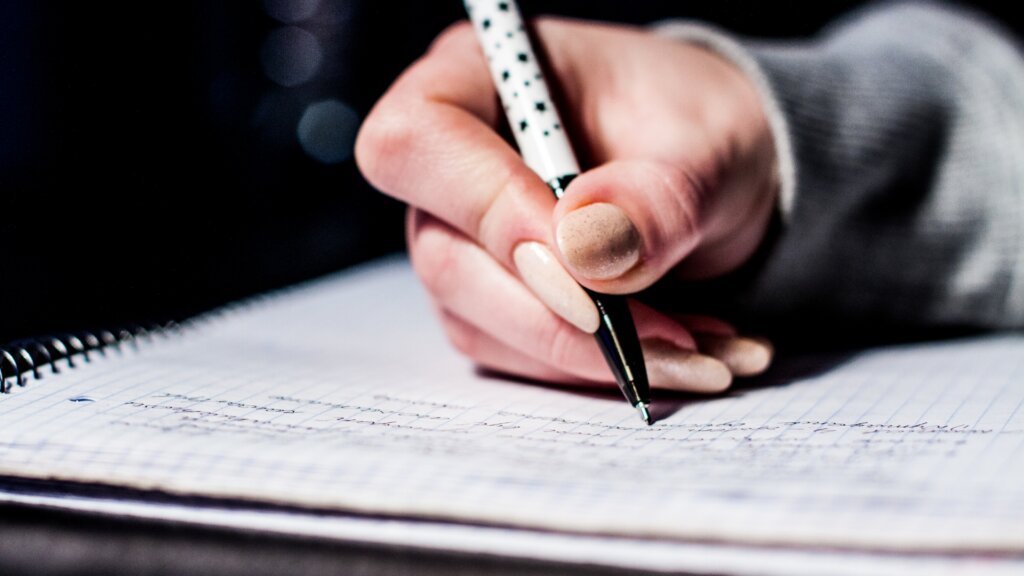
DeCarlo says the research is firm on one point: writing by hand beats typing for learning and memory. A 2024 study from Norwegian researchers supports that. Using EEG sensors on 36 university students, they found brain connectivity rose when participants wrote by hand but not when they typed. Whether looped cursive adds a benefit beyond plain print, DeCarlo says, remains far murkier.
Smith cares less about script style. She says the benefit comes from writing by hand at all, since it pairs motor skills with memory at every age. She also warns that adding cursive means something else gets pushed aside. Datchuk offers a third reason to teach it: children who never learn it may be unable to read letters from grandparents or books written by hand.
Jolie meant those lines for hotel staff in Greece, written as filming there wrapped up. Datchuk puts readability this way: “What appears readable for some people can be unreadable for others.” He adds that people write less legibly when rushed. Three years later, millions of strangers are grading a quick thank-you card, and their scores seem to track the cursive lessons each reader did or did not receive.