

Products are selected by our editors, we may earn commission from links on this page.

Researchers followed 94 dermatology patients for 12 months, all of whom arrived with new or worsened skin problems after using a makeup or skincare product promoted on social media. The findings were presented at the European Academy of Dermatology and Venereology Congress in 2026. Irritant contact dermatitis, which is skin inflammation without an allergic trigger, turned up in 42 percent of them. Close to 30 percent developed acne or saw existing acne get worse. Rosacea flares or rosacea-like dermatitis appeared in 12 percent. The sample is small and observational, so it cannot prove the routines caused the damage, but every patient in it walked in with a product history and a complaint.
This article was created with the assistance of AI and reviewed by our editorial team for accuracy and clarity.
A third of patients had no prior skin problems at all

The obvious assumption is that people with sensitive or reactive skin are the ones who get burned by an aggressive routine. The data does not support that. Among the 94 patients, 36 percent were acne-prone and 18 percent had a rosacea history, which leaves 35 percent with no known skin condition before the routine started. Those patients had nothing to flare. They reacted anyway. That matters for how the findings get read, because it removes the easy explanation that only people with existing conditions need to be careful. The study did not separate outcomes by group, so it does not show whether the previously healthy patients had milder reactions.
What exfoliating acids actually do to the skin barrier
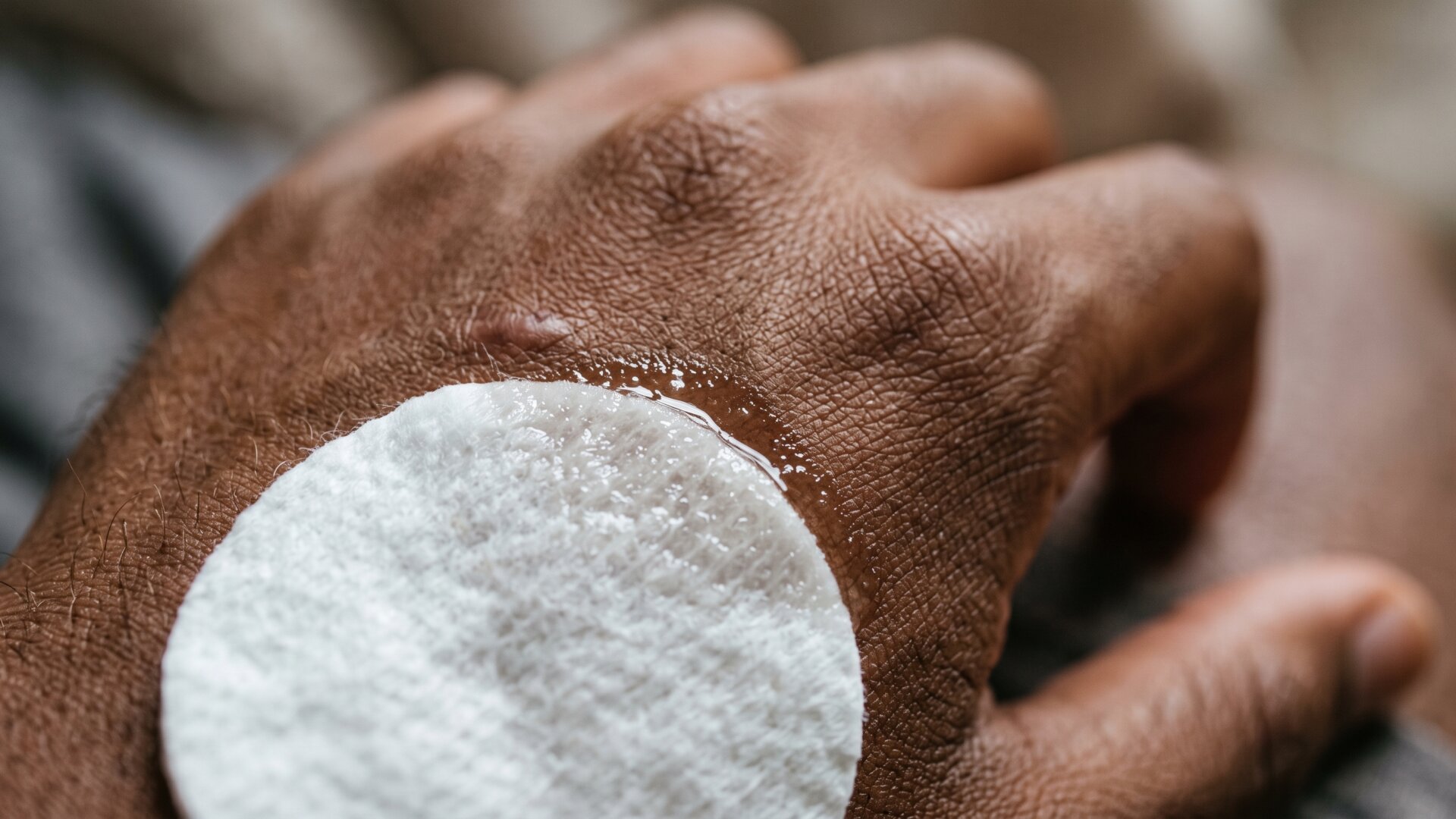
Alpha-hydroxy acids and beta-hydroxy acids were tied to adverse reactions in nearly 35 percent of patients, the largest ingredient category in the study. Both work by loosening the bonds between dead cells on the skin’s surface so those cells shed faster. AHAs, including glycolic and lactic acid, are water-soluble and work on the top layer. BHAs, mainly salicylic acid, dissolve in oil and reach into pores. The outer layer being thinned is also the layer that holds water in and keeps irritants out. Applied more often than the skin can rebuild that layer, the result is the inflammation the study recorded.
Sixty-three percent used more than three active ingredients

The headline number in the study is not any single product. It is the stacking. Nearly two-thirds of patients, 63 percent, had more than three active ingredients running in one routine. A further 14 percent described elaborate multi-step regimens that combined several potentially irritating actives, frequently applied in the same session. Ife J. Rodney, MD, founding director of Eternal Dermatology and Aesthetics in Columbia, Maryland, describes a specific version of this problem: a person using two separate products that each contain 5 percent of the same ingredient is effectively applying 10 percent. The label on each bottle looks reasonable. The combined dose on the face is not.
A Pediatrics study counted up to 21 irritating actives per routine

A separate 2025 study published in the journal Pediatrics analyzed 100 videos from beauty creators aged 18 or younger. The average routine shown contained six products. Among the 25 most-viewed videos, the average rose to 11 potentially irritating active ingredients, with one routine reaching 21. That study looked only at children and teenagers. Rodney says the pattern holds in adult content as well, and that trendy products recommended on social platforms can irritate skin, particularly in combination. Two studies, different populations, same structural finding: the routines being modeled online carry far more active chemistry than a dermatologist would start a patient on.
Introduce one product every one to two weeks

Cindy Wassef, MD, a dermatologist at Premier Health Associates in Randolph, New Jersey, gives a specific pace for anyone rebuilding a routine: one new product at a time, and no more than one every one to two weeks, while watching for signs of irritation. The spacing exists so that a reaction can be traced. Start five products at once and a flare identifies nothing. Wassef also warns against assembling several products aimed at the same single problem, since those tend to be duplicates or overlapping doses. Anyone with a history of acne or sensitivity should run new products past a dermatologist first, Rodney says.
The common error is reading the label, not the ingredients
Rodney’s description of the failure is precise. People shop by product category rather than by what is inside the bottle. A serum, a moisturizer and a treatment can all contain the same acid or the same retinoid, and nothing on the front of any of them says so. The consequence shows up in the study’s ingredient column. Over-the-counter retinoid products were linked to skin inflammation in 27 percent of patients. High-concentration vitamin C serums accounted for 14 percent. Niacinamide, which has a reputation as one of the gentler actives, was still responsible for 11 percent of cases recorded in the group.
Seven percent of patients had superficial chemical burns

Most reactions in the study sat at the irritation end of the range. A smaller group did not. More than 10 percent of patients developed hyperpigmentation, meaning darkened patches, following their skin inflammation. Seven percent had superficial chemical burns. Those are the outliers in a 94-person sample, roughly six or seven people, but they mark where the consequence stops being cosmetic discomfort. Hyperpigmentation in particular can outlast the inflammation that caused it by months. The study did not report how those patients were treated or how long their marks persisted, only that the reactions occurred within the 12-month follow-up window.
Three dermatologists on why the content is built to spread

Joshua Zeichner, MD, director of cosmetic and clinical research at Mount Sinai Hospital in New York City, locates the problem in the incentive rather than the person. Posts are designed for engagement, he says, and shocking or exaggerated content is what pulls viewers in and travels. A complicated multi-step regimen full of irritating actives makes good content without being right for a given viewer’s skin. Wassef adds that much of what circulates is paid and scripted, and that presenters may not fully understand the risks and benefits of what they are suggesting. Rodney’s objection is narrower: creators are offering medical advice without the scientific background to do it.
Some of these ingredients cancel each other out

The finding most likely to surprise someone layering products is not about irritation at all. Zeichner points out that exfoliating acids, retinoids, vitamin C and niacinamide do not necessarily work well together, and in some cases can inactivate each other. A routine built from four aggressive products can therefore deliver the irritation of all four and the benefit of fewer. That is the quiet cost sitting underneath the study’s 63 percent figure. Dermatologists in the piece are not telling anyone to stop watching. Rodney calls the content useful for showing people what exists. What happens after the video is where the difference lands.