


Products are selected by our editors, we may earn commission from links on this page.
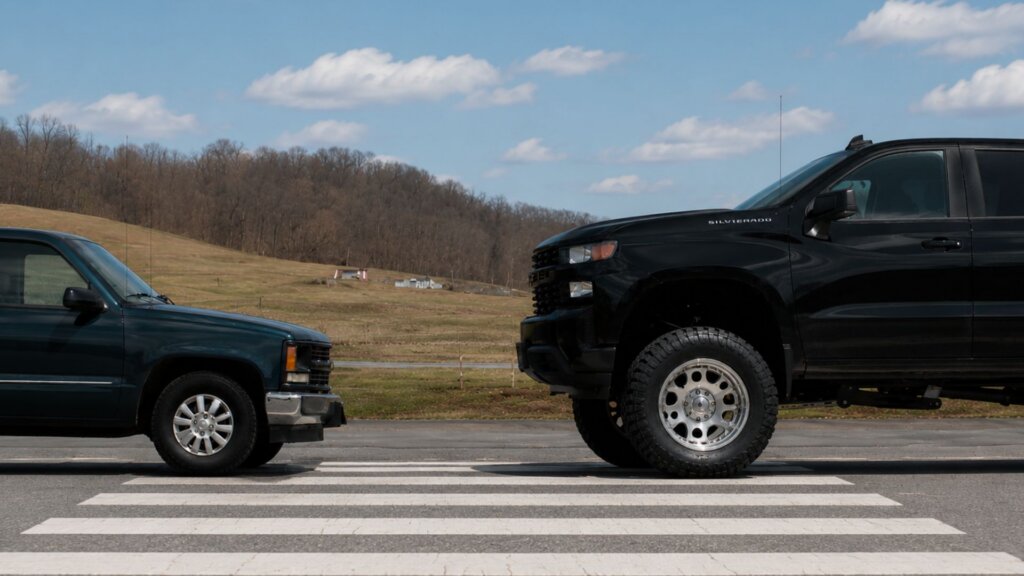
If you’re shorter than 5-foot-6, the front end of a typical new vehicle may not see you coming. A new investigation by The New York Times and the Insurance Institute for Highway Safety found that roughly half of American adults fall into that category, and that the vehicles now sharing their roads are larger, heavier, and more dangerous than at any point in modern automotive history.
Pedestrian fatalities have climbed 75% since 2009, reversing decades of steady progress on road safety. The NYT analysis links a significant share of that surge to a structural transformation in the American vehicle fleet. The shift away from low-slung sedans toward tall-hooded trucks, SUVs, and crossovers has reshaped not just what Americans drive, but what happens to people when those vehicles fail to stop in time.
Researchers estimate that roughly 3,000 pedestrian deaths between 2016 and 2024 can be attributed to the trend toward vehicles with higher hoods. The NYT treats that figure as conservative. Crash data from parking lots, driveways, and private roads was excluded from federal databases entirely, meaning the real number is likely higher.
This article was created with the assistance of AI and reviewed by our editorial team for accuracy and clarity.
A Regulatory Tweak in 2009 Helped Bigger Vehicles Take Over
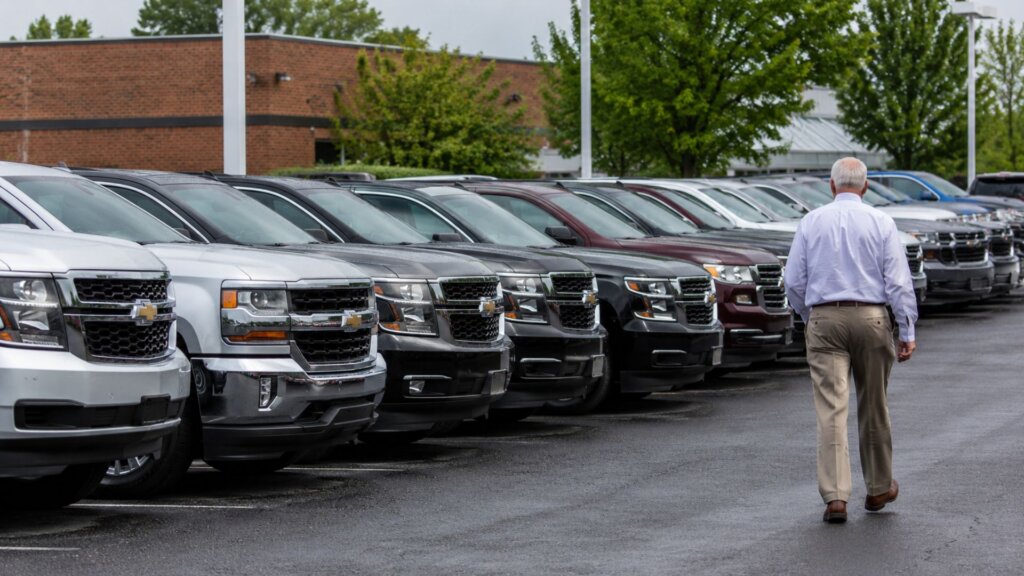
The 75% death toll increase traces back to a specific turning point: 2009. The truck and SUV market had already been expanding since the 1990s before the financial crisis briefly interrupted it. In the years that followed, a wave of policy changes reshaped what Americans ended up driving, and the effects proved lasting.
The Obama administration introduced what became known as the “footprint model,” a revised framework for calculating fuel economy that classified vehicles partly by their physical size. Under the new rules, automakers were permitted to emit more as long as their vehicles grew larger at the same time. The formula, however unintentionally, rewarded size. Then the Cash for Clunkers program removed nearly 700,000 vehicles from the used market, pushing buyers toward newer, larger models.
The crossover emerged as the unintended beneficiary. Positioned between a traditional SUV and a passenger car, the crossover inherited the benefits of both the footprint loophole and surging consumer demand. It has since displaced the midsize sedan as America’s default family vehicle.
Hood Height, Not Just Weight, Is Killing Pedestrians
Physics shapes the outcome of every pedestrian collision, and the math has shifted against people on foot. The NYT report highlights two forces at work: the total energy transferred on impact, which scales with a vehicle’s mass and speed, and the distribution of that force across the area of contact. A wider front end spreads the blow, which should, in theory, reduce concentrated injury.
European regulators acted on that logic years ago. Mandates pushed automakers away from sharp, angular front ends toward wider, more upward-curving hood designs. That approach reduced fatality rates. The problem is that American vehicles have grown so much heavier that the distribution benefit has been largely offset. Spreading force across a larger area helps less when the total force is substantially greater to begin with.
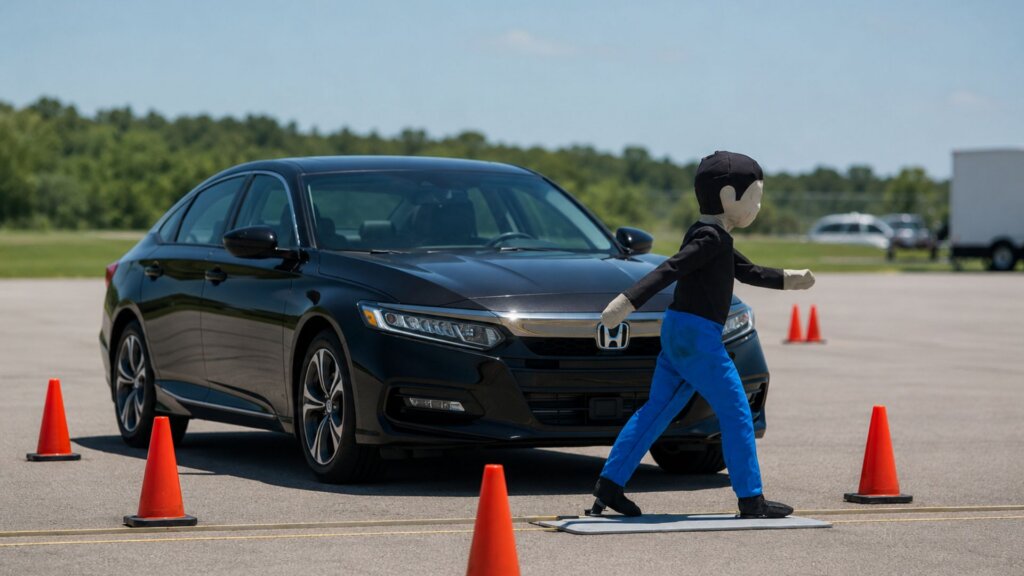
Hood height introduces a separate and more direct danger. A pedestrian struck below the center of mass tends to fall toward the vehicle, usually onto the hood, which can be survivable. A pedestrian struck at or above that point gets launched forward, directly into the vehicle’s path. “We see a lot of devastating collisions even at lower speeds because the pedestrian gets punted forward,” according to Shawn Harrington, whose firm Forensic Rock conducted crash testing for the report. “Before the driver knows what’s happened, the pedestrian’s head is under the wheel.”
200 to 400 Lives a Year Could Have Been Spared if Vehicles Stayed Smaller
The NYT’s central estimate is stark: between 200 and 400 pedestrian deaths per year would not have occurred if vehicles had remained roughly the same size as they were 25 years ago. That accounts for about 10% of the overall increase in fatalities. Scaled across a decade and a half, the cumulative toll from vehicle growth runs into the thousands.
Automakers have not been passive. Hood designs have evolved, driver assistance systems have improved, and braking technology is more capable than ever. But research consistently shows that those gains have not kept pace with the danger added by increasing size and weight. The engineering improvements are real; they simply haven’t closed the gap that size opened.
The incentive structure is also working against pedestrian safety. Larger vehicles generate higher profit margins, and consumer demand for trucks and SUVs has not meaningfully softened. Absent a regulatory correction to the footprint model or a major shift in what buyers choose, the fleet will likely keep growing.
The 75% rise in pedestrian deaths since 2009 did not happen because drivers became less careful or roads became more chaotic. It happened because the vehicles on those roads changed in ways that made surviving a collision significantly harder. The math, as the NYT puts it, is being settled in blood.