

Products are selected by our editors, we may earn commission from links on this page.
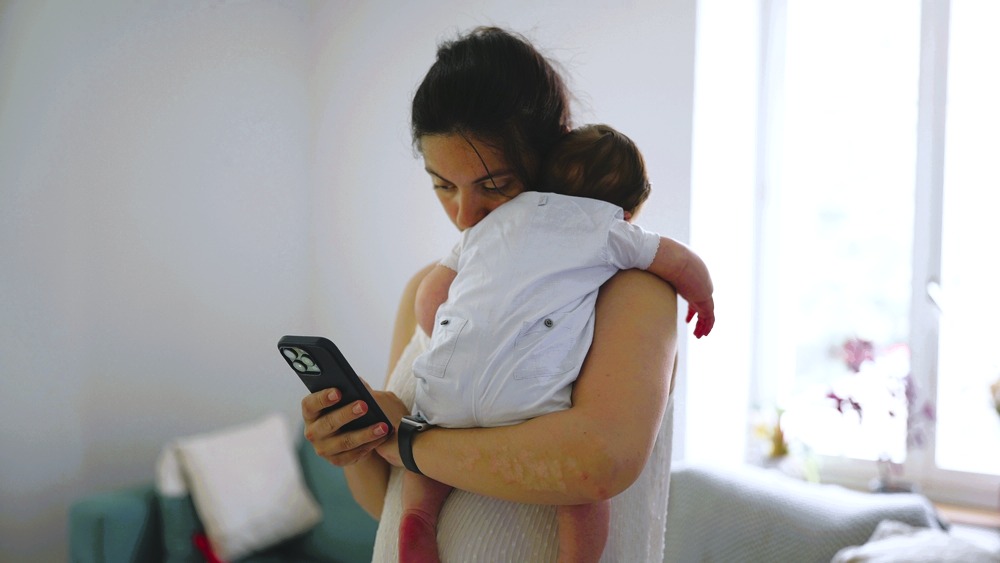
The hardest parts of running a household are often the jobs nobody sees. Remember the doctor’s appointment, plan dinner, check whether the kids need new shoes, arrange the playdate, anticipate the next school deadline and make sure nothing slips through the cracks. Now, some mothers are handing pieces of that invisible workload to ChatGPT — not simply as a search engine, but as something closer to a household assistant.
The trend has produced a new corner of the parenting-influencer economy. AI Chat Daily reported that Zurich-based brand consultant Lilian Schmidt gained 27,000 followers within three weeks after posting a TikTok about turning ChatGPT into her “coparent.” She later began selling access to a customized GPT called Coparent for $37. Other creators are offering prompt packs, handbooks and training designed to help mothers use AI for everything from meal planning to appointment organization.
The appeal makes sense against the sheer volume of small decisions involved in parenting. Schmidt has described using ChatGPT after struggling with her young daughter’s sleep, while creators such as Sarah Dooley, founder of the AI-Empowered Mom, have promoted AI as a tool for reducing the administrative burden of family life. The technology is being asked to do something particularly valuable to exhausted parents: remember, organize and generate options on demand.
The Mental Load Was Unequal Before AI Arrived

The phenomenon taps into a problem that researchers were documenting long before generative AI entered family kitchens. The “mental load” includes the cognitive and emotional labor required to anticipate needs, evaluate choices, make decisions, and monitor whether everything actually gets done. Unlike washing dishes or doing laundry, much of this work happens silently inside someone’s head.
Research discussed by the BBC found that women in heterosexual relationships tend to perform considerably more of this hidden work. Sociologist Allison Daminger identified four stages of cognitive household labor — anticipating needs, identifying options, deciding among them and monitoring results. Mothers in her research did more across all four, with the disparity particularly evident in the anticipation, planning, and research that precede a family decision.
Even households that appear financially egalitarian can retain that imbalance. A 2023 Pew Research Center analysis cited by The Guardian found that wives in opposite-sex marriages where both partners earned roughly the same amount still spent more than twice as much time on housework as their husbands. They also spent more time caregiving, while husbands recorded about three-and-a-half additional hours of leisure each week.
Mothers Are Looking for Relief at a Difficult Moment
AI is arriving as evidence points to a troubling deterioration in mothers’ well-being. An analysis drawing on responses from nearly 200,000 female parents in the National Survey of Children’s Health found that the proportion of mothers reporting “excellent” mental health dropped from 38.4% in 2016 to 25.8% in 2023. Meanwhile, the proportion describing their mental health as “fair” or “poor” rose from 5.5% to 8.5%.
The decline crossed socioeconomic groups, although single mothers, mothers with less education, and those whose children had public insurance or no insurance experienced particularly poor outcomes. Mothers also reported worse mental health than fathers: in 2023, about one in 12 mothers described their mental health as fair or poor, compared with roughly one in 22 fathers. Researchers have pointed to possible contributors including economic pressure, social isolation and limited access to mental healthcare.
Against that background, asking a chatbot to build a grocery list, organize a week of meals or help think through an overloaded calendar can look less like a futuristic parenting experiment and more like straightforward delegation. AI Chat Daily cited a 2022 Department of Labor survey showing employed mothers spent 13.5 hours per week on chores and another 12.5 hours on childcare. For a parent already juggling paid work and family responsibilities, even shaving small amounts of thought and planning from repetitive tasks can have practical value.
But Outsourcing the Load Does Not Redistribute It

There is a contradiction at the center of the trend. A mother who uses ChatGPT to organize family life may reduce the amount of thinking she personally has to do, but she can remain the person responsible for deciding what needs to be delegated, supplying the necessary information and making sure the resulting plan works. The family’s invisible project manager has gained a digital assistant without necessarily gaining another human manager.
Schmidt herself has said her partner does his share while household planning still largely falls to her. She told Wired, as quoted in coverage of the trend, that the mental load continues to be treated as a female problem. AI Chat Daily reported that about 95% of her audience is female; men who contact her often ask privately how AI might ease their wives’ workloads.
That distinction matters because technology can address the friction of household administration without changing the underlying division of responsibility. A chatbot can suggest meals or draft a babysitter message, but it cannot independently notice that a child has outgrown a coat, accept responsibility for an upcoming birthday or decide that another parent should take ownership of pediatrician appointments. Those are questions about who is expected to anticipate family needs in the first place.
AI Can Be an Assistant Without Becoming the Parent

The enthusiasm around AI also comes with reservations. The reporting around the trend points to concerns about privacy, environmental costs, employment disruption and the potential effects of generative AI on children. There is also the basic limitation shared by general-purpose chatbots: their responses can be inaccurate, making human judgment particularly important when questions involve children’s health, safety or development.
Some advocates resist framing AI as another productivity demand placed on women. Stephanie Leblanc-Godfrey, founder of Mother AI, has criticized what she called the “toxic efficiency” side of the conversation. That concern captures the difference between technology that genuinely removes unnecessary work and technology that simply raises expectations for how much an already-busy parent should accomplish.
For mothers who find it useful, ChatGPT can nevertheless become one more tool for organizing a complicated household. The more consequential question is what its popularity reveals about the problem it is being recruited to solve. If mothers increasingly need an artificial “coparent” to handle the anticipation and planning of family life, the technology may be reducing part of the mental load while making its longstanding imbalance much harder to ignore.