

Products are selected by our editors, we may earn commission from links on this page.

The disappearance of Amelia Earhart remains one of aviation’s most enduring mysteries. Now, decades later, a modern tool and a curious pilot have brought new attention to the case, raising a question that refuses to fade, could the answer have been hiding in plain sight all along?
A Chance Discovery On Google Earth

What began as casual exploration on Google Earth quickly turned into something far more intriguing. Pilot Justin Myers believes he may have identified remnants of Earhart’s aircraft, the Lockheed Electra 10E, simply by analyzing satellite imagery and applying his aviation experience to what he saw.
From Curiosity To Investigation

Myers was not initially immersed in Earhart’s story, his interest was sparked after watching a documentary on National Geographic Channel. That moment of curiosity led him to explore remote locations tied to her final journey, eventually guiding him toward a deeper, self-driven investigation.
Why Nikumaroro Island Matters

One location stood out, Nikumaroro Island, long considered a possible crash site. Previous expeditions have uncovered items that some researchers believe could be linked to Earhart’s final days, including fragments consistent with aircraft materials and improvised survival tools.
Thinking Like A Pilot
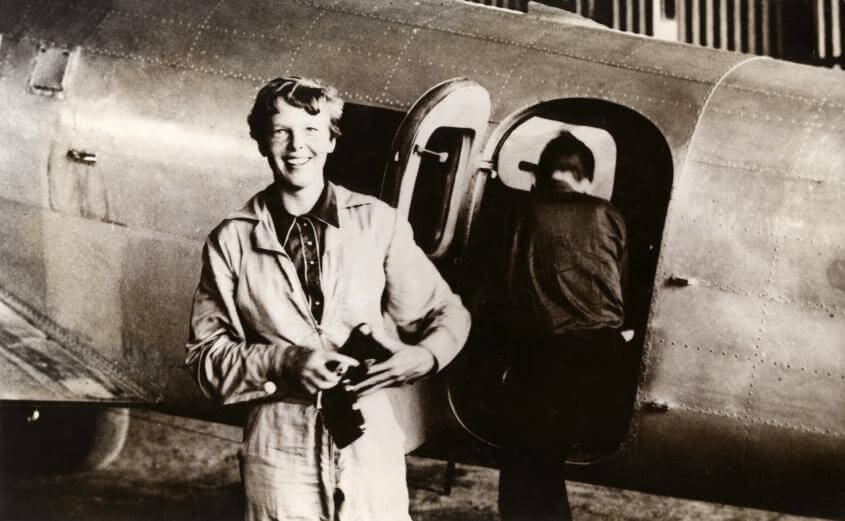
Rather than searching randomly, Myers approached the mystery from a pilot’s perspective. He imagined the conditions Earhart and her navigator, Fred Noonan, may have faced, low fuel, limited visibility, and urgency, then identified where he himself might attempt an emergency landing under similar circumstances.
A Shape In The Sand

While scanning the area, Myers noticed an elongated, sand-colored formation partially exposed along a reef. Its size immediately caught his attention, prompting him to take a closer look and compare it against known aircraft dimensions.
Measurements That Raise Questions

Using digital tools, he measured the object and found something striking, its length closely matched the 39-foot wingspan of the Lockheed Electra 10E. Nearby, a darker, sharply defined structure appeared even more compelling, resembling a man-made component rather than a natural formation.
Signs Of Possible Aircraft Debris

As he continued examining the imagery, Myers identified additional shapes that resembled aircraft parts, including what could be a partially exposed radial engine. The alignment of these elements with known specifications strengthened his belief that the site may contain wreckage.
The Role Of Timing And Nature

One explanation for why this discovery went unnoticed before lies in the shifting environment. According to Myers, natural forces may have temporarily revealed debris that had long been buried, only for it to be concealed again by tides and weather patterns shortly after.
Attempts To Get Attention

Determined to validate his findings, Myers reached out to aviation authorities, including the National Transportation Safety Board and the Australian Transport Safety Bureau. Despite submitting reports and contacting institutions such as Purdue University, his claims have yet to prompt a formal investigation.
A Mystery Still Waiting For Answers

The search for Earhart’s plane has seen many hopeful leads, some later disproven, like a recent deep-sea anomaly explored by Tony Romeo that turned out to be a natural rock formation. Myers remains cautious but confident, acknowledging that even if the wreckage is not Earhart’s, it could still solve a different, long-forgotten aviation mystery.