

Products are selected by our editors, we may earn commission from links on this page.

High in the mountains of northwest China, archaeologists have uncovered a vast network that had remained unnoticed for millennia. What began as a regional survey near the city of Yulin turned into the discovery of more than 500 stone fortresses, revealing an ancient landscape shaped by defensive engineering and social organization. The findings offer a new window into how early communities survived, thrived, and interacted across challenging terrain.
A cultural heritage team in Yulin spent six years examining the rugged terrain of northern Shaanxi Province. Their work combined field inspections, specimen collection, and aerial mapping to track the remains of prehistoric settlements. By following the region’s water system maps, researchers identified concentrations of stone structures hidden along river corridors.
The Scale of the Discovery

In total, 573 ancient stone fortresses and related settlements were documented. Some dated as far back as 2800 B.C.E., placing them in the late Yangshao period, while others belong to the Shang Dynasty (1600–1046 B.C.E.) and the Zhou era (1046–221 B.C.E.). The clustered distribution demonstrated that these sites formed an extensive and interconnected cultural landscape.
Each fortress consisted of stone-walled enclosures designed to defend against threats and shield inhabitants. Researchers noted clear distinctions between fortified settlements and nearby ordinary villages with no defensive walls. The contrast suggested a hierarchy of purpose, in which strongholds served as secure hubs for everyday communities.
The fortresses were positioned along rivers, echoing ancient habitation patterns where access to water shaped survival. Survey teams traced waterways through mountains to locate hidden fortifications and their associated settlements. The geographic logic illustrated how environmental resources influenced early settlement planning.
The sites varied widely in scale, form, and building technique. Some were small and rudimentary, while others showed complex spatial layouts and advanced masonry. Over time, construction shifted from simple arrangements to mature, sophisticated architectural models that mirrored the region’s evolving abilities.
Evidence of Social Hierarchy
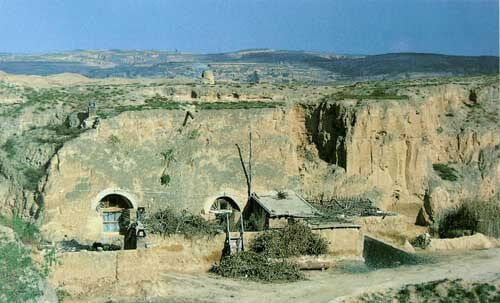
Patterns within the clusters pointed to clear social stratification. Fortified strongholds appeared to function as centers, with smaller non-walled settlements aligning around them. The distribution suggested that these places were not isolated villages but nodes within broader systems of governance and community.
Archaeologists believe the discovery refines the understanding of how northern Chinese societies developed. The fortresses demonstrate persistent defensive planning and cultural continuity from prehistoric times into dynastic periods. Their progression helps researchers trace changes in settlement organization, population movement, and regional interaction.
Yulin’s Long Legacy

The region around Yulin has long been a strategic frontier, a role also visible in its later history. From Ming dynasty fortifications to the nearby Zhenbei Observatory of 1607, the area reflects centuries of defensive architecture. The newly documented stone sites add a prehistoric chapter to a landscape already marked by military heritage.
Discovering more than 500 hidden fortresses reshapes how archaeologists view ancient settlement in China. The findings illuminate the continuity of defense, community, and adaptation across thousands of years.