


Products are selected by our editors, we may earn commission from links on this page.

China is making a move that could ripple through the global auto industry. The country announced it will ban hidden car door handles, a sleek design feature made famous by Tesla and rapidly copied by other electric vehicle makers. The decision follows mounting safety concerns that these flush, button-activated handles can fail when drivers and passengers need them most. China will become the first country in the world to outlaw the feature entirely, forcing automakers to rethink a design trend that was once sold as futuristic and premium. For years, critics warned that style was winning over safety. Now, regulators are stepping in and saying enough.
How Hidden Door Handles Took Over Modern Cars

Hidden door handles first gained popularity as electric vehicles aimed to look clean, modern, and aerodynamic. Instead of a traditional pull handle, these designs sit flush with the door and require a press or electronic trigger to pop out. Tesla made the look iconic, but it did not stop there. Chinese automakers quickly adopted similar designs, including models from Xiaomi and Aion. What began as a visual upgrade soon became a symbol of cutting-edge engineering. But as the feature spread, so did reports of confusion, malfunction, and danger.
The Safety Problem Regulators Could No Longer Ignore

The core issue is simple. In emergencies, hidden handles can be hard to find, hard to operate, or impossible to use. China’s Ministry of Industry and Information Technology cited two major concerns. First, the inconvenience of operating exterior handles, especially for first responders unfamiliar with the design. Second, the inability to open doors after accidents, particularly when power systems fail. Regulators concluded that any feature that delays escape or rescue is unacceptable, no matter how modern it looks.
What the New Rules Actually Require

Under the new policy, all cars sold in China must include mechanical door releases for both the interior and exterior. Exterior handles must provide enough space for a hand to operate the release from any angle. Interior handles must be clearly visible and easily accessible from the occupant’s seat. The goal is straightforward. Anyone, including a rescuer, should be able to open a car door instinctively, without searching for buttons or relying on electronics. The rules will take effect on January 1, 2027, giving automakers time to redesign.
Tesla’s Design Comes Under Renewed Scrutiny

Tesla is the brand most closely associated with hidden door handles, and the ban arrives at an awkward time. The company is already facing slowing global sales and intense competition in China, its second-largest market. Tesla has previously acknowledged problems with door access in emergencies and said it was exploring redesigns after multiple accidents. While the new Chinese rules do not target any specific company, the symbolism is hard to miss. A feature once marketed as futuristic is now officially labeled a safety risk.
Trapped Inside Cars, Real Stories Changed the Debate

Concerns about hidden handles are not theoretical. Investigations in the United States documented dozens of incidents where people were trapped inside Teslas due to door handle failures. In some cases, occupants were forced to break windows to escape. In others, rescuers reportedly struggled to access vehicles after crashes. Bloomberg identified at least 140 incidents involving door access problems, some resulting in serious injuries. These stories fueled public pressure and gave regulators concrete examples of why the design could be dangerous.
China’s Own Wake-Up Call
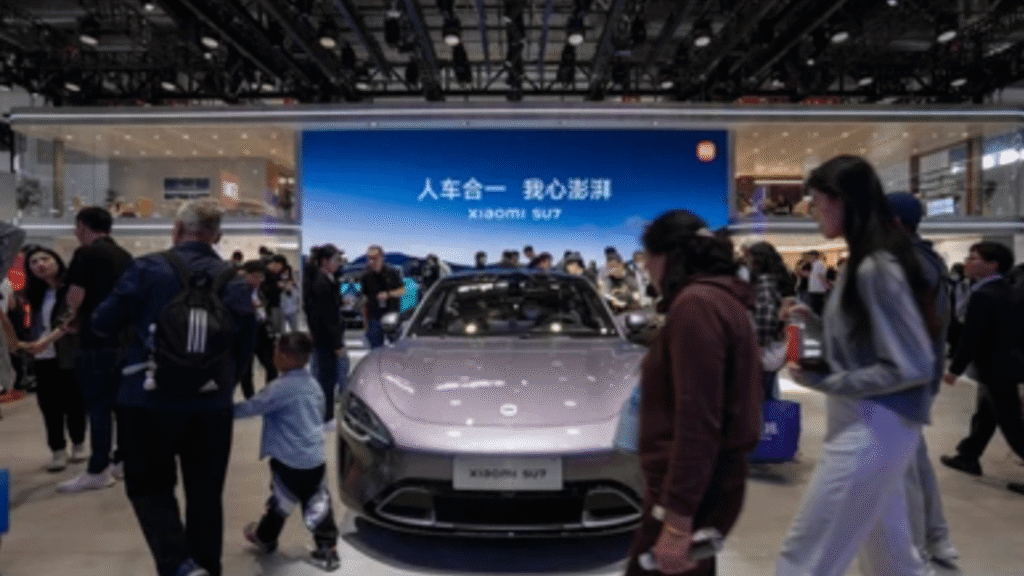
China has faced similar incidents closer to home. Last year, Xiaomi’s stock fell sharply after a fatal crash involving one of its sedans. Local media reported problems unlocking the vehicle’s doors following the collision. While investigations into that crash covered multiple factors, the door access issue intensified scrutiny of modern vehicle design. In response, Chinese regulators tightened oversight of advanced driving features and began reevaluating safety standards across the EV sector. The door handle ban is part of that broader shift.
Style vs. Safety in the EV Arms Race

Electric vehicle makers have been racing to differentiate themselves through design. Flush handles reduce drag and look futuristic, but critics argue they prioritize aesthetics over instinctive use. Traditional handles exist for a reason. They are intuitive, mechanical, and familiar across cultures. China’s decision signals a broader regulatory philosophy. Innovation is welcome, but not if it complicates basic safety. That stance could influence how other countries approach vehicle design going forward.
Could This Spread Beyond China

China is often a regulatory trendsetter, especially in the automotive world. As the largest car market on Earth, its rules shape global manufacturing decisions. Automakers may choose to standardize safer, mechanical handles worldwide rather than produce separate designs for different markets. Safety agencies elsewhere are already watching closely. If China’s ban proves effective, other countries could follow, turning a once-premium design into a cautionary tale.
The End of a Design Era

Hidden door handles were meant to signal the future of driving. Instead, they may come to represent a moment when innovation moved faster than common sense. China’s ban does not just change a design rule. It redraws the line between novelty and necessity. When seconds matter in an emergency, regulators are betting that a simple handle beats a clever one every time. The rest of the world may soon agree.