

Products are selected by our editors, we may earn commission from links on this page.
Cuba has suffered an unprecedented nationwide blackout after its entire electrical grid experienced a total collapse on Monday. The outage briefly left roughly 10 million residents in total darkness, including the entire Havana metropolitan area. This systemic failure follows years of increasing instability caused by aging infrastructure and a crippled economy.
The collapse occurred at 1:54 p.m. local time, triggering immediate restoration protocols by the Ministry of Energy and Mines. While power is reportedly returning slowly to some specific areas, the island remains in a state of high tension. The government has urged citizens to unplug all nonessential equipment until stability can be restored.
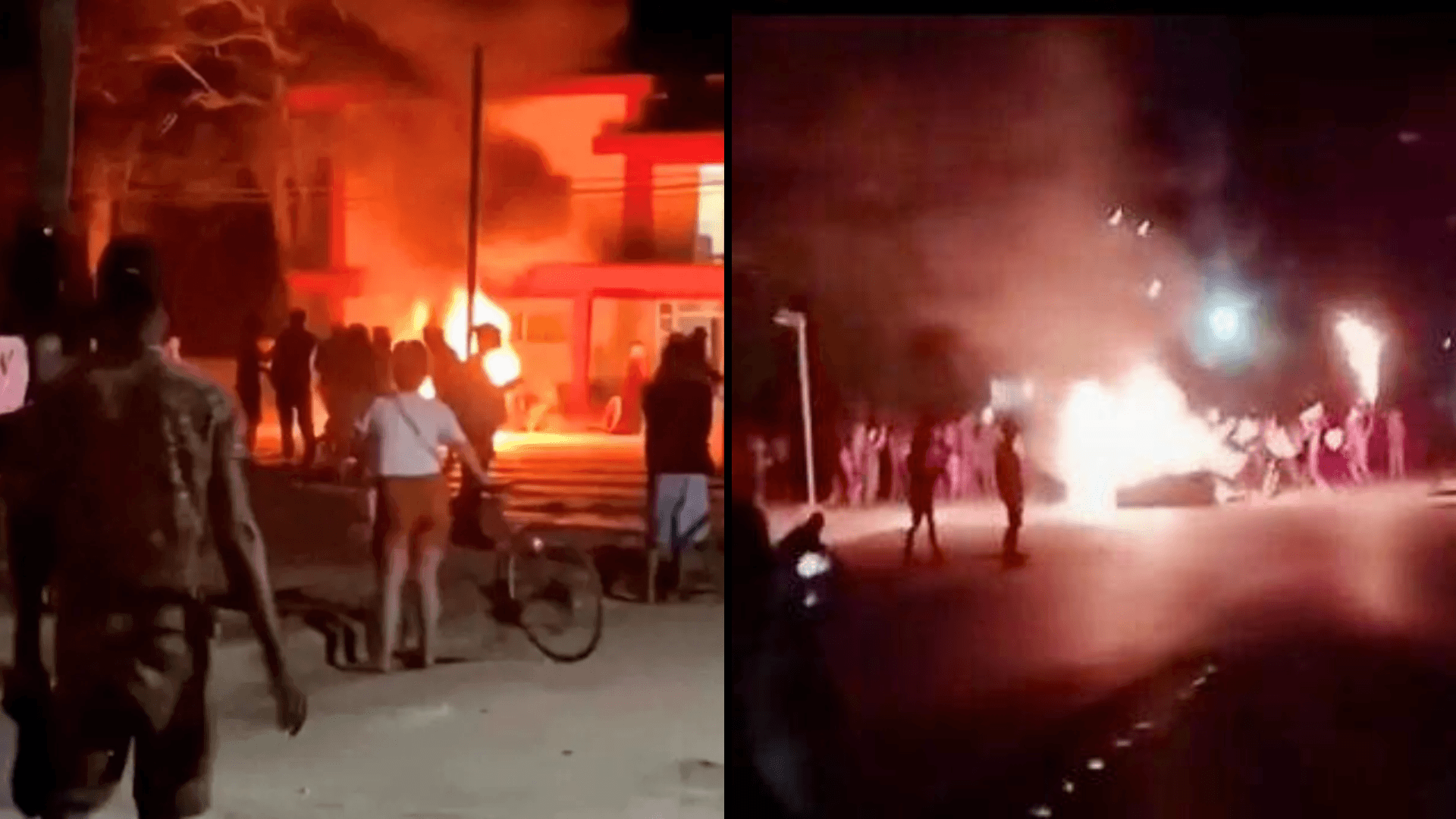
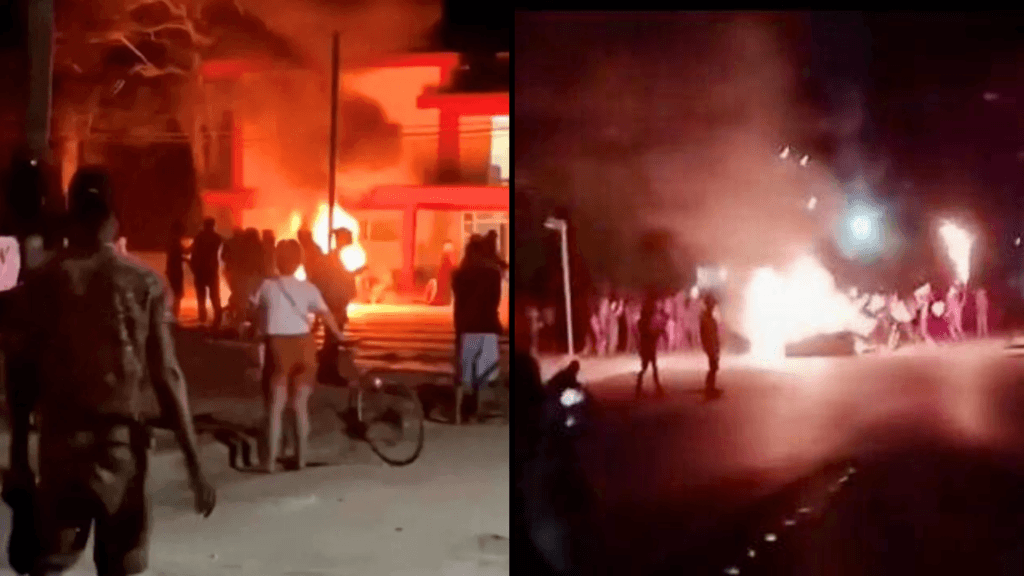
This energy emergency comes just two days after frustrated protesters attacked a local Communist Party headquarters. Video footage captured the crowd ransacking the building and attempting to set it on fire. The rare display of public dissent highlights a breaking point for a population fed up with rolling blackouts that disrupt water, food refrigeration, and communication.
“No Fuel” and the Fireboarding of Morón
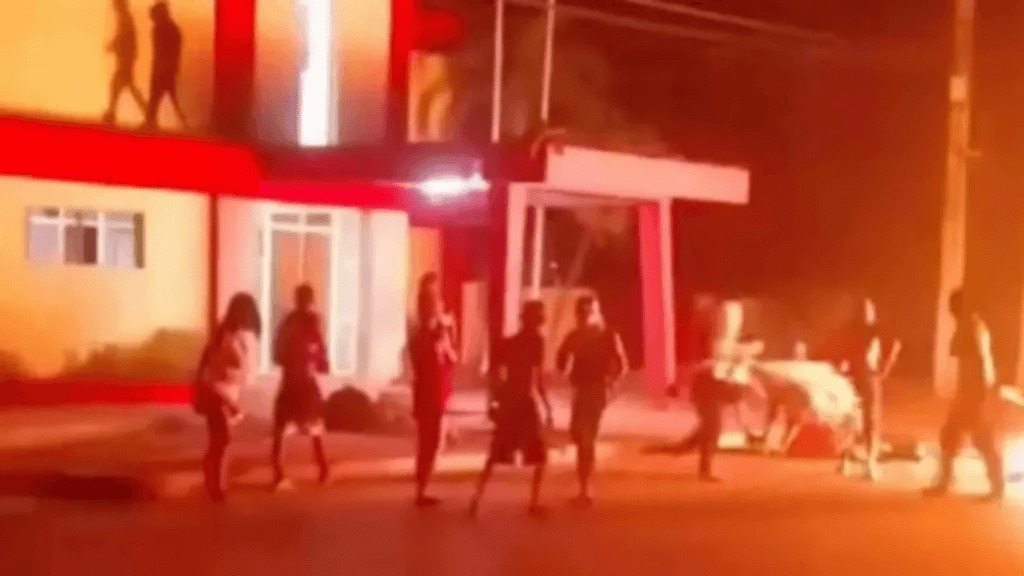
The violence in the city of Morón began as a peaceful rally late Friday before escalating into a riot where protesters hurled rocks and shouted “liberty”. Large fires were ignited at the scene as demonstrators targeted the symbols of government authority. For many, the lack of electricity has become a survival issue rather than a mere inconvenience.
Cuban President Miguel Díaz-Canel revealed a staggering statistic behind the crisis: no fuel has entered the country for the past three months. This “zero fuel” reality has forced the island to rely heavily on renewable energy sources just to keep basic services running. The government blames the crisis on long-standing oil embargos and disrupted shipments from key partners like Venezuela.
Officials have framed the current situation as an economic blockade that specifically targets Cuban families. Deputy Minister for Foreign Affairs Carlos F. de Cossio suggested that U.S. officials must be “feeling very happy” about the harm caused by the total blackout. The lack of fossil fuels has turned energy generation into a matter of desperate national security.
The Desperate Pivot to Solar Sovereignty
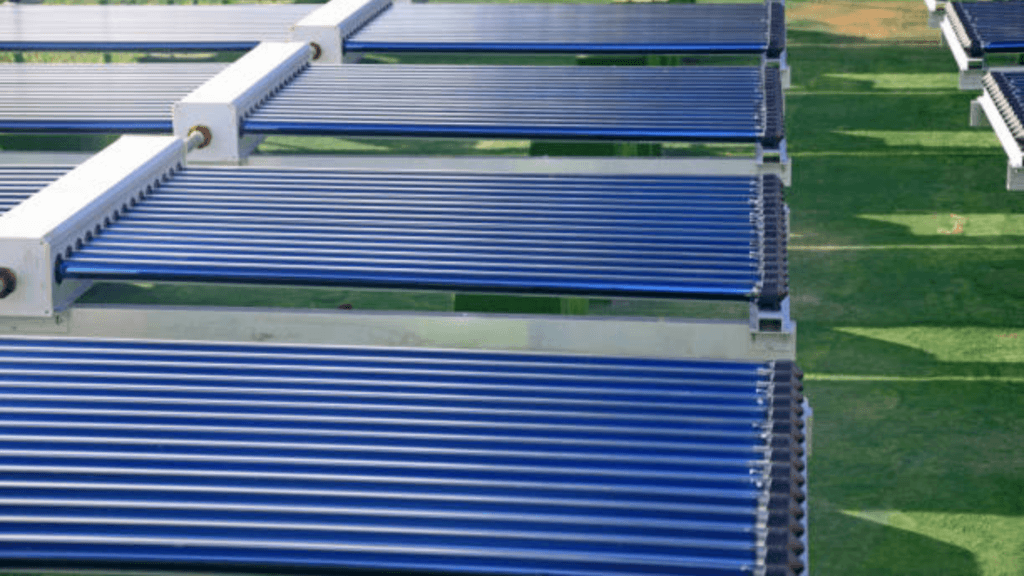
With the traditional power grid in shambles, Cuba is attempting a radical pivot toward “electric sovereignty” through solar power. Just hours before the total collapse, officials announced updates to a major solar panel project in Villa Clara. They described the shift to renewables as a necessity for survival in a context of severe energy constraints.
The Villa Clara Electric Company argued that betting on renewables is no longer just an environmental choice. Because Washington maintains restrictions on access to technology and funding, solar energy is seen as the only path to bypass the fuel blockade. However, these projects are currently insufficient to power the entire island or prevent massive grid failures.
The instability of the National Electrical System is a result of decades of wear and tear without the parts or funds for proper maintenance. While solar panels offer a glimmer of hope, the immediate reality for 10 million people remains one of dark streets and silent appliances. The transition to green energy is happening under the most pressurized conditions imaginable.
Life in the Shadows of a Total Blackout
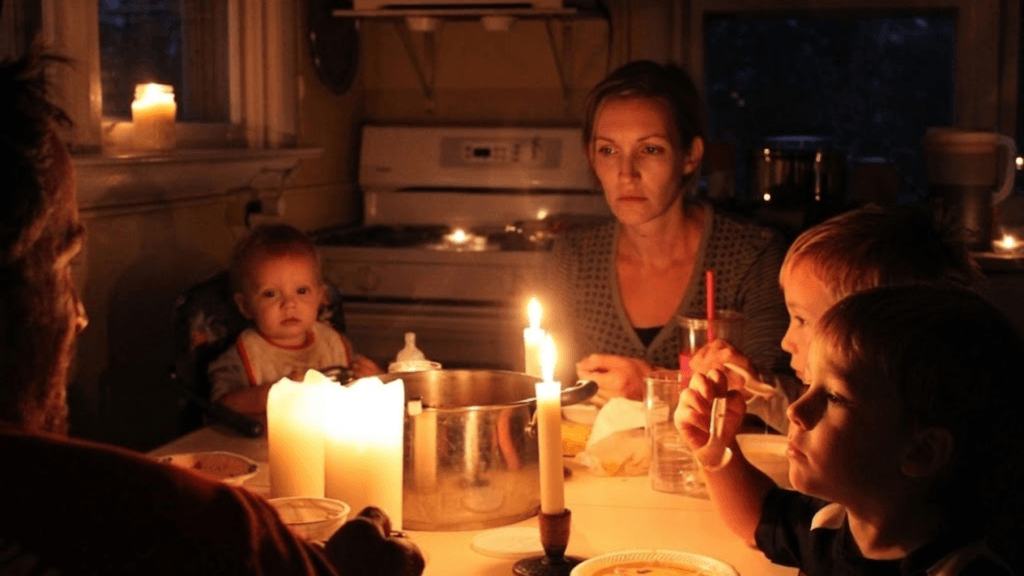
For ordinary Cubans, the blackout is more than a news headline; it is a fundamental disruption of daily life. Mass blackouts have been recorded throughout early 2026, with elderly neighbors often huddling together in the dark to pass the time. In some municipalities, families are forced to navigate dark streets by signaling cars with flashlights or hand gestures.
The outage has created a ripple effect, stopping water pumps and leaving food to rot in non-functional refrigerators. These conditions are exactly what fueled the firebombing of the party headquarters in Morón. As the government scrambles to restore the grid, the underlying causes—lack of fuel and crumbling plants—remain largely unaddressed.
The future of the island’s energy remains uncertain as political tensions and fuel shortages persist. Whether the move toward solar power can happen fast enough to prevent further civil unrest is the question now facing the administration. For now, the people of Cuba wait in the dark, hoping for a flicker of stability in a grid that has reached its limit.