

Products are selected by our editors, we may earn commission from links on this page.

In Patagonia, Argentina, scientists uncovered a dinosaur so enormous that even its fossils caused trouble. When researchers transported the ancient bones, they were so heavy that they cracked the road beneath the truck carrying them. This surprising event led to the discovery of Chucarosaurus diripienda, a giant long-necked dinosaur from the Cretaceous period. The find amazed paleontologists and raised new questions about how such massive creatures once lived.
Unearthing a Giant in Patagonia

The story began in 2018, when paleontologists explored the rugged hills of Río Negro province. There, buried across the steppe, they found enormous bones belonging to a titanosaur. These dinosaurs were among the largest plant-eaters to ever walk Earth. The bones of this one stretched across the landscape, hinting at an animal nearly 100 feet long. As researchers examined the pieces, they realized transporting the fossils to Buenos Aires proved more dramatic than anyone expected, as each piece required multiple people to move even inches.
Bones So Big They Broke the Road

The research team carefully wrapped the massive bones in protective plaster casts and loaded them onto a transport vehicle. But the sheer weight destabilized the truck, causing an accident that sent fossils flying through the air. Remarkably, no one was injured, and the incredibly hard bones survived intact. However, the road wasn’t so fortunate. The fossils cracked the asphalt beneath them, proving just how massive these ancient remains truly were.
A Name Born from Chaos

Because of the dramatic accident, the dinosaur received a name that reflected both its power and its bumpy journey. “Chucaro” comes from a Quechua word meaning “hard and indomitable,” while “diripienda” means “scrambled,” describing how the fossils scattered during transport. Together, the name honors the dinosaur’s strength and the unexpected challenges researchers faced. With a fitting identity in place, scientists focused on uncovering what made this titanosaur different from other giants.
Not the Largest, but Still Enormous

While Chucarosaurus wasn’t as massive as record-holders like Argentinosaurus, it was still gigantic. Scientists estimate it weighed between 30 and 40 tons—about as heavy as several large trucks combined. Standing nearly 100 feet long, it would have towered above almost everything around it. Its huge size helps researchers understand the different shapes and forms titanosaurs developed over time. To learn even more, they examined the creature’s remarkable bones.
Bones That Tell a Story
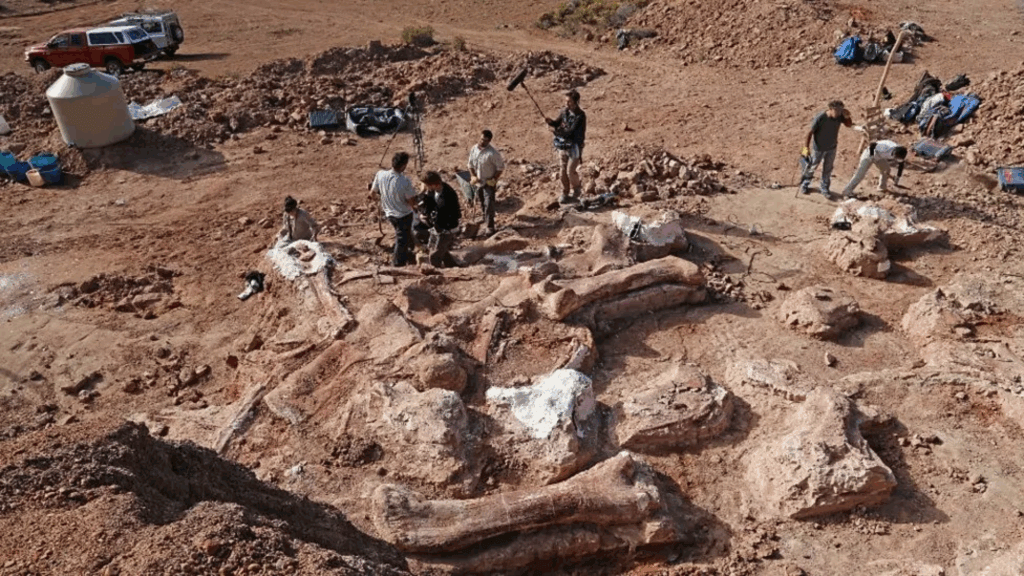
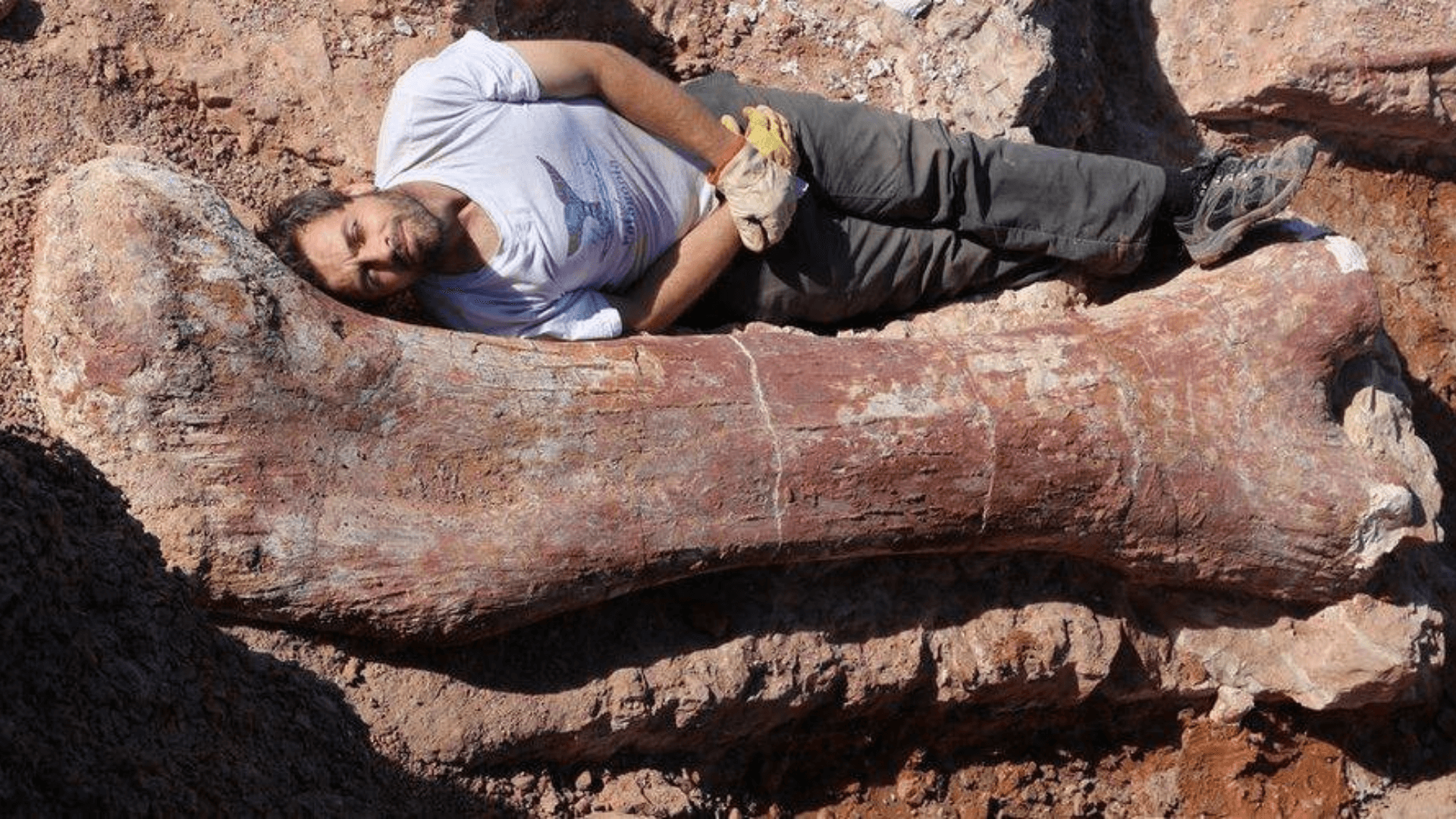
The research team recovered impressive fossils from the dinosaur’s arms, hips, and legs. One of the most striking pieces was a femur measuring over six feet long. These bones revealed important clues about how Chucarosaurus carried its enormous weight. Scientists noticed something unusual: its limbs were more slender than expected for such a large creature. This raised a new question—was this giant built not just for strength, but also for surprising efficiency?
A Surprisingly Agile Titanosaur
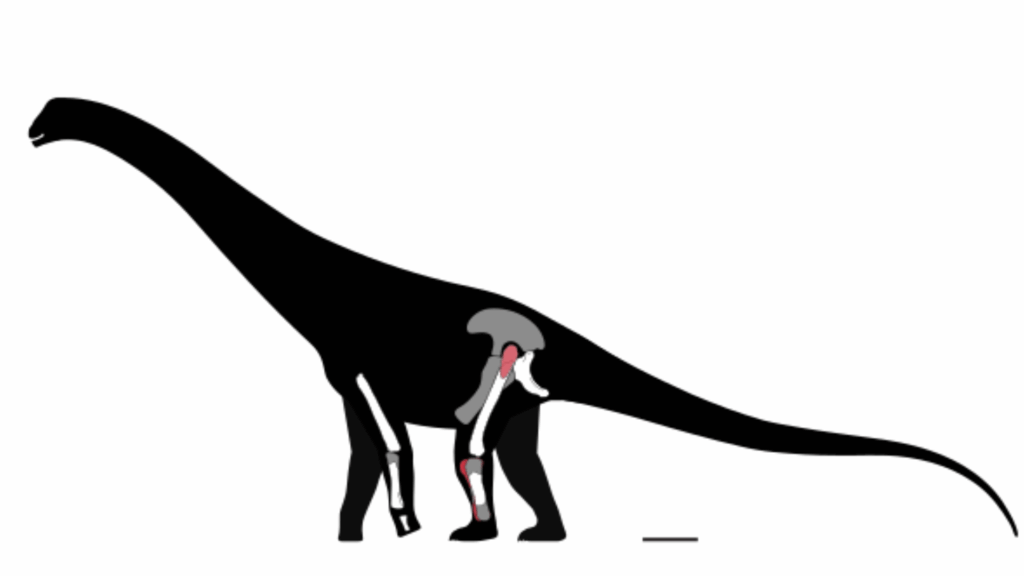
The structure of Chucarosaurus’s legs suggests it wasn’t just a slow, lumbering giant. Its relatively light limbs may have helped it move more easily across long distances while searching for food. Its long neck allowed it to reach tall trees, while its strong tail might have protected it from predators. These features show that titanosaurs weren’t all the same—some, like Chucarosaurus, may have been faster and more adaptable than once believed.
What This Discovery Adds to Science

Finding Chucarosaurus gives scientists new clues about how different titanosaurs evolved. The bones show that these dinosaurs didn’t all move the same way or share identical body shapes. Instead, they developed features that helped them survive in their environments. The unique limb proportions of Chucarosaurus add an important piece to the puzzle, helping paleontologists better understand how these enormous creatures spread across ancient landscapes. And still, there was more to learn.
A Rare Glimpse Into the Past

Every fossil from Chucarosaurus helps scientists build a clearer picture of life during the Cretaceous period. Because its bones were unusually well-preserved, researchers can study tiny details about its movement and growth. These clues help fill gaps in our understanding of giant plant-eaters that once dominated South America. With each new discovery, the story of Earth’s ancient past becomes richer and more complete. All that remained was understanding why this find mattered today.
Giants Still Shaking Science

Over 90 million years after it roamed Earth, Chucarosaurus diripienda continues making an impact, literally and scientifically. Now housed at Buenos Aires’s Museo Argentino de Ciencias Naturales, this titanosaur challenges the idea that bigger always meant bulkier. It proves that power and grace could coexist even at 100 feet long. As researchers continue studying these remarkable bones, one truth emerges: this isn’t just another dinosaur discovery. It’s evidence that nature’s giants were far more diverse and sophisticated than we ever imagined.