


Products are selected by our editors, we may earn commission from links on this page.

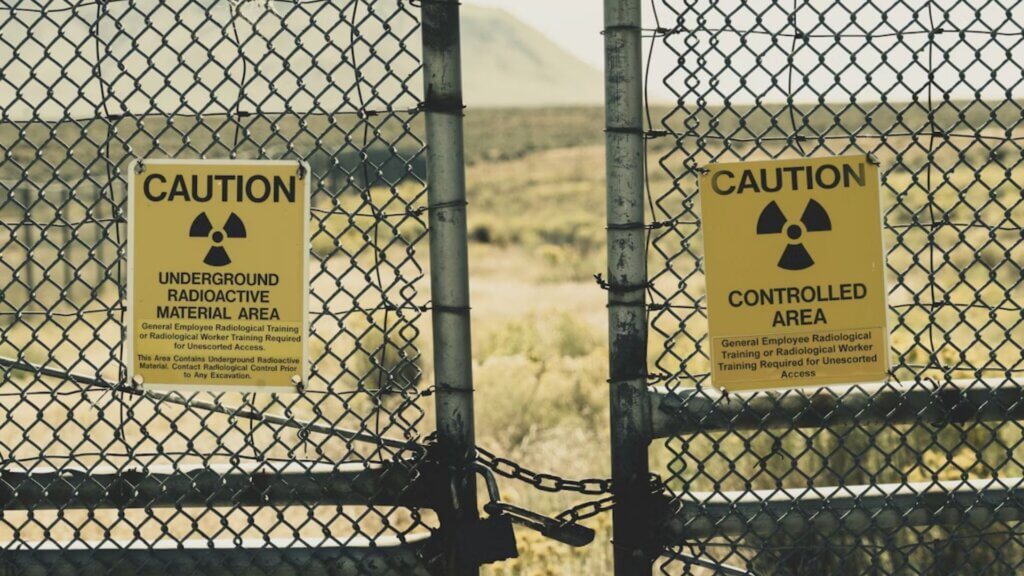
Nuclear waste has long carried one stubborn, defining problem. It stays dangerous for an almost incomprehensible stretch of time. Unprocessed spent nuclear fuel takes roughly 100,000 years to cool to the radiotoxicity level of natural uranium ore, according to the U.S. Department of Energy’s Advanced Research Projects Agency-Energy. That number has shaped energy policy, public fear, and the nuclear debate for decades.
Now, DOE’s ARPA-E believes that the timeline can be cut to around 300 years by recycling the waste rather than simply burying it. To pursue that goal, ARPA-E has awarded $8.17 million in grants through its Nuclear Energy Waste Transmutation Optimized Now, or NEWTON, program, tapping Jefferson Lab to lead both research projects.
The program aims to process all of the spent nuclear fuel currently stockpiled across U.S. commercial plants within 30 years. Jefferson Lab, based in Newport News, Virginia, was chosen for its decades of expertise in particle accelerator technology. Its Continuous Electron Beam Accelerator Facility has supported more than 1,700 nuclear physicists worldwide since its first experiment in 1995.
How a Beam of Protons and Liquid Mercury Could Neutralize Nuclear Waste

The technology at the center of both grants is called an accelerator-driven system, or ADS. It works by firing a beam of high-energy protons at a target material, typically liquid mercury. That collision causes the mercury to “spall,” releasing a burst of neutrons that are then directed at containers of spent nuclear fuel, breaking down long-lived radioactive isotopes into shorter-lived materials that are far easier to handle.
Rongli Geng, who leads Jefferson Lab’s Accelerator Operations, Research and Development division and serves as principal investigator on both grants, says the lab’s decades of accelerator experience put it in a unique position to make this work. “Instead of having a lifetime of 100,000 years in storage, you can shorten the storage years down to 300,” Geng said.
The process does more than reduce radioactivity. ADS technology also generates additional electricity during transmutation, meaning spent nuclear fuel is both neutralized and used to generate power. That dual output, power and waste reduction, is central to NEWTON’s broader goal of making transmutation a practical reality, not just a scientific one.
Supercharging the Cavities That Drive the Whole System
The first $4.2 million grant targets the accelerator cavities themselves. Today’s most advanced research machines use cavities made of pure niobium, a silver-colored metal that becomes superconducting only when chilled to near absolute zero. That superconductivity is what makes them efficient, but it also requires expensive cryogenic refrigeration systems that would be impractical at the industrial scale ADS demands.
Jefferson Lab and its partners have found that coating the inner surfaces of niobium cavities with tin dramatically improves performance, allowing operation at higher temperatures with standard commercial cooling units. The grant will support testing of niobium-tin cavities specifically designed to accelerate protons for the neutron-release process, built on the proven Spallation Neutron Source cavity design from Oak Ridge National Laboratory.
Beyond improving existing designs, the team also plans to build and test an entirely new class of components called spoke cavities. “Very likely, the whole machine will be based on this SRF technology,” Geng said, “so this is the kind of innovation that is going to be an additive value.” Collaborators include RadiaBeam Technology and Oak Ridge National Lab.
The Popcorn Component That Has to Hit 10 Megawatts to Make This Work
The second grant, worth just under $4 million, tackles the challenge of powering the accelerator cavities. The solution involves magnetrons, the same basic technology that turns corn kernels into popcorn. In an ADS, magnetrons would supply the energy that SRF cavities use to drive particle beams. Still, the frequency of that energy must precisely match the cavity’s operating frequency of 805 Megahertz.
“We need a lot of power, 10 Megawatts or more. That’s why efficiency becomes very critical,” Geng said. Jefferson Lab will work with Stellant Systems, a major magnetron manufacturer, alongside General Atomics Energy Group and Oak Ridge National Laboratory, to build and test advanced magnetrons that can be linked together to deliver the high power output the system requires.
Both projects were deliberately structured to include commercial partners from the start, ensuring that the specialized knowledge developed in the lab is grounded in real-world manufacturing. “The challenge is to really translate the accelerator science from where we are right now in terms of technology readiness to where the technology needs to be for this application,” Geng said. If it works, the math changes entirely.