

Products are selected by our editors, we may earn commission from links on this page.
The quiet anxiety of watching a local riverbank recede under the weight of industrial expansion is a vulnerability that millions of suburban residents could feel and realize as technology firms rapidly consume local natural resources. This immediate consequence became real for community advocates when executive leaders attempted to downplay the massive ecological requirements of the nation’s newest artificial intelligence networks. Microsoft Chief Executive Officer Satya Nadella directly challenged public environmental fears by asserting that his enterprise has engineered a way to expand infrastructure without draining regional municipal reserves.
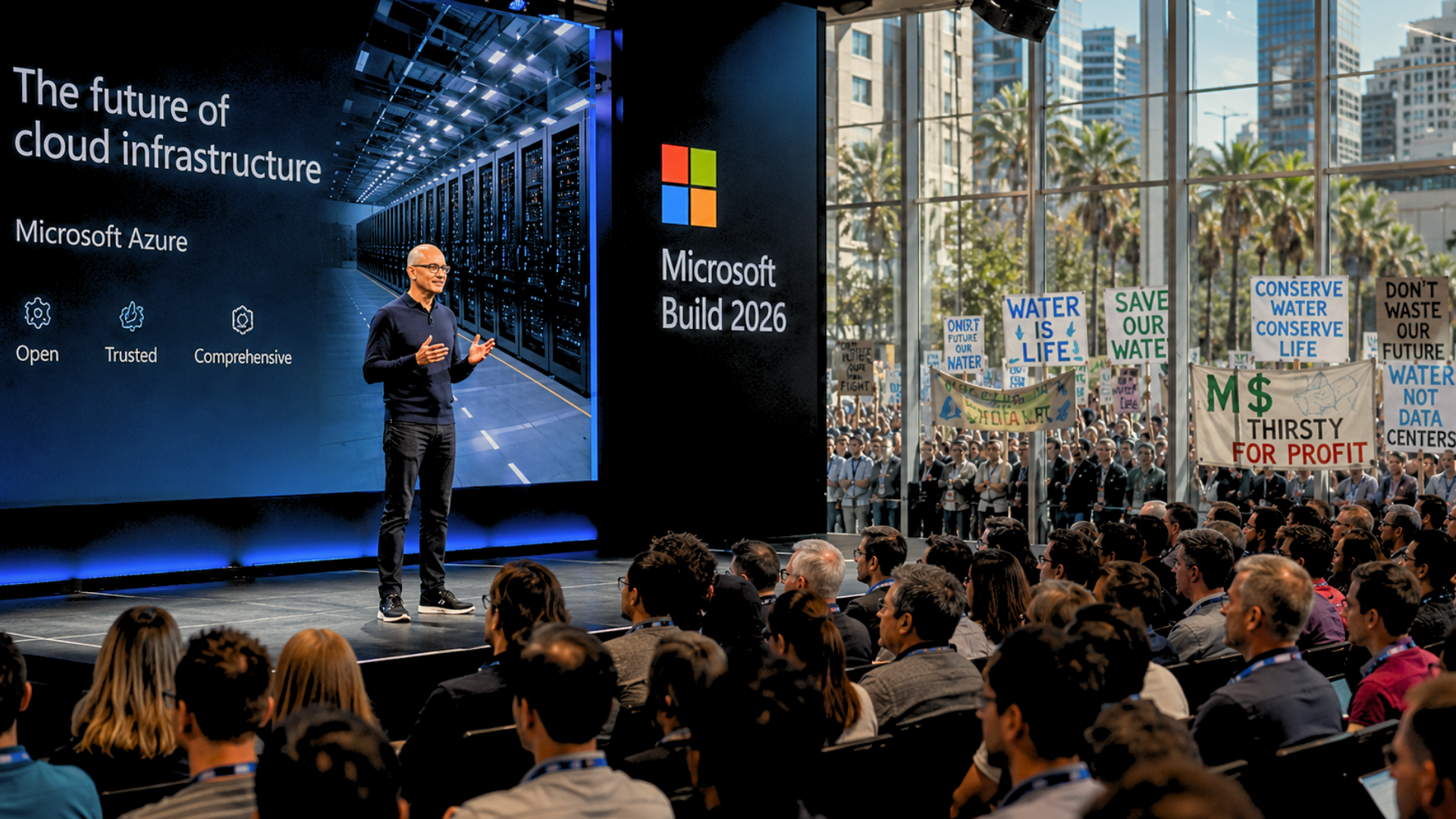
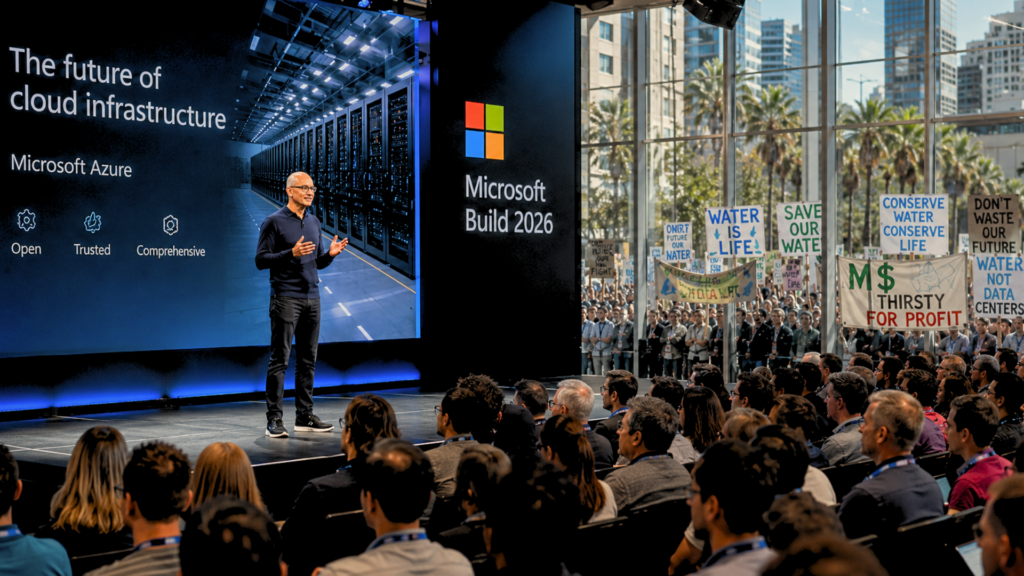
The underlying corporate conflict erupted during the high-profile Microsoft Build 2026 developer conference held in San Francisco. According to public transcripts released by technology journals and independent environmental logs compiled by United Nations monitors, Nadella unveiled a community first infrastructure blueprint designed to neutralize growing civilian protests over resource depletion. This executive public relations offensive was launched as citizen groups gathered outside the convention center, creating a sharp tension between corporate expansion goals and public utility preservation.
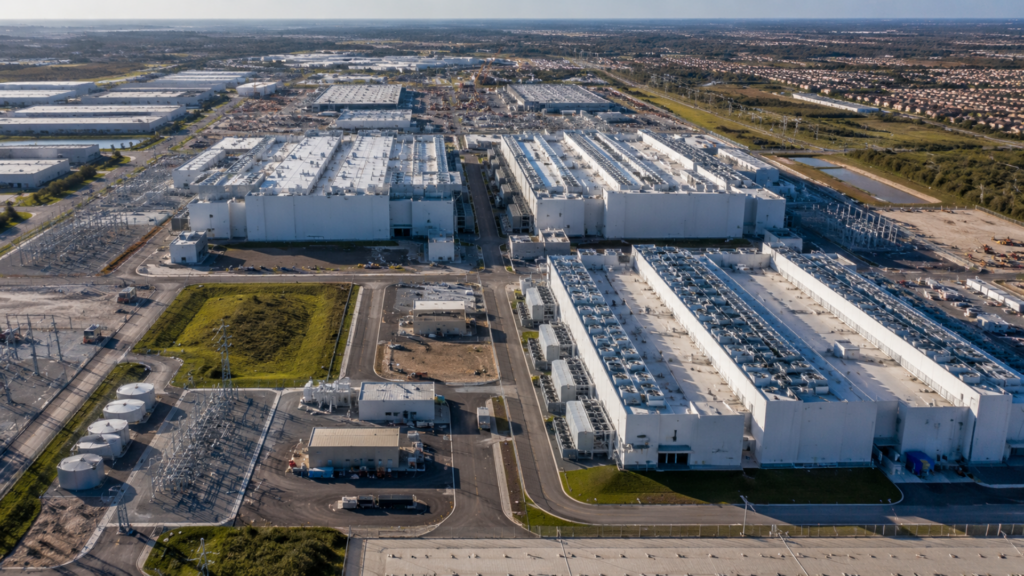
The immediate systemic scale of this corporate infrastructure deployment involves a sprawling global network containing more than 500 active Azure server facilities. That vast computational footprint represents a physical real estate empire larger than the total acreage of every public park in Chicago combined, with facilities spanning 80 independent geographic regions. To keep these dense processing clusters from experiencing catastrophic thermal failure, traditional data factories have historically sucked up tens of millions of gallons of fresh water annually from local municipal reservoirs.
When Closed Loop Hardware Blueprints Fail to Address Legacy Infrastructure Demands
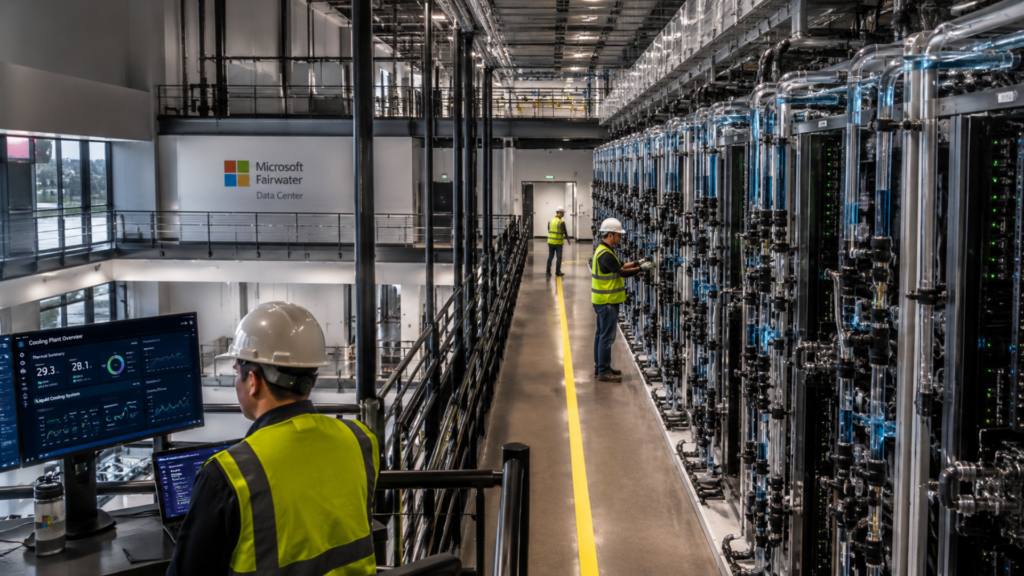
Corporate engineering claims regarding near zero environmental consumption frequently overlook the massive operational realities of older, water intensive data facilities. Under the newly unveiled Fairwater design framework, technicians fill an internal liquid cooling system just once during initial construction to continuously recycle the exact same fluid supply. Industry analysis compiled by Tom’s Hardware demonstrates that while a standard neighborhood restaurant consumes up to one million gallons of water annually, a traditional 100 megawatt hyperscale facility requires an amount equivalent to the yearly water usage of over 100,000 ordinary citizens.
Microsoft executives have publicly doubled down on their environmental efficiency pledges, issuing formal declarations that the new recirculating liquid loop handles over 90 percent of the server heat. Company spokespersons confirmed that this vertical, two story architectural model will serve as the standard blueprint for all upcoming domestic construction projects. However, independent utility engineers counter that this restaurant level efficiency rating remains entirely inapplicable to the hundreds of older, evaporative cooling facilities currently active around the world.
The structural fallout of this selective technological rollout leaves local water infrastructure heavily strained across regions where older server designs remain online. Because the enterprise has not announced a comprehensive retrofit initiative for its existing 500 campuses, millions of gallons of water continue to evaporate into the atmosphere daily. For a homeowner living near an older data center, this structural delay means a higher risk of lowered municipal water pressure and steady increases on their monthly residential utility bills.
How Rapid Suburban Land Acquisitions Threaten Regional Public Utility Reserves
The secondary complications of the ongoing artificial intelligence race extend deep into rural American communities, transforming quiet agricultural towns into high density industrial processing zones. Local zoning boards have encountered immense logistical hurdles as technology conglomerates buy up hundreds of contiguous acres of land for multi billion dollar data campuses. This rapid development creates significant friction with regional environmental laws, as the massive cooling fans and massive electrical substations often violate local noise ordinances and overload small town power grids.
Independent civic watchdogs in Mount Pleasant, Wisconsin, have aggressively scrutinized the local impacts of the 315 acre Fairwater campus, which represents a massive seven billion dollar corporate investment. While municipal leaders originally welcomed the massive influx of corporate tax revenues, neighboring residents have voiced severe disapproval regarding the long term stability of their public water tables.
This localized anxiety has triggered secondary protests in other states, forcing officials in Illinois and California to temporarily halt similar data facility expansions until independent environmental impact audits can be completed.” The cooling loop is filled once, and the data center can operate effectively with zero water consumption. The daily water usage over the course of an entire year is roughly equivalent to what a single restaurant would use.”
Why Abstract Resource Pledges Leave Suburban Civil Infrastructure Permanently Vulnerable
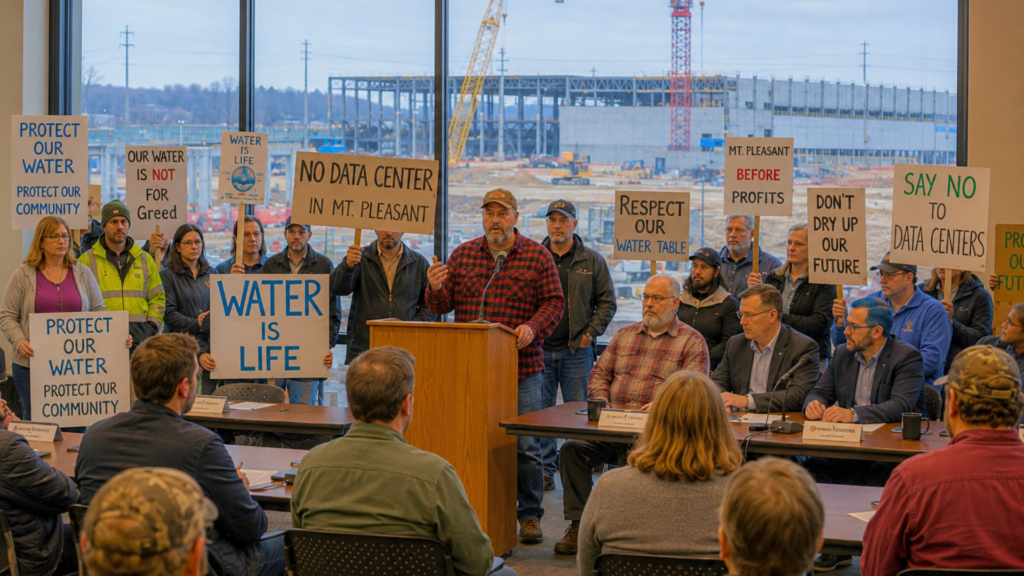
The long term structural fallout of the corporate rush to construct gigawatt scale artificial intelligence clusters threatens to permanently alter the baseline of American public utility regulation. Federal regulatory watchdogs are increasingly concerned that the immense power and water requirements of modern graphics processing units will outpace the physical capacity of regional infrastructure. If massive technology enterprises continue to build these massive data complexes without strict government oversight, the cumulative strain will permanently alter public utility access for neighboring communities.
This current infrastructure crisis mirrors previous historical cycles where private industrial operations externalized their immense environmental maintenance costs onto the backs of the American public. From the unchecked expansion of commercial cryptocurrency mines to the unregulated growth of manufacturing factories, local municipalities have historically borne the long term financial burdens of private operational waste. International climate reports confirm that the tech industry’s total resource consumption is accelerating at an unprecedented pace, leaving local governments to manage the immediate consequences.
The silent friction between corporate public relations campaigns and defensive community organizing continues to reshape the American landscape without any clear federal resolution. Families living across from these massive computing hubs face a future where a corporate executive’s abstract mathematical formula dictates the daily safety of their regional water supply. No federal oversight agency has established mandatory, industry wide efficiency standards to halt this aggressive infrastructure expansion, forcing ordinary citizens to carry the permanent burden of an unverified environmental gamble.