


Products are selected by our editors, we may earn commission from links on this page.

Every year, the Social Security Board of Trustees publishes a report on the program’s financial health. The 2026 edition, released on June 9, delivered an uncomfortable update: Social Security’s retirement fund is now projected to be depleted in the fourth quarter of 2032 — one year earlier than last year’s projection. That shift matters enormously. It means the window for Congress to act without causing major pain to tens of millions of Americans just got smaller. What happens if nothing is done?
This article was created with the assistance of AI and reviewed by our editorial team for accuracy and clarity.
The 22% Cut Is Automatic. No Vote Required

Here’s the part many people don’t realize: Congress wouldn’t need to pass a law to cut your benefits. The reduction would happen by default. When the Old-Age and Survivors Insurance trust fund depletes its reserves, incoming payroll taxes will cover only 78% of scheduled benefits — translating to an automatic 22% reduction in monthly checks for all retirees. That’s not a proposal or a worst-case scenario. It’s the built-in legal consequence of insolvency, and it applies to everyone currently receiving benefits.
For a Typical Retiree, That’s $440 Less Every Single Month

Abstract percentages become real fast when you do the math. For an average retiree receiving roughly $2,000 per month, a 22% reduction would mean approximately $440 less each month — a loss that compounds over years of retirement. The impact scales up for couples. A typical couple retiring in 2033 would face an $18,400 annual reduction to their combined benefits, according to earlier analysis by the Committee for a Responsible Federal Budget. For retirees who depend heavily on Social Security, those numbers could determine whether basic bills get paid.
Three Forces Are Draining the Trust Fund Faster Than Expected

The 2026 report identified three major reasons the timeline accelerated. The report lowered the country’s projected fertility rate to 1.75 births per woman, down from 1.9 in last year’s forecast, signaling fewer workers in coming decades to support the program. Declining immigration is also expected to weaken Social Security’s finances, because fewer workers will be paying into the program. The third factor was a policy decision — a new federal tax law that reduced how much revenue flows into the trust fund each year.
A 2025 Tax Law Quietly Accelerated the Crisis by a Full Year

The earlier insolvency stems in part from a new federal tax law passed last summer that gave senior citizens an additional deduction, reducing taxes on Social Security benefits for many recipients and lowering the fund’s expected collections. The expanded senior deduction alone will reduce Social Security revenues by $169 billion, according to analysis cited by the Peter G. Peterson Foundation, accelerating the insolvency date from early 2033 to late 2032. A tax cut intended to benefit seniors today may end up reducing benefits for all seniors by 2032.
The Worker-to-Retiree Ratio Has Been Shrinking for Decades

Social Security was designed around a specific assumption: a large working-age population supporting a smaller retiree population. That math no longer holds. In 1960, there were five workers paying Social Security taxes per beneficiary. That ratio has dropped to 2.9-to-1 in 2026 and is projected to decline further to just 2.2-to-1 by the 2070s. Compounding the shortfall is longevity — the life expectancy of a 65-year-old has increased by over 50% since 1940, and the Social Security Administration projects that trend will continue. The program is being stretched by forces on both ends.
High Earners Have Been Quietly Escaping the Payroll Tax

There’s a lesser-known structural flaw in how Social Security is funded. Social Security payroll taxes are capped at $184,500 in wages for 2026 — meaning any earnings above that threshold are exempt from the 6.2% payroll tax. Million-dollar annual wage and salary earners stopped paying into Social Security as of March 9. When Congress last reformed Social Security in 1983, payroll taxes applied to 90% of all covered wages. Today, that figure is only 83%, because higher-income workers’ wages have grown much faster than the taxable maximum.
The Fix Options Are Real, and Each One Has a Political Price

Experts are clear that Social Security’s math problem is solvable. The debate is about who absorbs the cost. One option would be to raise the payroll tax. The Social Security Administration estimated that a 4.6% tax increase would be needed to keep pace with the program’s requirements — raising the combined employer-employee rate to roughly 17% from the current 12.4%. Other proposals involve removing or raising the income cap, trimming benefits for higher earners, adjusting the retirement age, or a combination of all of the above. None of these are popular with voters.
Delay Makes the Medicine Even Harder to Swallow

The longer Congress waits, the more painful the eventual fix becomes. If Congress enacts reforms beginning in 2026, a 4.25 percentage point payroll tax increase would be needed to stabilize financing over 75 years. If action is postponed until 2034, that increase would jump to 4.90 percentage points. Alternatively, an across-the-board benefit reduction of 25% would be required if reform starts now, rising to 29% if delayed until 2034. Every year of inaction narrows the options and raises the cost for everyone.
America Has Fixed Social Security Before Under Worse Conditions
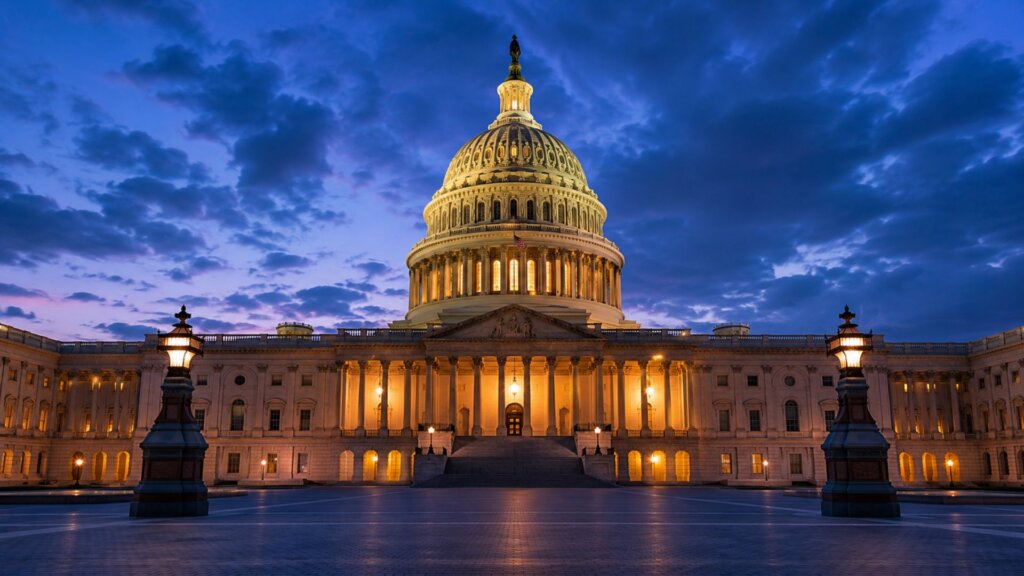
This isn’t the first time the trust fund has approached the edge. In 1983, the Social Security Trust Fund was rapidly emptying. President Reagan appointed a bipartisan commission headed by Alan Greenspan to recommend solutions. The $168 billion package eased the program through a turbulent period, and 1983 marks the last time Congress cut Social Security benefits, raised taxes, and lived to tell about it. The fix combined payroll tax increases, a higher retirement age, and a delay in cost-of-living adjustments — an approach both parties ultimately accepted.
The Senators Elected in 2026 Must Act or Watch Benefits Fall

The political stakes are unusually concrete this election cycle. Senators elected in the 2026 election cycle will need to vote on Social Security reforms in their upcoming six-year term, or stand by and watch benefits be cut by 22%. Yet few candidate websites mention the program’s financial difficulties, and only 7 out of 56 candidates describe their policy stance on improving Social Security’s finances. The incoming class will be the first group of federally elected officials who must either fix the program or own the consequences.
What to Do Now If You’re Counting on Social Security

No one should overhaul their retirement strategy based on a projection that Congress may still reverse. But it’s worth stress-testing your plan. Check your Social Security earnings statement at SSA.gov to see what a 22% reduction would look like for your specific benefit. Consider whether other income sources — savings, a part-time income stream, or a spouse’s benefit — could offset a cut. The longer Congress waits to act, the harder solving Social Security’s financial challenge becomes, and the greater the burden on retirees and taxpayers. The time to plan for uncertainty is before it arrives.