


Products are selected by our editors, we may earn commission from links on this page.

Most people assume aging creeps forward the same way every single year, a little slower, a little stiffer, on a smooth downward slide. A major study out of Stanford says that’s wrong. Researchers tracking thousands of people found the body doesn’t decline gradually at all. Instead, it holds steady for stretches, then suddenly lurches forward at specific points in life. Three of those points stand out clearly in the data.
Researchers Tracked Nearly 3,000 Proteins in 4,263 People
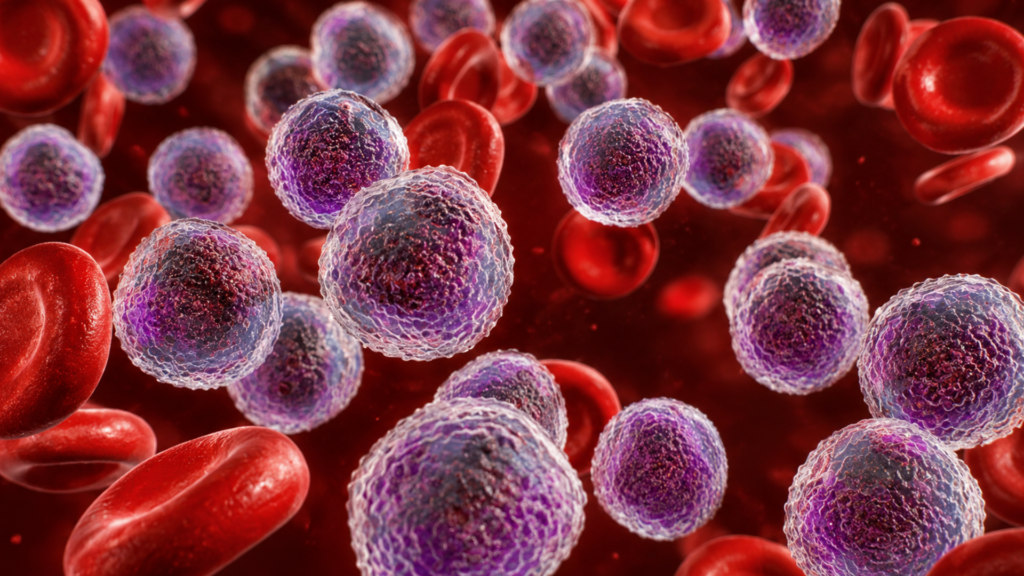
According to Stanford researchers, the study measured levels of almost 3,000 individual proteins in blood plasma samples from 4,263 people ranging from age 18 to 95. Of those, 1,379 proteins showed levels that shifted meaningfully as people got older. That gave the team an enormous dataset to search for patterns, and what they found upended the assumption that aging moves in a straight line.
Aging Happens in Bursts, Not a Straight Line

Rather than gradually rising or falling year after year, many of these proteins stayed flat for long periods, then jumped sharply at specific ages. The National Institute on Aging notes the biggest of these bursts clustered around three points in the human lifespan. Researchers describe it as a herky-jerky trajectory rather than a smooth descent, with the body’s biological programming appearing to shift at distinct moments rather than continuously.
Age 34 Marks the First Major Shift

The earliest of the three bursts lands around age 34, catching most people off guard since that age rarely feels like a turning point. At this stage, proteins tied to inflammation, cellular repair, and early metabolic changes begin moving in noticeable ways. It’s subtle enough that nobody feels it happening in real time, but the blood data shows the body has already started operating differently than it did in the decade before.
Age 60 Brings a Bigger, More Consequential Wave

The second burst, centered around age 60, involves a larger cluster of proteins and carries more direct health implications. According to the NIH, proteins linked to cardiovascular disease and Alzheimer’s disease show up prominently in this wave. One neural protein in particular stayed essentially flat for decades, then spiked sharply right around this age, a pattern researchers still can’t fully explain.
Age 78 Marks the Final Turning Point

The third and final burst arrives around age 78, rounding out what researchers describe as young adulthood, late middle age, and old age as the three distinct inflection points in a person’s biological timeline. Proteins connected to age-related disease again surge here, layering onto the changes that began decades earlier. Together, the three waves suggest the body reprograms itself in stages rather than winding down evenly.
Men and Women Age Differently, the Data Shows

The study also uncovered a significant divide between the sexes. A notable share of the proteins that shift with age behave differently in men than in women, according to New Atlas. Researchers say the findings strongly support including both sexes in clinical trials and tracking biological sex as a factor in aging research going forward, something studies have historically overlooked.
A Simple Blood Test Could Estimate Your Real Age

Using just 373 of the proteins identified in the study, researchers found they could predict a person’s chronological age with strong accuracy, within roughly a three-year range. An even smaller subset, just nine proteins, still produced a passable estimate. Notably, when the formula guessed someone was younger than their actual age, it often lined up with people in unusually good health.
The Findings Could Reshape How Doctors Track Aging

Researchers see potential clinical uses years down the road, including tests that flag people aging faster than expected and therefore at higher risk for conditions like heart disease or dementia. The same lab previously showed that infusing an older mouse with young blood could reverse signs of aging, raising early questions about whether these protein shifts might eventually be influenced, not just measured.
The Takeaway: Aging Isn’t Gradual, It’s a Series of Jolts

The research reframes aging as a staged process rather than a slow, even fade, with the body undergoing coordinated shifts at roughly 34, 60, and 78. Clinical applications remain years away, but the discovery already changes how scientists think about when and why the body changes. For now, the biggest takeaway is simple: those milestone birthdays may matter more biologically than anyone realized.