

Products are selected by our editors, we may earn commission from links on this page.
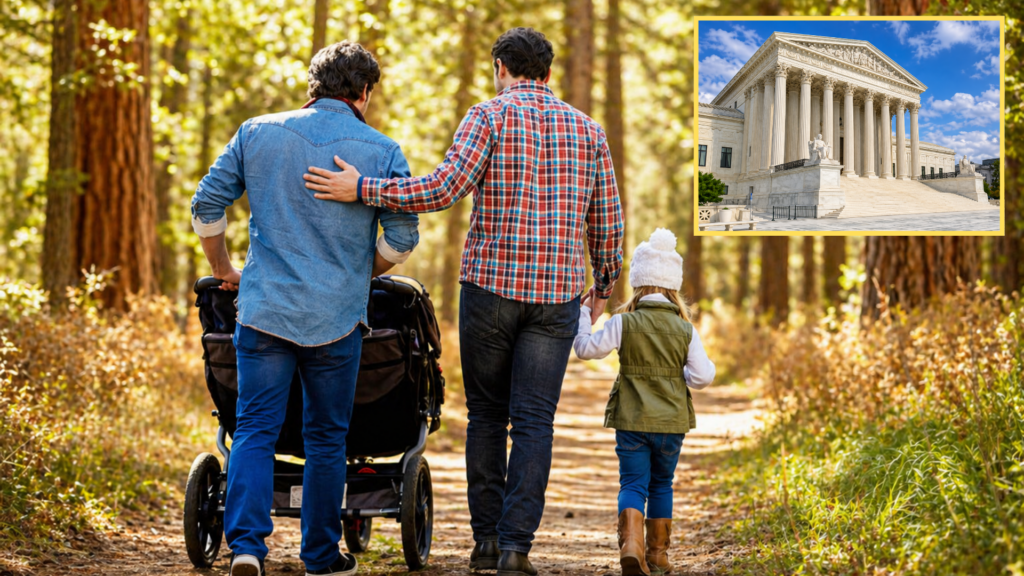
Two Catholic preschools in Colorado are at the center of a legal fight that could rewrite the rules on how far religious institutions can go when using public money. On April 20, the Supreme Court agreed to hear the case known as St. Mary Catholic Parish v. Roy. At its core, the question is stark: can a state require religious schools to accept all families, including LGBTQ ones, as a condition of receiving taxpayer funding for preschool?
Colorado launched its Universal Preschool program in 2020 after voters approved it 68% to 32%. It allows all children to receive up to 15 hours of free preschool per week in the year before kindergarten, covering public, private, faith-based, and in-home providers. The catch: every participating school must comply with a nondiscrimination rule that prohibits turning away families based on religion, race, sexual orientation, or gender identity. The Archdiocese of Denver requested an exemption in 2023. The state said no.
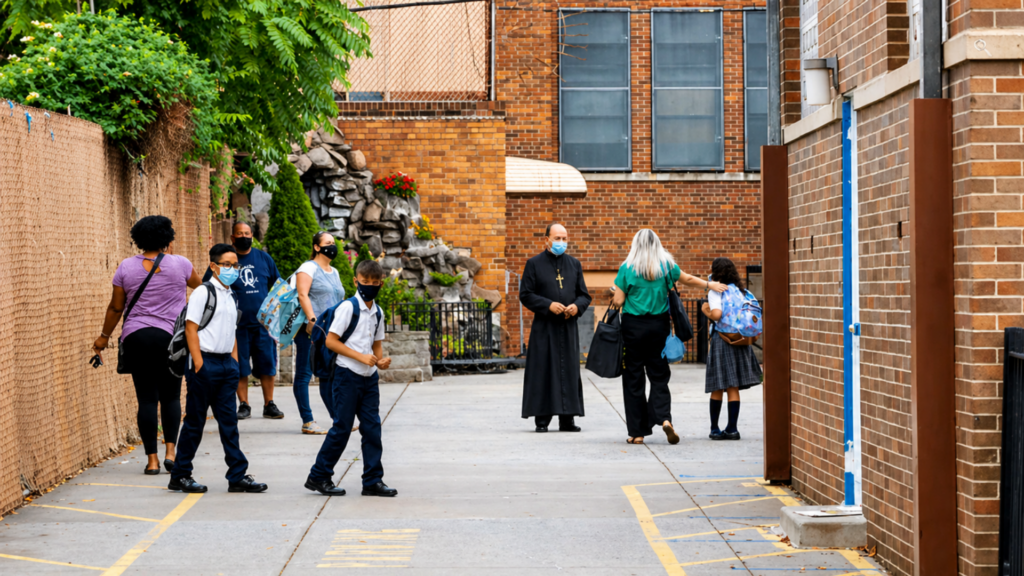
The Archdiocese of Denver oversees 34 Catholic preschools and argued that if the nondiscrimination provision is enforced against faith-based providers, it would restrict their ability to participate in the program without compromising their sincerely held religious beliefs. After the state denied the exemption request, the Archdiocese, two parishes, and a Catholic family filed a lawsuit. Both a federal district court and a federal appeals court sided with Colorado. The Supreme Court will now have the final word.
A Family Caught Between Faith and Financial Reality
Dan and Lisa Sheley, Catholic parents named in the case, wrote that all they want is the freedom to choose the best preschool for their children without being penalized for their faith. Their argument is personal and financial: Colorado’s program was designed to make preschool affordable for all families, yet families like theirs are effectively excluded because they chose a Catholic education. Attorney Jordan Varberg of the Becket Fund for Religious Liberty said the Sheleys pay far more for preschool than any other family in the state because of their faith.
The petitioners’ case rests on a pointed observation about how Colorado applies its own rules. While the program requires equal opportunity for all families, the schools argue the state has quietly granted secular exceptions, for example allowing providers to prioritize children from low-income families or those with disabilities, without extending the same flexibility to religious organizations. In the schools’ view, that selective generosity is the constitutional problem: secular carve-outs exist, but a religious one is denied outright.
The Archdiocese noted in its petition that in its 2015 ruling legalizing same-sex marriage, the Supreme Court said religious organizations would retain First Amendment protections when their teachings on marriage and sexuality diverge from secular norms. That promise, the petitioners argue, rings hollow if states can simply withhold public funding to pressure religious schools into compliance. Meanwhile, a Colorado official noted that the program currently supports more than 45,000 children, with the state welcoming all providers as long as all families are treated equally.
A 35-Year-Old Legal Precedent Is Now in the Crosshairs
The deeper stakes in this case extend far beyond preschool enrollment. At the center of the legal argument is a 1990 Supreme Court decision called Employment Division v. Smith, which established that a law burdening religious practice does not violate the First Amendment as long as it is neutral and applies to everyone equally. Ryan Thoreson, a law professor at the University of Cincinnati, told Newsweek that ruling has guided free exercise cases for 35 years. This case could significantly narrow it, even without formally overturning it.
Three of the court’s conservative justices have already stated publicly that Employment Division v. Smith should be overturned entirely. The Supreme Court declined in this case to take up that specific question directly, but it did agree to consider narrowing the precedent, which is what the Trump administration urged the court to do. In an unusual move, Solicitor General D. John Sauer weighed in on the case even though the federal government is not a party to the dispute, arguing the court should raise the bar for what counts as a “neutral” law under the existing test.
According to Thoreson, a broad ruling could produce consequences well beyond Colorado’s preschool program. If courts begin requiring states to offer religious groups the same exceptions granted to secular ones, any government program delivered through private partners could be affected. Religious organizations could gain the right to opt out of nondiscrimination requirements in a wide range of publicly funded services. LGBTQ advocacy organization Rocky Mountain Equality argued that public funding carries public responsibility, and that those two things cannot be selectively applied.
Where the Court Has Stood, and Where It May Be Headed
The Supreme Court has handed down a string of rulings in recent years that favor religious plaintiffs over LGBTQ protections. In March, the court struck down Colorado’s conversion therapy ban, finding it regulated speech based on viewpoint. In 2025, it upheld Tennessee’s prohibition on gender-affirming medical care for transgender minors. In that context, this case arrives not as an outlier but as the next step in a legal pattern that has been building for years.
Human Rights Campaign President Kelley Robinson stated that students deserve to be accepted at school and treated equally regardless of their own or their family’s sexual orientation or gender identity. She described the use of public dollars for preschools that treat children with LGBTQ parents differently as state-backed discrimination. Two Archdiocesan preschools have already closed since the litigation began. Both sides can point to real harm already done. The question of who bears more of it is precisely what the justices will be asked to answer.
The case is set to be heard when the court’s new term begins in October, with a decision expected sometime in 2027. Whatever the court rules, it will almost certainly land far beyond Colorado’s borders. If religious organizations win the right to exclude families from publicly funded programs, the implications for schools, social services, and adoption agencies could be sweeping. And if the court narrows a legal framework that has stood for 35 years, the question will no longer be what this ruling means, but what comes next.