

Products are selected by our editors, we may earn commission from links on this page.
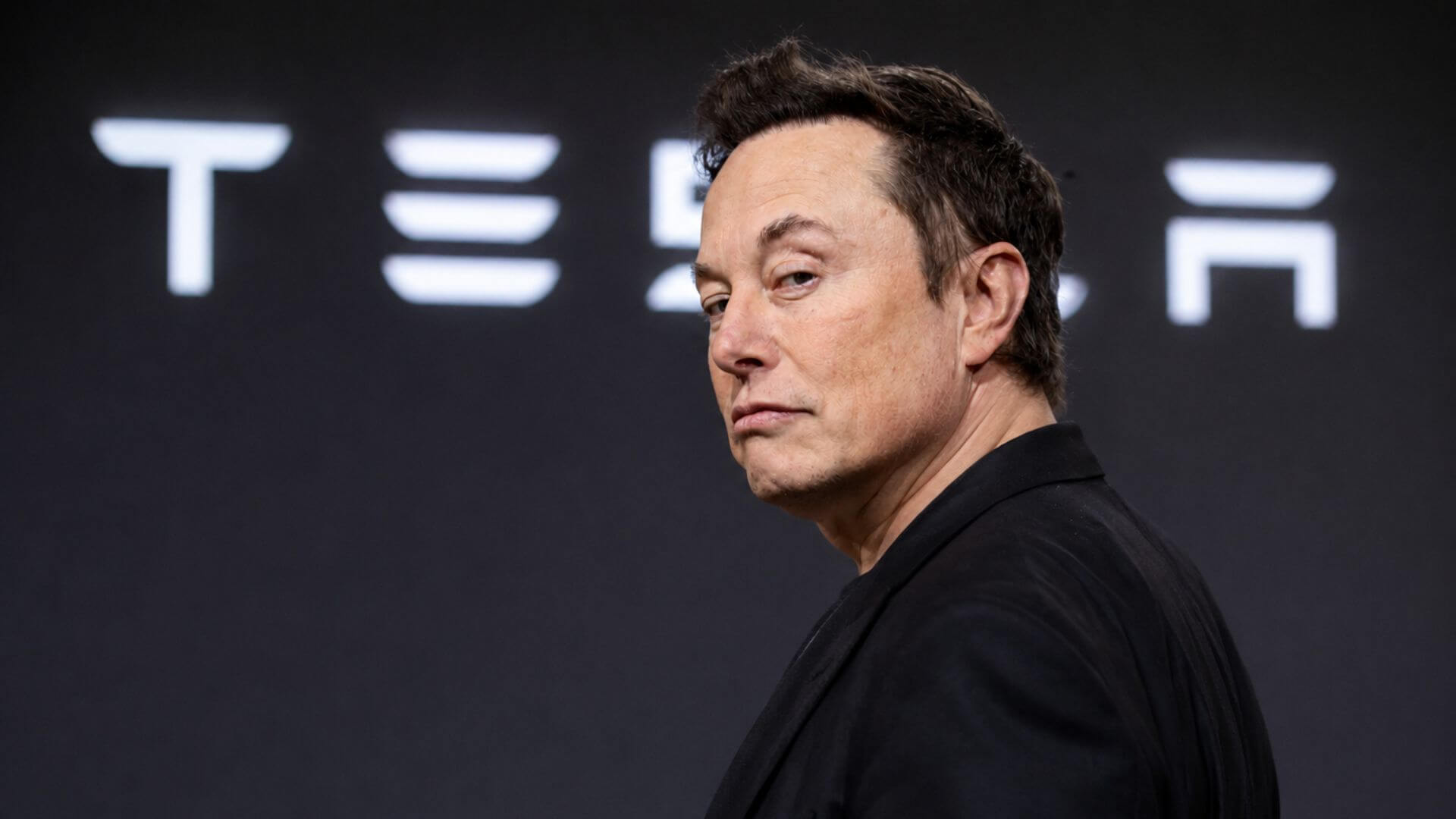
Tesla told European regulators its self-driving software could have saved 32,000 lives in the United States alone. That claim, delivered to Swedish and Dutch officials as Tesla pushed for market approval, is now falling apart under scrutiny. A Reuters investigation found the underlying numbers rest on assumptions no serious safety analyst would accept, and the fallout is already reshaping how the European Union decides whether Tesla’s Full Self-Driving system gets to operate at all.
The claim first surfaced in April. Days after Dutch regulator RDW approved FSD for supervised use, Tesla’s EU policy manager, Ivan Komusanac, emailed Swedish authorities requesting the same green light. His pitch included a slide deck asserting that Tesla vehicles running FSD travel more than seven times farther between crashes than the average American driver, a figure meant to fast-track approval across the rest of Europe.
Independent researchers who reviewed the presentation told Reuters the seven times figure and the lives saved projection share the same flaw. Both numbers only work if every vehicle on American roads, including semi-trucks and motorcycles, gets swapped out for a Tesla running FSD, and if every one of those Teslas performs at least seven times better than whatever it replaced.
This article was created with the assistance of AI and reviewed by our editorial team for accuracy and clarity.
Researchers Say Tesla’s Safety Math Assumes Every Car in America Becomes a Tesla
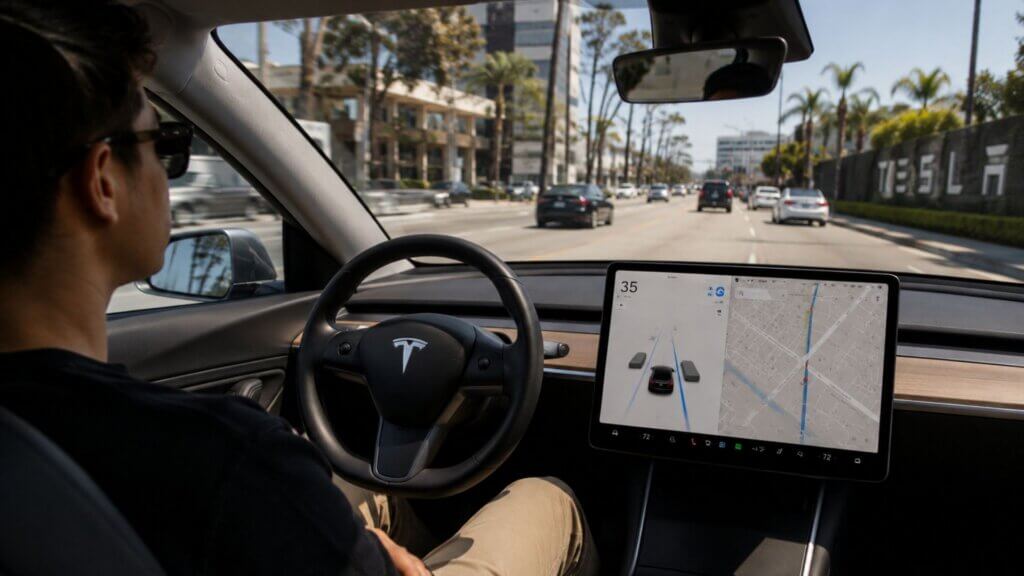
That assumption alone strains credibility, but according to a summary of the Reuters findings, it isn’t the only problem. Tesla’s data counted only severe crashes that triggered airbag deployment in its own fleet, then compared that narrow figure against the broader U.S. crash rate, which includes minor fender benders and everything in between.
Reuters calculated that mismatch alone inflates Tesla’s claimed safety advantage by roughly three times, according to Gadget Review’s breakdown of the report. Layer in a second factor and the gap widens again. The average American car on the road today is about 12.8 years old. The average Tesla is 4.1 years old. Newer vehicles crash less often no matter what software is running them.
Put those factors together and Tesla’s headline claim, that FSD is up to ten times safer than a human driver, starts to look less like data and more like a sales pitch. Of the eleven independent researchers Reuters consulted on the methodology, ten said the analysis did not meet the bar for credible science.
Carnegie Mellon Professor Calls Tesla’s Numbers “Marketing Puffery, Not a Serious Safety Analysis”
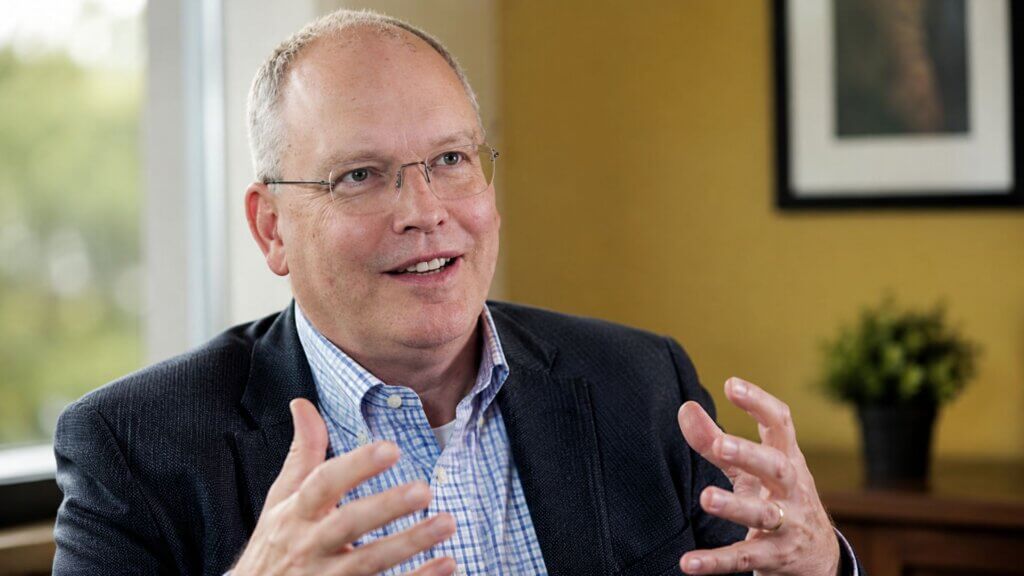
Phil Koopman, a Carnegie Mellon University professor who reviewed the data for Reuters, put it bluntly: the analysis was “full of marketing puffery, and not a serious safety analysis.” Koopman also pointed out that key methodology details remain redacted even in the safety filings Tesla submitted to the National Highway Traffic Safety Administration, a level of secrecy he says is uncommon among companies building autonomous vehicle systems.
Dutch regulator RDW, the agency that approved FSD for supervised use back in April, told Reuters it does not rely on marketing claims or external statistics when making decisions. The agency says it runs its own tests, analyses and audits on public roads and test tracks. RDW declined to say whether it specifically evaluated the U.S. safety statistics Tesla submitted to Swedish officials, or what its own testing actually found.
Dudley Curtis of the European Transport Safety Council was more direct. He told Reuters that if Tesla wants to make safety claims of this size, the company should give the data to a university, have it independently verified by a qualified researcher, and then talk. A Norwegian road safety official offered a similar warning, noting that Tesla’s figures are self produced and nearly impossible to cross check against official accident records.
Sweden Tells the EU to Reject Tesla’s Self-Driving System Over a Speed Limit Loophole

The credibility questions arrive at a critical moment. FSD approval across the European Union requires a vote clearing 55% of member states and 65% of the EU population, thresholds that effectively demand support from Germany, France or Italy, according to a Tech Times report on the process. None of those three countries has moved toward approval, and each has raised its own concerns about whether Tesla’s data holds up under European road conditions.
Sweden went further. On June 20, its national transport authority formally recommended that the EU reject bloc wide approval, citing a feature called Speed Offset that lets Tesla drivers set FSD to drive above the posted limit. Around the same time, U.S. Senators Edward Markey and Richard Blumenthal sent a letter demanding that federal regulators review Tesla’s safety statistics by July 7, calling the data misleading and incomplete.
Tesla has called European approval essential to reversing a 28% sales collapse across the region in 2025. That recovery now depends on regulators who have watched the company’s own numbers unravel under outside review, and on a committee vote that is not expected before October at the earliest. For a company racing to prove its software drives safer than people, the harder problem is proving its data does too.