


Products are selected by our editors, we may earn commission from links on this page.

The typical American worker has less than $1,000 saved for retirement. Not $10,000. Not even $5,000. Just $955. That figure, published by the National Institute on Retirement Security, captures the median savings across all employed adults between the ages of 21 and 64, including the roughly 56 million workers who have no access to an employer-sponsored retirement plan at all. It is a number that is both staggering and, for many experts, entirely predictable.
The $955 figure is not an outlier. It is a reflection of a system where access to retirement savings tools has never been universal. Workers who do have a retirement account hold a median balance of $40,000, according to the same report. But that figure still falls dramatically short of what Americans say they need: roughly $1.5 million to retire with any real financial comfort. The gap between what workers have and what they need has not narrowed quietly. It has widened, loudly, for decades.
What makes this moment different is the timing. A recent survey found that 79 percent of Americans agree the country is facing a retirement crisis, up from 67 percent in 2020. That growing anxiety is not abstract worry. It tracks with real numbers, real decisions, and real consequences for millions of workers who are now looking at retirement not as a finish line, but as a financial cliff. The sections ahead break down exactly why this crisis happened, who it is hitting hardest, and what, if anything, is being done about it.
When the System Excludes You, You Simply Do Not Save

The retirement savings gap does not exist because Americans are careless with their money. It exists, in large part, because millions of workers were never given the tools to save in the first place. The National Institute on Retirement Security put it plainly: “The bottom line is that if Americans are not saving for retirement through their employer, then they are probably not saving at all.” Fifty-six million workers currently lack access to a workplace retirement plan. Without automatic enrollment and employer matching, most people simply do not start.
Among lower-income workers who do participate in retirement plans, 86 percent do so only because their employer provides a matching contribution. Remove that match, and participation collapses. This tells a revealing story about how the current system functions: it works reasonably well for higher earners who can afford to save independently, but it leaves lower-wage workers almost entirely dependent on employer generosity that many never receive. The structure itself creates the gap.
About three in five American workers say their retirement savings are behind where they should be, according to Bankrate’s 2025 Retirement Savings Survey, and of those, 37 percent describe themselves as significantly behind. Those numbers have remained stubbornly consistent for three straight years. Inflation has made it worse. Stagnant wages have made it worse. And for the workers who were never enrolled in a plan to begin with, the gap has simply grown wider with every passing year. The crisis is not coming. For many, it has already arrived.
Older Workers Are Running Out of Time to Catch Up

Conventional retirement wisdom holds that workers who fall behind early can make up ground later. The data suggests that is not happening. Workers between the ages of 55 and 64, the group closest to retirement, have accumulated only 19 percent of their targeted retirement savings, according to the National Institute on Retirement Security. By the traditional benchmark set by Fidelity, a 60-year-old should have eight times their annual income saved. Most do not come close.
A Prudential Financial survey found that adults at age 55 carry a median retirement balance of less than $50,000, far below the recommended savings target for that age, and two-thirds of 55-year-olds fear they will outlive their savings entirely. Those fears are not irrational. Someone retiring at 65 today could easily live another 20 years, spending down savings that were never sufficient to begin with. The math does not work, and a growing number of older Americans know it.
The consequences are already visible. More seniors are returning to work after retirement, a trend the AARP has documented with increasing concern. Seven percent of retirees have re-entered the workforce in the last six months alone, with nearly half citing financial pressure as the reason. “With the cost of living still high and many people worried that they don’t have enough saved for retirement, the trend of older adults working longer will likely continue,” said Carly Roszkowski, AARP’s vice president of financial resilience programming. For many, retirement was never truly an option.
Social Security Is a Lifeline That Could Soon Fray
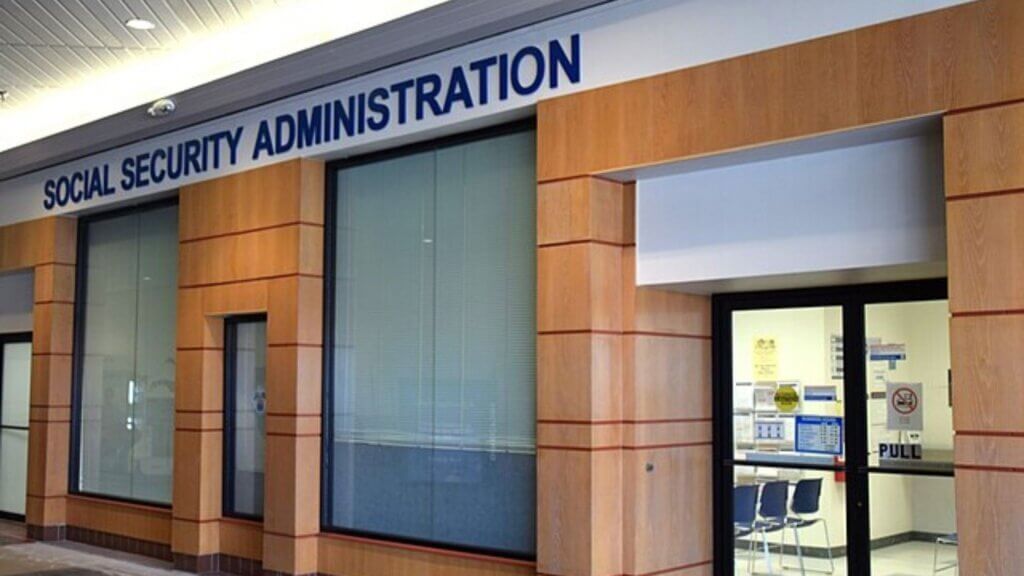
For workers who reach retirement age with little to no savings, Social Security is not a supplement. It is the plan. The National Institute on Retirement Security found that millions of seniors rely on it for more than half of their annual income. Yet a significant share of Americans misread its role entirely. A 2025 survey by life insurer Allianz found that one in five Americans believe Social Security alone will cover all their retirement expenses, when in reality it replaces only about half of the typical senior’s pre-retirement income.
That misunderstanding matters more right now because Social Security’s own finances are under pressure. Without congressional action, the program faces a roughly 20 percent cut to benefits as early as 2034. Nearly 80 percent of retired adults say they are worried they will not receive their promised benefits if the trust fund runs short, up from 71 percent in 2024. Lawmakers have options: raise the payroll tax rate, increase the retirement age, or lift the current $184,500 income cap on earnings subject to Social Security taxes. None are politically easy, and none have moved fast enough.
Meanwhile, senior poverty is rising. The share of older Americans living below the poverty line climbed to 15 percent in 2024, the highest rate among any age group, according to Census data. Roughly half of adults aged 60 and older have household incomes below what is needed to cover basic living costs in their area. The NIRS report noted that the resulting benefit cut “would have a significant impact on the lives of seniors and other beneficiaries.” A retirement system that was already strained is heading toward a moment it may not be equipped to handle. The only question is whether enough people are paying attention before it does.