

Products are selected by our editors, we may earn commission from links on this page.
Housing costs have become one of the biggest factors shaping where Americans can afford to live, but some communities remain considerably less expensive than the national average. The source list, based on Niche’s affordability rankings, considers factors including cost of living, housing affordability relative to income, taxes and everyday expenses such as food and fuel. The most affordable locations are spread across the Midwest and South, where lower housing costs can make a substantial difference in a household budget.
Pittsburgh, Pennsylvania

Pittsburgh stands out among large U.S. cities because its housing costs remain considerably below those in many major metropolitan areas. Current 2026 housing data put the city’s median home price around $250,000, more than $150,000 below the national median cited in recent affordability research. The city also has major employment centers in healthcare, technology, education and research, giving residents access to a broader economic base than many smaller low-cost communities.
Decatur, Illinois

Decatur is another standout for buyers focused primarily on housing costs, with recent data placing its median home value at roughly $89,855. The city has a long connection to manufacturing and agriculture, including major employers such as Archer Daniels Midland, while its location near highways and rail lines supports transportation and business activity. U.S. News has also placed Decatur at the top of its 2025-2026 Best Affordable Places to Live ranking, although affordability rankings can differ depending on the methodology used.
Enid, Oklahoma

Enid combines relatively inexpensive housing with an economy connected to energy, agriculture and government services. Recent figures put its median home value around $143,305 and median rent near $647 per month, helping keep housing expenses well below those of many larger U.S. markets. Vance Air Force Base is also a major local employer, adding an important economic anchor to the community.
Fort Wayne, Indiana

Fort Wayne offers a combination of relatively inexpensive housing and a diversified employment base that includes manufacturing, healthcare, insurance and defense-related industries. Recent affordability data place the city’s cost of living roughly 39% below the national average, while median home prices have been around $180,000 in recent estimates. That combination can make the city attractive to households that want access to metropolitan amenities without the housing costs found in larger coastal markets.
Des Moines, Iowa
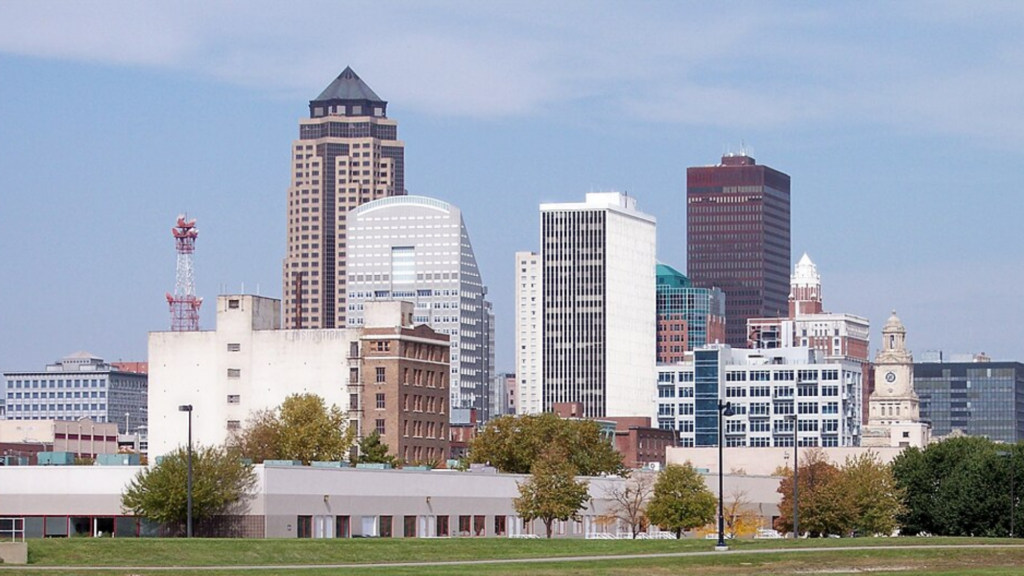
Des Moines has a somewhat different affordability profile because it combines relatively moderate housing costs with a stronger employment base than many smaller low-cost communities. Housing costs are estimated to be about 23% below the national average, while the metro area’s economy includes finance, insurance, data services and other professional industries. The city’s median household income has also been reported at roughly $85,731, illustrating why affordability is better understood by comparing expenses with local incomes rather than looking at home prices alone.
Oklahoma City, Oklahoma

Oklahoma City gives residents access to the amenities of a major metropolitan area while maintaining housing costs below those of many similarly sized U.S. cities. Recent figures put the median home sale price at roughly $225,167, while housing costs are estimated to be about 21% below the national level. Its economy has also expanded beyond traditional energy industries into healthcare, technology and aerospace, with employers such as Devon Energy, Tinker Air Force Base and OU Medical Center playing important roles.
Wichita, Kansas

Wichita is known for its aerospace industry, but its relatively low cost of living is another major feature for residents. Recent affordability estimates put its cost of living about 11% below the national average, with median home prices around $190,000. Major employers include Spirit AeroSystems, Textron Aviation and Koch Industries, giving the city an economic foundation that extends beyond its lower housing costs.
Green Bay, Wisconsin

Green Bay rounds out the featured communities with housing and living expenses that remain below national averages. Recent data put the city’s overall cost of living about 13% below the national average, while local industries include paper products, food processing and healthcare. Its lower housing costs can help offset other household expenses, although prospective residents still need to compare property taxes, utilities, transportation and healthcare costs before deciding whether the city fits their budget.
Where Your State Fits Into the Bigger Picture

Here is the full state-by-state ranking from most affordable to least affordable based on the source’s cost-of-living comparison: 1. Mississippi, 2. Oklahoma, 3. Kansas, 4. Alabama, 5. West Virginia, 6. Missouri, 7. Arkansas, 8. Tennessee, 9. Iowa, 10. Indiana, 11. Michigan, 12. Ohio, 13. Kentucky, 14. Nebraska, 15. South Dakota, 16. North Dakota, 17. Louisiana, 18. Georgia, 19. Wyoming, 20. South Carolina, 21. Texas, 22. North Carolina, 23. Wisconsin, 24. Minnesota, 25. Pennsylvania, 26. Idaho, 27. Arizona, 28. Florida, 29. New Mexico, 30. Nevada, 31. Delaware, 32. Montana, 33. Virginia, 34. Colorado, 35. Maine, 36. Utah, 37. Vermont, 38. Rhode Island, 39. Connecticut, 40. New Hampshire, 41. Oregon, 42. Washington, 43. Alaska, 44. Maryland, 45. New York, 46. Massachusetts, 47. New Jersey, 48. California, 49. Hawaii, and 50. Washington, D.C. These rankings are based on the source’s affordability methodology and should be viewed as a comparison rather than a guarantee of what an individual household will spend.