

Products are selected by our editors, we may earn commission from links on this page.
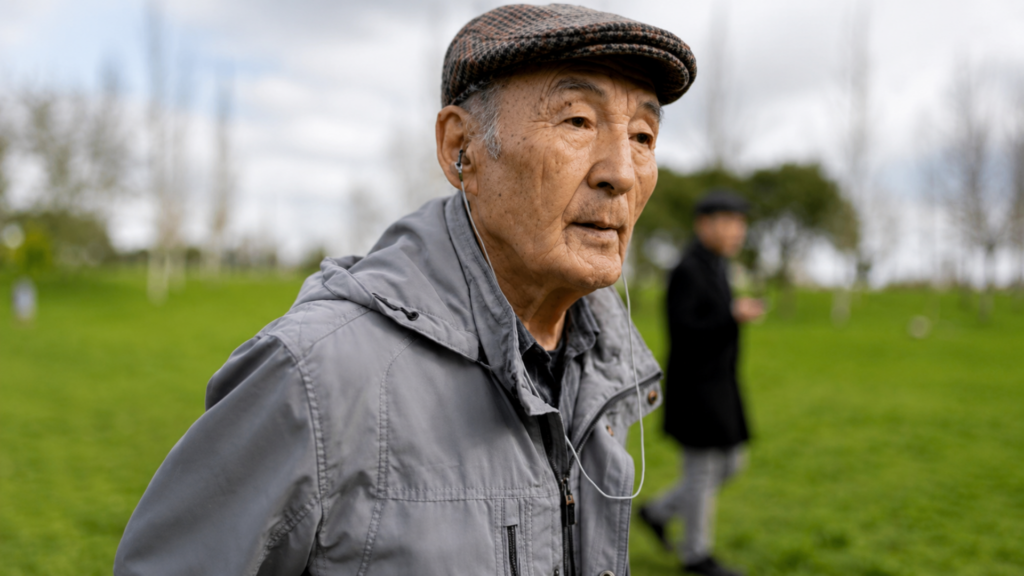
When people picture early cognitive decline, they usually think of forgetfulness or confusion, not how much someone moves during an ordinary day. A new study published in JAMA Network Open suggests a subtler tell: adults whose memory was slipping were also, years later, spending noticeably less time on everyday physical activity, long before anyone might think to connect the two.
Researchers Tracked Thousands of Adults for Nearly Two Decades

The study followed 2,529 adults aged 50 and older in England as part of the English Longitudinal Study of Ageing, testing their memory and verbal fluency repeatedly over a 17-year period. Memory was measured through word recall tasks, while fluency was tested by asking participants to name as many animals as possible in a set time, building a long-term trajectory for each person rather than a single snapshot.
Wrist Trackers Measured What Surveys Usually Miss

To capture actual movement rather than self-reported estimates, participants wore accelerometers around the clock for eight consecutive days. The devices logged exactly how much time each person spent in moderate-to-vigorous activity, light activity, sedentary time, and sleep, giving researchers an objective read on daily movement patterns instead of relying on memory of how active someone thought they’d been.
The Gap Was Real, but Modest: 14 Minutes a Day

Adults with steeper memory decline over the study period spent about 14 fewer minutes per day in light physical activity than those whose memory held steady, according to lead author Mikaela Bloomberg of University College London. That adds up to roughly 1.6 fewer hours of light activity per week, the kind that includes casual walking, light chores and cooking rather than structured exercise.
The Effect Nearly Doubled Past Age 70
Age sharpened the pattern considerably. Among participants over 70, those with less favorable memory trajectories logged as much as 20 fewer minutes of light activity per day, roughly 2.3 fewer hours per week, compared with peers whose memory stayed more stable. The gap in sedentary time widened alongside it, with declining memory linked to more hours spent sitting or lying down while awake.
Structured Exercise and Sleep Barely Moved at All

Not every kind of activity showed the same pattern. Differences in moderate-to-vigorous exercise and total sleep time were minor across memory trajectories, and verbal fluency changes had a much weaker association with movement than memory did. The clearest signal was specifically in light, everyday activity, the kind that requires planning a small task and following through on it.
The Researcher’s Own Caution Is Worth Noting

Bloomberg told Medical News Today that the relationship between brain health and movement likely runs in both directions rather than one simply causing the other, and cautioned against over-interpreting observational links between activity and dementia risk. The study can’t say memory decline directly causes inactivity, only that the two consistently show up together over time.
One Limitation: The Study Group Wasn’t Very Diverse

The research carries real limitations. Roughly 95 percent of participants were white, so it’s unclear how well the pattern holds across other populations. Researchers also flagged the possibility of unaccounted variables beyond the factors they adjusted for, like income, education, smoking, and chronic illness, and noted that wrist accelerometers can sometimes blur the line between quiet sitting and actual sleep.
A Slower Pace Might Not Be Just Aching Joints

The practical takeaway reframes a common assumption. When an older adult starts sitting more or skipping their usual walk, it’s easy to assume sore joints or general fatigue are to blame. This research suggests cognitive changes deserve a look too, since planning and following through on physical tasks draws on the same mental resources that decline alongside memory.
Supporting Movement May Mean More Than Encouragement

For families and caregivers, the findings point toward a different kind of support: structured routines, gentle reminders, and organized activities that lower the mental effort required to get moving, not just encouragement to exercise more. Protecting memory and protecting physical independence, the research suggests, may turn out to be more connected than either one alone.