


Products are selected by our editors, we may earn commission from links on this page.
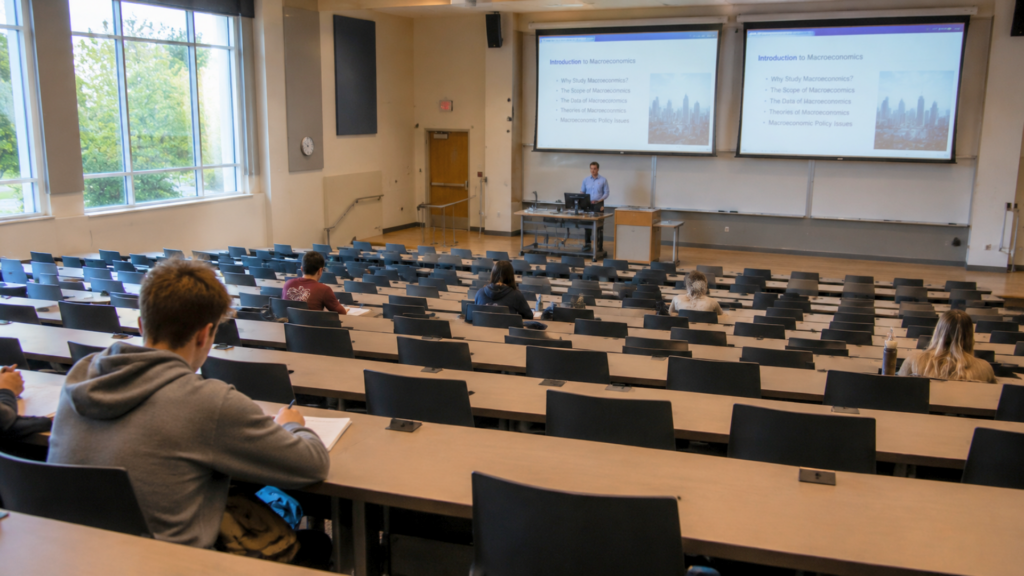
You might think a college’s tuition money comes mostly from local families. But at many schools, one small group carries a bigger load. Foreign students often pay full price, with no discounts and no financial aid. When thousands of them stopped enrolling last year, that income vanished fast. The University of North Texas lost 2,800 expected students almost overnight. That gap punched a $45 million hole in its budget. Some colleges are now cutting programs just to stay open.
This article was created with the assistance of AI and reviewed by our editorial team for accuracy and clarity.
A College President’s Nightmare Started With Empty Seats

Harrison Keller became president of the University of North Texas last year, right before disaster hit. His school expected 2,800 international students to arrive last fall. They never came. Visa denials, deportations, and travel bans under the Trump administration kept them home. Losing that many full-tuition students pushed the university $45 million into the red. Keller had to cut 71 academic programs just to balance the books. One year in the job, and the ground had already shifted.
These Students Aren’t Just Filling Seats, They’re Paying the Bills
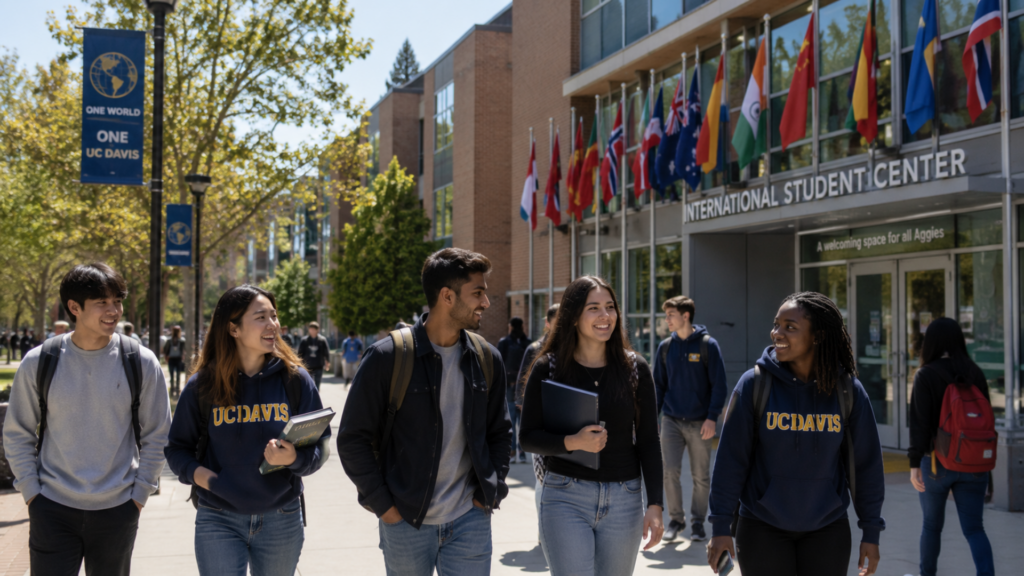
International students matter more to college budgets than most people realize. Graduate students from abroad can bring in $20,000 to $25,000 each, every single year. That money helps pay for buildings, staff, and services used by every student on campus. It even helps keep costs lower for local students. When that income disappears, someone has to cover the gap. Schools are now facing a hard choice between raising prices or cutting what they offer.
A Small Group of Students Carries a Huge Share of College Money

Across the country, international students make up just 6 percent of all college students. But they bring in 12 percent of total revenue, according to research from Princeton University. At some schools that depend on them most, that number climbs above 30 percent. That means losing even a small slice of these students can blow a huge hole in a school’s budget. For families back home, it means fewer classes and fewer services for everyone else.
The Drop-Off Isn’t Slowing Down, It’s Speeding Up
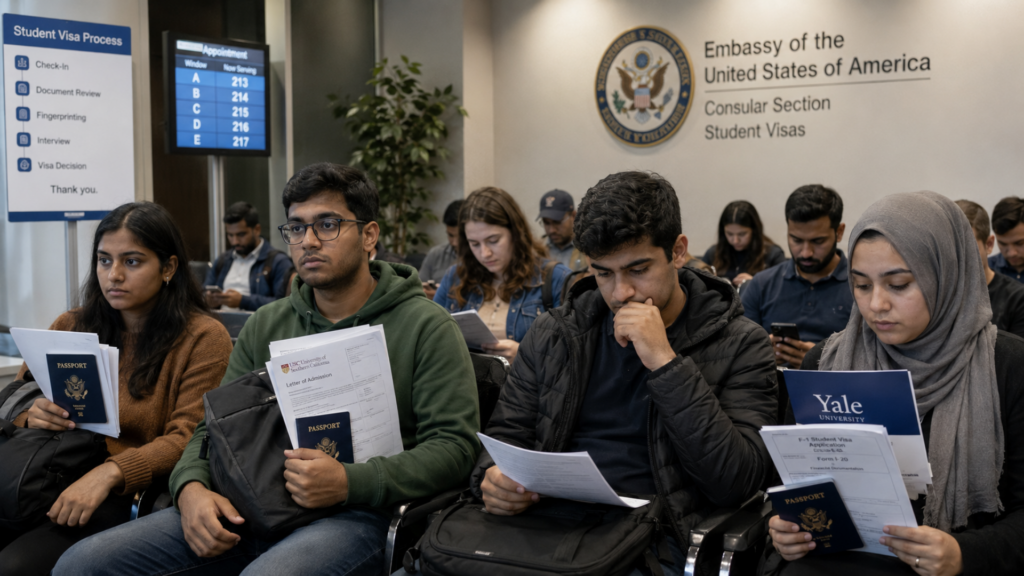
New federal data shows the problem is not going away. Student arrivals fell 5 percent in March compared with last year. They dropped almost 8 percent in April and 1 percent in May. That follows a nearly 22 percent plunge in arrivals last summer alone. Each of those numbers means real students who chose not to come, and real dollars that never reached college budgets. Schools built years of planning around students who simply stopped showing up.
Someone Always Pays When the Money Stops Coming In

When a college loses this much money, the bill does not just disappear. It lands somewhere else instead. Dick Startz, an economics professor at the University of California, Santa Barbara, said the missing money leaves a big hole that must be filled one way or another. “It leaves a really big hole in the budget, which has to get filled one way or another, either by increasing tuition or cutting services,” he said. For students, that trade-off is already starting.
Families Never Knew Just How Much They Were Leaning On Foreign Students

Most American families never thought about who was paying for their kids’ classes. Domenico Ferraro, an economics professor at Arizona State University, has studied this exact issue for years. He said many families never realized how important full-tuition international students had become to their own college’s finances. Now that support is fading fast. Colleges built their budgets around a steady stream of students that suddenly stopped flowing. The bill for that mistake is coming due.
The Cuts Are Already Hitting Campuses Across the Country
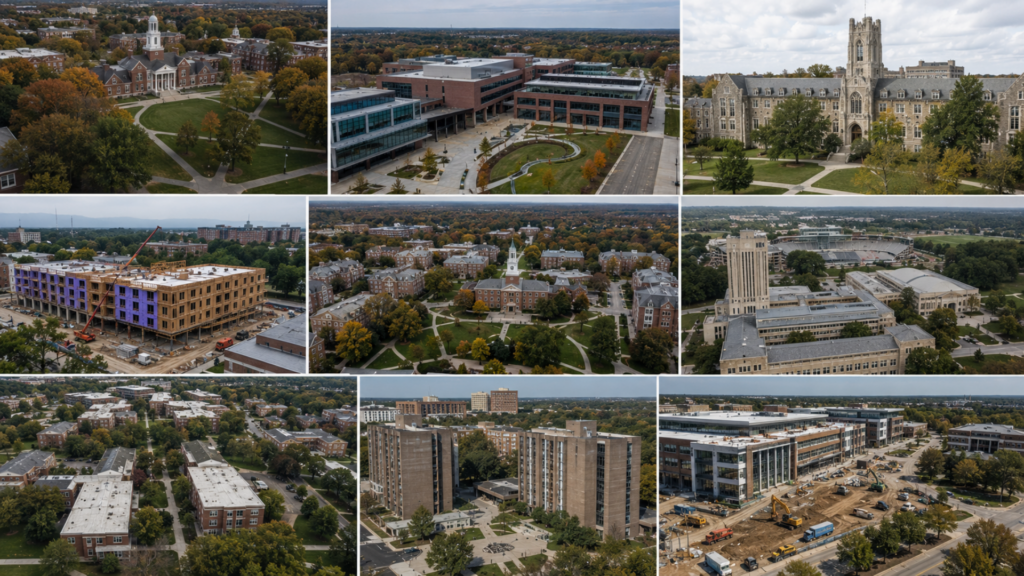
This is not just one college’s problem, it is a national pattern. Northwestern University cut 425 jobs and froze hiring last year, citing falling international enrollment. The University of Southern California cut nearly 1,000 jobs after applications from abroad fell 23 percent. DePaul University laid off 114 workers after its international student numbers dropped by a third. “It definitely hurts. There’s no question,” said Ruth Johnston of the National Association of College and University Business Officers.
Canada Already Shows Where This Road Can Lead
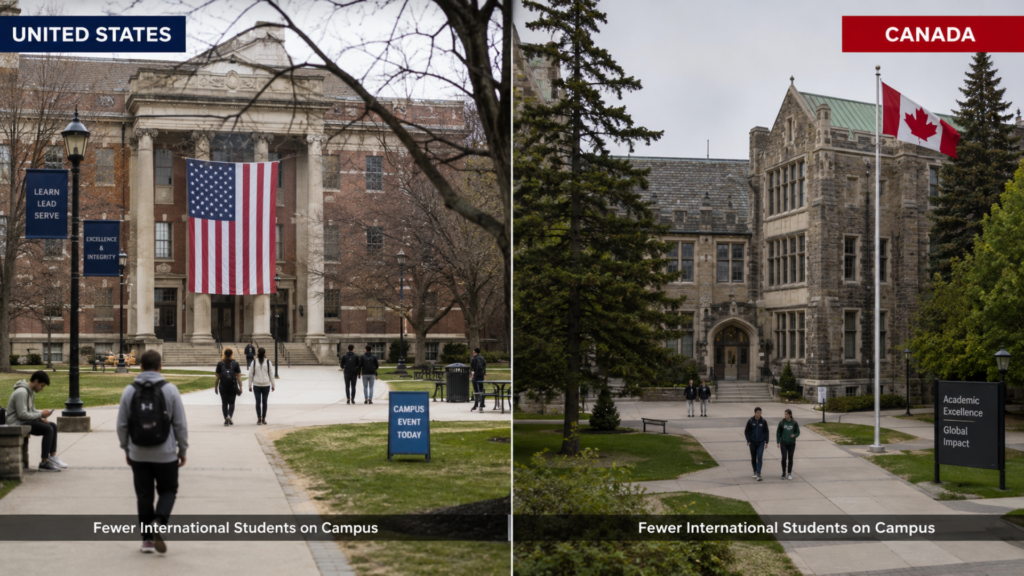
The United States is not the first country to feel this shock. Canada capped international student numbers in 2024, and arrivals there have dropped 73 percent since then. Ontario schools alone are expected to lose $1.5 billion in income this year. Sixty percent of Canadian colleges now plan budget cuts. Tuition there has not gone up. But as one expert put it, students “aren’t necessarily paying more, they’re getting less.” The warning signs are hard to ignore.
The Empty Seats Were Never Really About Seats At All
Go back to that empty dorm room from the start of this story. It was never just about one missing student. It was about a whole system built on money that could vanish overnight. Colleges leaned on foreign students to survive, and now that support is slipping away fast. The classrooms are quieter this year. The real test now is whether colleges can find a steadier way to keep their doors open.