

Products are selected by our editors, we may earn commission from links on this page.
The widening crisis in the Middle East is no longer just a regional conflict, it is a direct threat to the financial stability of the entire planet. Qatar’s energy minister, Saad al-Kaabi, has issued a chilling statement, warning that the escalating war could bring down the economies of the world. As American and Israeli jets target energy facilities in Tehran, the global market is bracing for a shock that could send oil prices into a record breaking spiral. What started as a localized dispute has rapidly transformed into a struggle for the world’s primary energy arteries.
The immediate impact was felt after a drone strike hit Qatar’s largest liquefied natural gas plant, a move that disrupted delivery patterns for one of the world’s most vital fuel sources. Al-Kaabi noted that it will take weeks or even months to return to normal operations, leaving Europe particularly vulnerable to a massive price spike. While the initial headlines focused on military maneuvers, the real story is the looming energy famine. The prospect of a wider assault on infrastructure has turned the region into a ticking time bomb for global trade.
This energy crunch creates a chain reaction that threatens to stall GDP growth across every continent. If the conflict persists for even a few more weeks, experts believe the world will face a shortage of essential products as factories lose the power to supply their goods. The answer to how long the global economy can withstand this pressure is becoming increasingly grim. The answer, according to those on the front lines, is that we are nearing a breaking point that could change everything.
The Fuel Infrastructure Breakdown
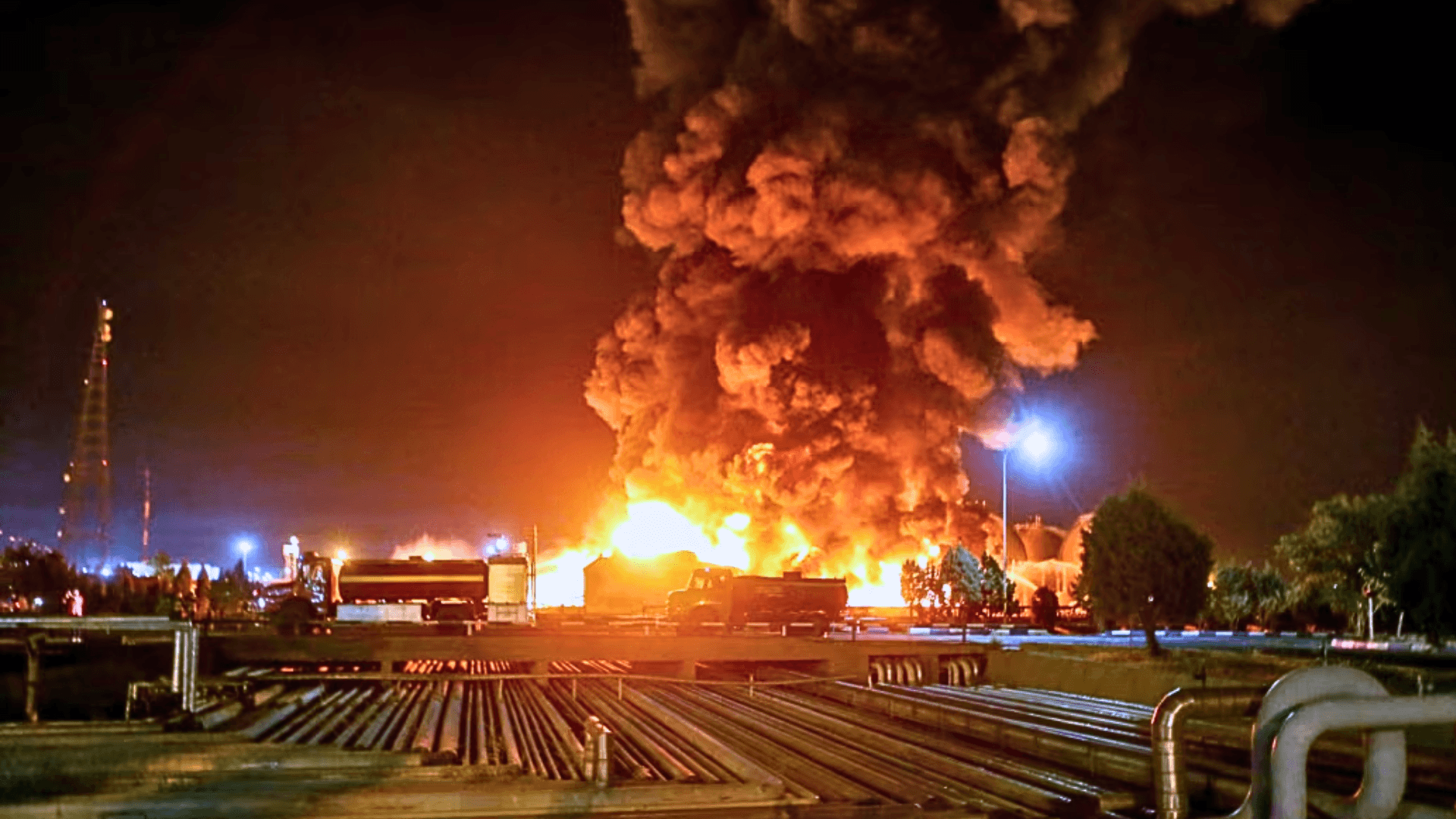
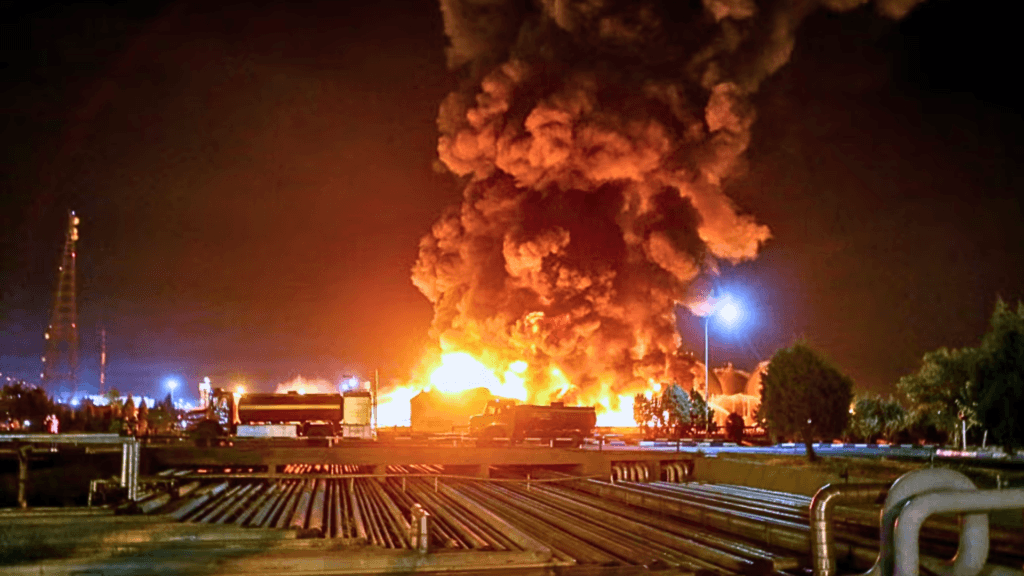
Tehran was recently engulfed in thick black smoke as fireballs rose from four targeted oil depots, marking a significant shift in the war’s strategy. This was the first direct strike on energy facilities since the conflict began, signaling that the regional infrastructure is now a primary target. Goldman Sachs has analyzed the situation and issued a brutal forecast, predicting that oil could jump to 150 dollars per barrel by the end of March. This surge would hit businesses and consumers with a level of financial pressure not seen in decades.
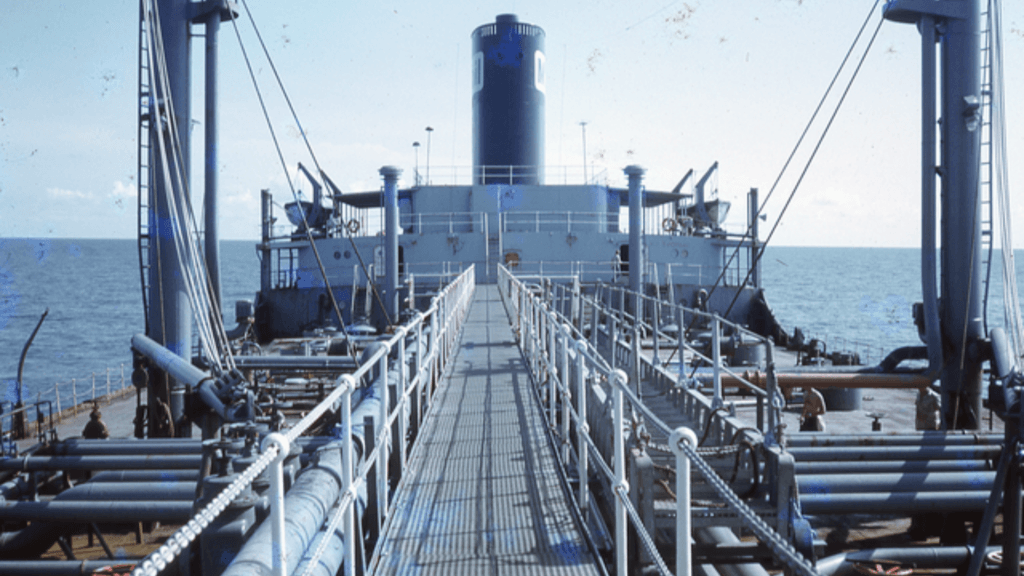
The physical reality of the blockade is most evident in the Strait of Hormuz, where traffic has plummeted to just 10 percent of its usual levels. This narrow waterway is the world’s most important oil transit point, and its near-complete shutdown has forced major producers like Saudi Arabia, Iraq, and Kuwait to suspend shipments. Currently, as much as 140 million barrels of oil are sitting in storage, unable to reach global refiners. This bottleneck is 17 times larger than the peak hit to Russian production during the 2022 invasion of Ukraine.
These details matter because the Middle East provides 1.4 days of global demand in every single shipment cycle. As storage facilities in the Gulf reach maximum capacity, oil fields in Iraq have already begun to cut production, with Kuwait and the UAE expected to follow. Prof Mohamed El-Erian of the University of Pennsylvania warns that countries like the UK are hit from multiple sides. The lack of storage and high reliance on gas for heating means that the average person will face a broad range of price increases, from mortgages to basic household goods.
The Manufacturing And Supply Chain Crisis
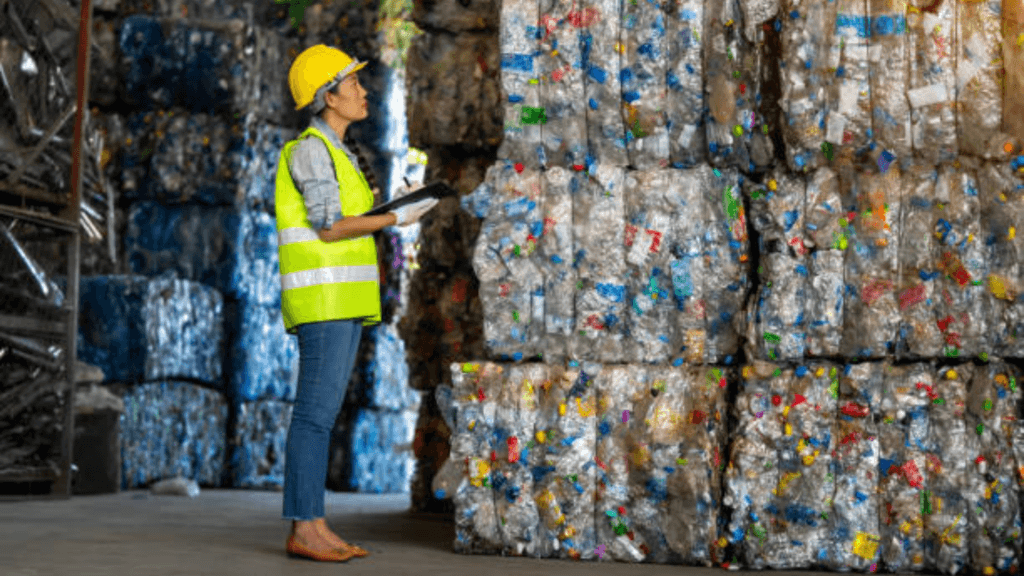
The pivot from fuel costs to consumer goods is where the average person will feel the most concern. Around 40 percent of the world’s plastic is produced from crude oil, meaning the current volatility will directly impact the cost of everything from food packaging to furniture. Young Liu, chair of Foxconn, the world’s largest electronics maker, has agreed that if these effects last longer, everyone will start to feel them. The manufacturing of smartphones, car parts, and medical equipment is all tied to the stability of the Middle East energy corridor.
The larger implications connect to a fresh bout of global inflation that policymakers are desperate to avoid. As Asian buyers outbid Europeans for the remaining gas on the market, the price of electricity is expected to soar, particularly in nations without diverse energy reserves. In the UK, where gas-fired plants provide 30 percent of electricity and heat 70 percent of homes, the vulnerability is extreme. National Gas recently reported that stores were at a mere 18 percent of their former capacity, leaving very little margin for error as the war expands.
This economic pressure creates a fascination with the recession playbook as major banks like Morgan Stanley warn of a prolonged downturn. The spectre of supply chain disruptions means that even goods not directly related to oil will see noticeable increases in price. As energy costs eat into the margins of global companies, the incentive to maintain current production levels vanishes. The world is witnessing an energetic and financial contraction that reflects the fragile interconnectedness of our modern society.
The Future Of Global Trade Stability
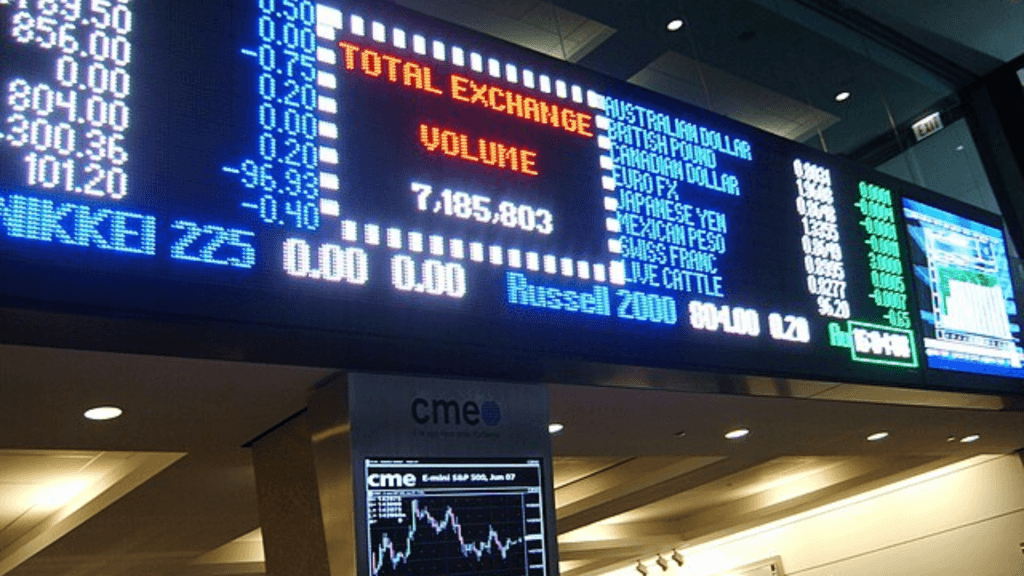
The return to urgency is felt most acutely as oil prices eclipse 100 dollars per barrel for the first time in years. Iran’s Islamic Revolutionary Guard Corps has intensified the conflict by striking commercial tankers, claiming they ignored warnings to stay out of the strait. These actions have turned a shipping lane into a war zone, making the delivery of energy a high risk gamble. The global growth rate is already projected to slow by 0.4 percentage points due to the spike, a number that will only grow if the blockade continues.
While government spokespeople insist that energy caps and diverse systems will protect households, the reality of the market suggests otherwise. The only way to truly protect against these spikes is to move away from the rollercoaster of fossil fuel markets entirely. However, that transition cannot happen overnight, leaving the global economy tethered to a region in flames. The forward looking consequences of this conflict involve not just higher bills, but a fundamental reshaping of how nations secure their most basic resources.
Ultimately, the Iran war serves as a powerful and quotable reminder that peace in the Middle East is the foundation of the global economy. As fire engulfs oil depots and tankers are set ablaze, the cost is shared by every person who flips a light switch or buys a bag of groceries. The struggle for survival on the Rock, as it were, has moved from the battlefield to the bank account. We must now accept that the era of cheap, reliable energy may be over until the fires in the desert are finally extinguished.