


Products are selected by our editors, we may earn commission from links on this page.

For most of us, parking lots are just background noise; white lines, faded arrows, maybe a ‘Reserved’ sign or two. But lately, drivers in more and more towns are pulling up to something new: a parking space painted purple. It’s easy to assume it’s just another branding gimmick or a quirky new rule. It isn’t. Those purple spaces are tied to a story most people never hear, and depending on where you live, they can carry real legal weight. Here’s what the color actually means, why it’s appearing now, and why it’s sparking debate everywhere it pops up.
Purple parking spaces are generally known as Purple Heart parking spaces. They’re intended to honor U.S. military service members who were wounded or killed in combat and received the Purple Heart medal. The purple color is a direct nod to that award’s signature ribbon and legacy.
Why You’re Seeing Them More Often

These spaces have been spreading because local governments and businesses want visible, everyday ways to recognize combat-wounded veterans, not just on holidays, but in daily life. Many communities have started adding them near public buildings, shopping centers, and city lots as symbolic ‘front-row’ respect.
Here’s where things get tricky. Purple parking spaces aren’t standardized federally. Unlike blue accessible spaces, there isn’t one universal U.S. law that defines them the same way everywhere. That means their meaning and enforcement depend on the state or even the town. One purple space might be strictly reserved in one city and purely honorary in another.
Florida became one of the early states to formalize Purple Heart parking spaces through legislation. The state’s law defines these spaces for Purple Heart recipients and allows penalties for misuse, reinforcing that in Florida, purple often signals a real reservation, not just a tribute.
In municipalities that treat purple spaces like official reserved parking, using one without proof can mean tickets or other penalties. A New Jersey township ordinance, for example, created designated Purple Heart spaces and set fines for drivers who park there without eligibility. Elsewhere, purple spaces function more like an honor system. There may be no ticket risk, just a community expectation to leave the space open if you’re not a Purple Heart recipient. That gray area is why you’ll see people posting them online: “If it’s not enforced, is it really reserved?”
Why Businesses Like the Purple Space Trend
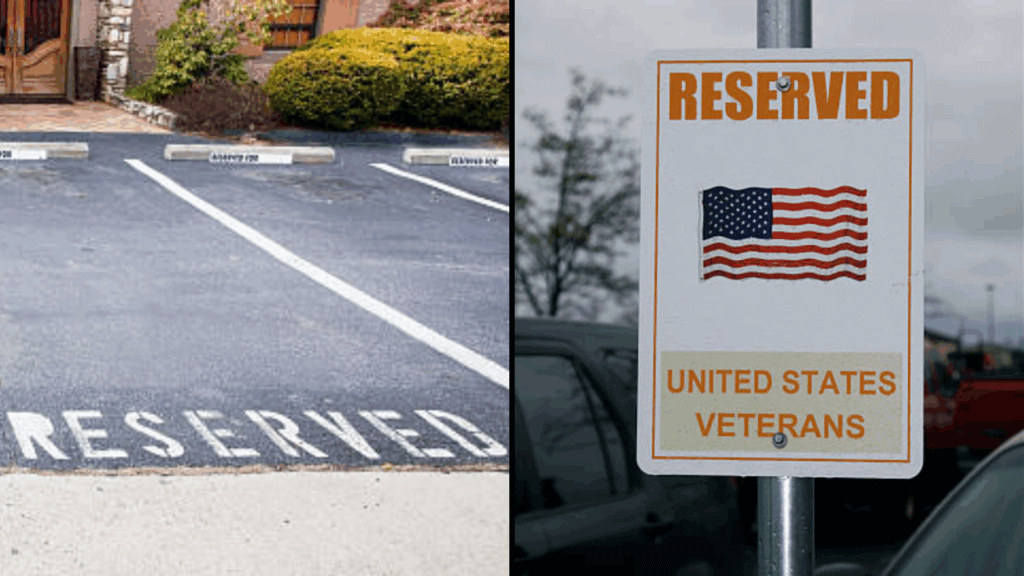
For stores and shopping centers, purple spaces are a way to signal respect for veterans without needing a major redesign. It’s visible, low-cost, and meaningful. And it gives businesses a chance to connect with local military communities. But critics argue private lots shouldn’t create “reserved” spaces that drivers don’t fully understand.
Supporters call purple spaces a small but powerful public thank-you. Skeptics worry the lack of uniform rules makes them confusing or that too many “special” spaces dilute attention from accessible parking. Some veterans love the recognition; others feel honor should come with clearer enforcement so the gesture isn’t ignored. The push-and-pull is exactly why these spaces keep trending.
What You Should Do If You See One

First, look for signage. If the lot is in a state or city that enforces Purple Heart spaces, there will usually be a sign explaining who can park there. If no rule is posted, treat it like a courtesy space: not illegal for most drivers, but meant to be left available when possible.
Purple parking spaces aren’t random decoration or a new brand color; they’re a public salute to combat-wounded veterans. But because the rules vary place to place, the purple paint can mean anything from a strict reserved spot to a respectful suggestion. Either way, it’s a reminder that some everyday spaces carry more meaning than we realize. And the next time you roll past one, you’ll know: that color isn’t about parking — it’s about honor.