

Products are selected by our editors, we may earn commission from links on this page.
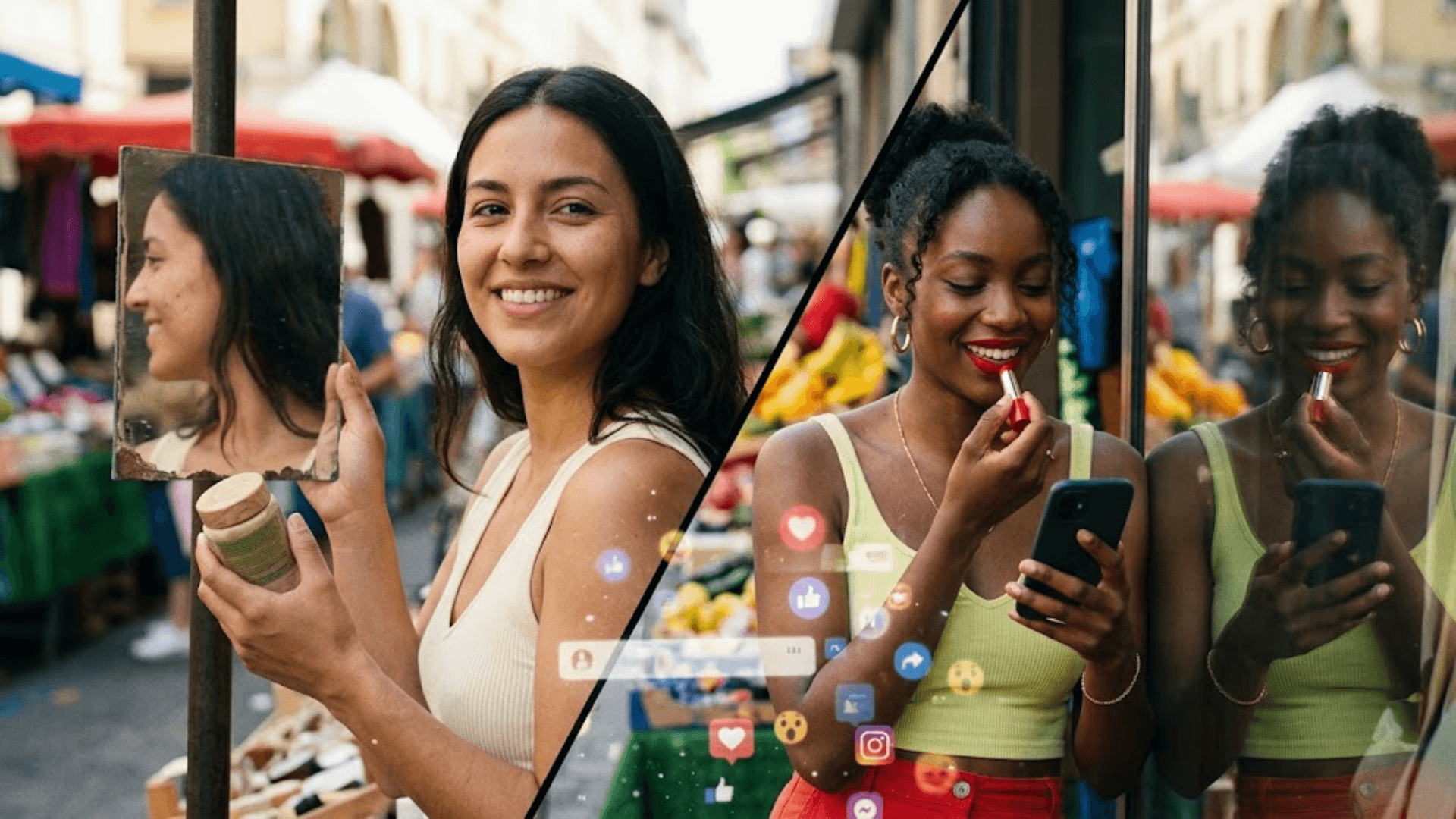
Scroll far enough online, and you will find lists claiming women who skip makeup share a specific set of personality traits, confidence, authenticity, resilience, and more. Actual psychological research tells a much messier story. The largest recent study on makeup and personality found real but small links, not a tidy personality profile. Reading someone’s character from their beauty routine turns out to be far less reliable than viral lists suggest.
This article was created with the assistance of AI and reviewed by our editorial team for accuracy and clarity.
The Largest Study on This Topic Looked at 1,410 Women
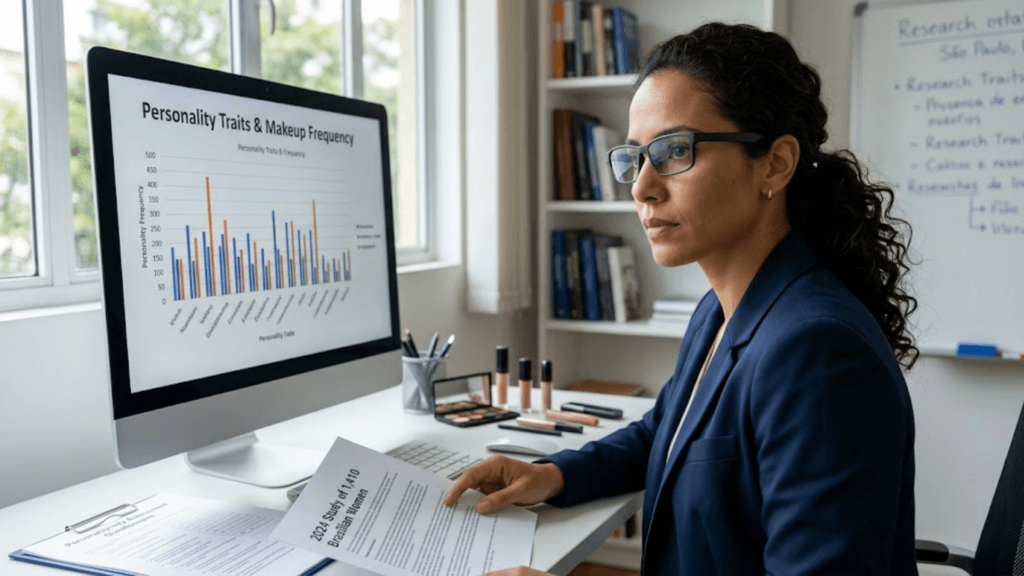
The most comprehensive recent research came from a 2024 study of 1,410 Brazilian women, led by researcher Anthonieta Looman Mafra and colleagues. Participants reported how often and how heavily they wore makeup, then completed standardized personality assessments measuring traits including narcissism, psychopathy, and the Big Five personality dimensions. That scale makes it one of the largest studies to directly connect makeup habits with measured personality traits rather than assumptions.
The Results Didn’t Match the Flattering Narrative Online

The results did not support a clean personality divide between minimal and heavy makeup wearers. Women who wore less makeup scored slightly lower on narcissism and extraversion, and slightly higher on psychopathic traits, compared to women who wore more. Every one of these differences fell within the normal range of personality and explained only a small portion of why women differ in makeup habits at all.
One Real Pattern Does Show Up Consistently in Research
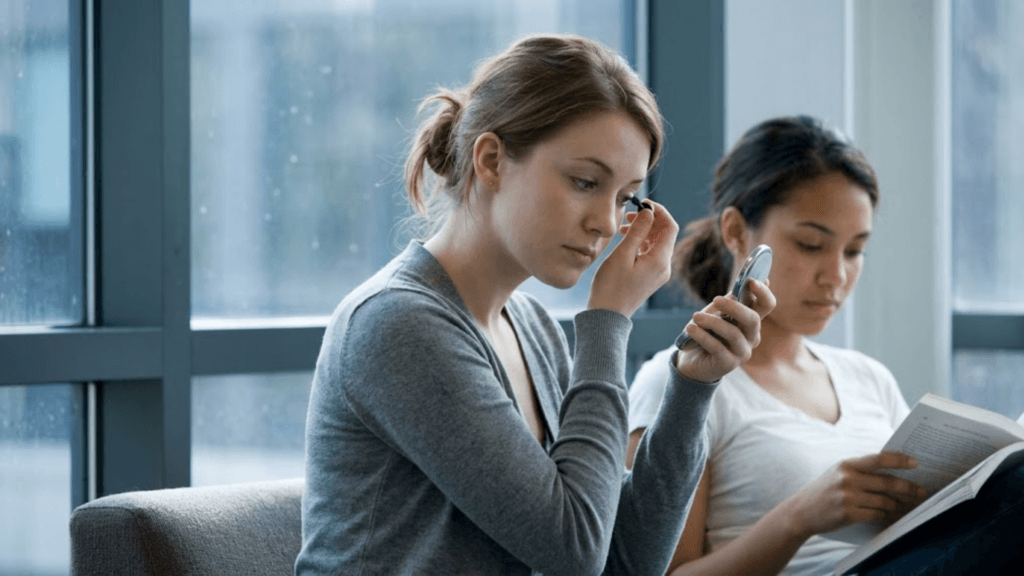
An earlier line of research does show one real, if narrow, pattern worth noting. A 2008 study by Robertson and colleagues found a positive correlation between frequent cosmetics use and anxiety, self-consciousness, and conformity. Women who reported wearing makeup less often tended to report higher social confidence and emotional stability. Correlation is not causation here, but the pattern has shown up consistently enough to interest researchers.
Confidence and Makeup May Actually Feed Each Other
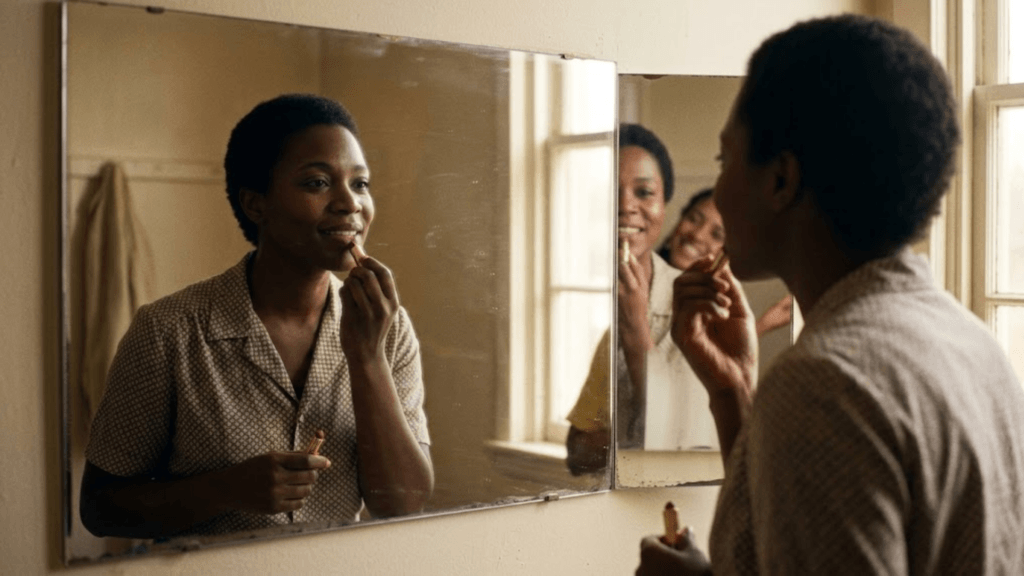
Confidence and makeup use may actually feed into each other rather than one simply causing the other. Research by Miller and Cox in 1982 found that women concerned about their appearance wore more makeup and believed it improved their social interactions. The researchers described a possible feedback loop: self-conscious women feel more attractive wearing makeup, act more confidently as a result, and get more positive responses that reinforce the habit.
Researchers Themselves Say You Can’t Guess Personality From a Face

Even the researchers behind the largest recent study were direct about the limits of their own findings. Writing about the 2024 Brazilian study, coverage in Psychology Today summarized the core conclusion plainly: “you can’t look at a woman’s face and reliably guess her personality profile.” The associations were statistically significant only because of the large sample size, not because they were large or meaningful on an individual level.
Not All Self-Esteem Points in the Same Direction

Self-esteem itself is not a single, simple predictor either, according to a separate 2022 study published in PLOS ONE. Researchers found that women with higher general self-esteem and body comfort tended to spend less money on makeup overall. Women with higher social self-esteem specifically, however, tended to spend more, suggesting different types of confidence push people toward opposite makeup habits rather than one universal pattern.
Sometimes Makeup Has Nothing to Do With Personality at All
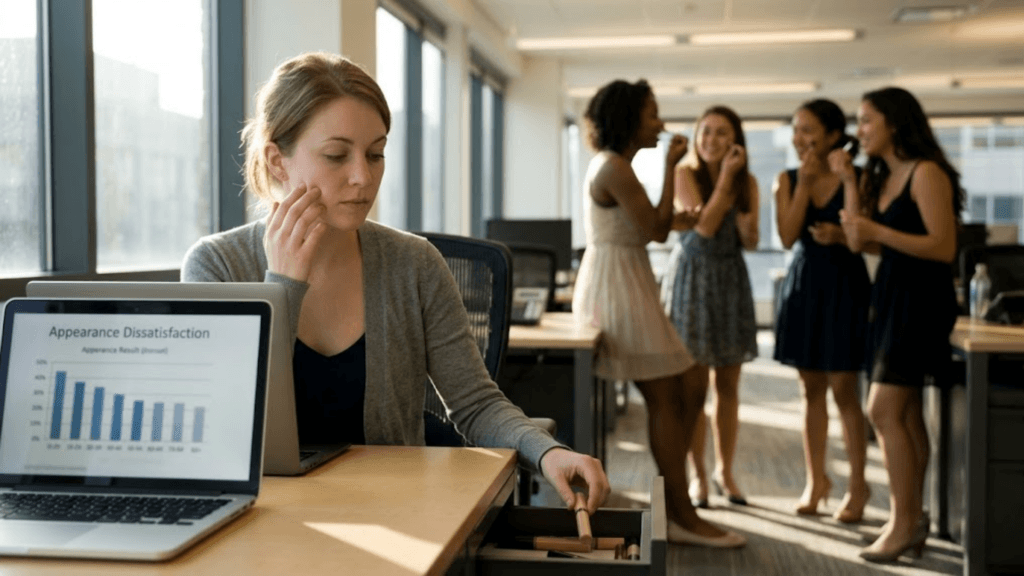
Makeup habits also shift for reasons that have nothing to do with personality at all. Research by Gentina and colleagues found that makeup can function as a ritual marking the transition into adulthood among adolescent girls, separate from any underlying trait. A separate study of American college women found 37 percent began wearing makeup specifically because they felt dissatisfied with their appearance at the time.
A Mirror, Not Makeup, Might Build Real Comfort
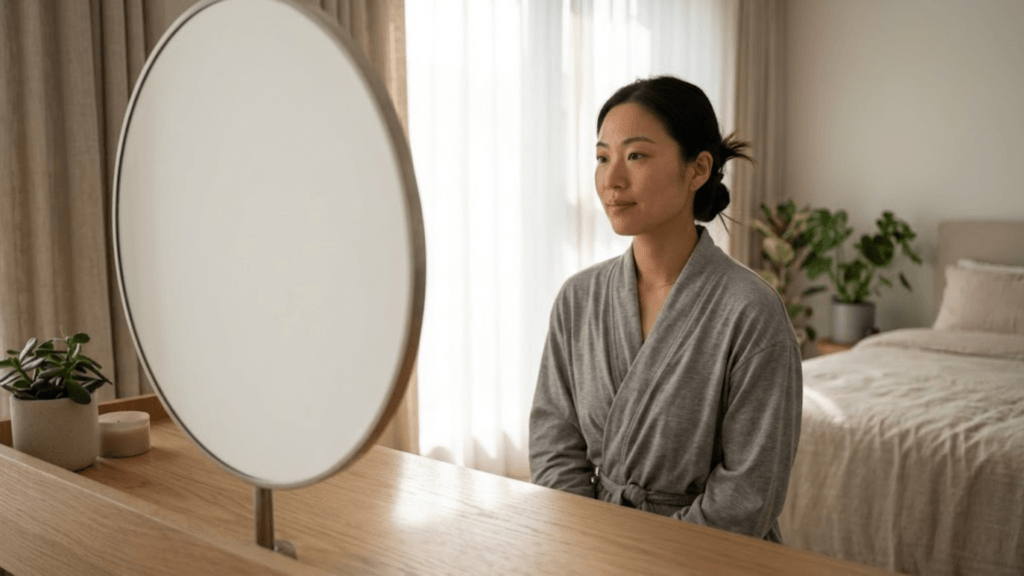
A small preliminary study by Well and colleagues in 2016 pointed toward a different path to comfort entirely. Women who spent two weeks simply looking at their own reflection in a mirror, without any specific goal, reported feeling more comfortable with their natural appearance afterward. They also reported reduced stress and increased self-compassion, suggesting familiarity with one’s own face may matter more than makeup choices themselves.
There Is No Single “Type” of Woman Behind a Makeup Routine
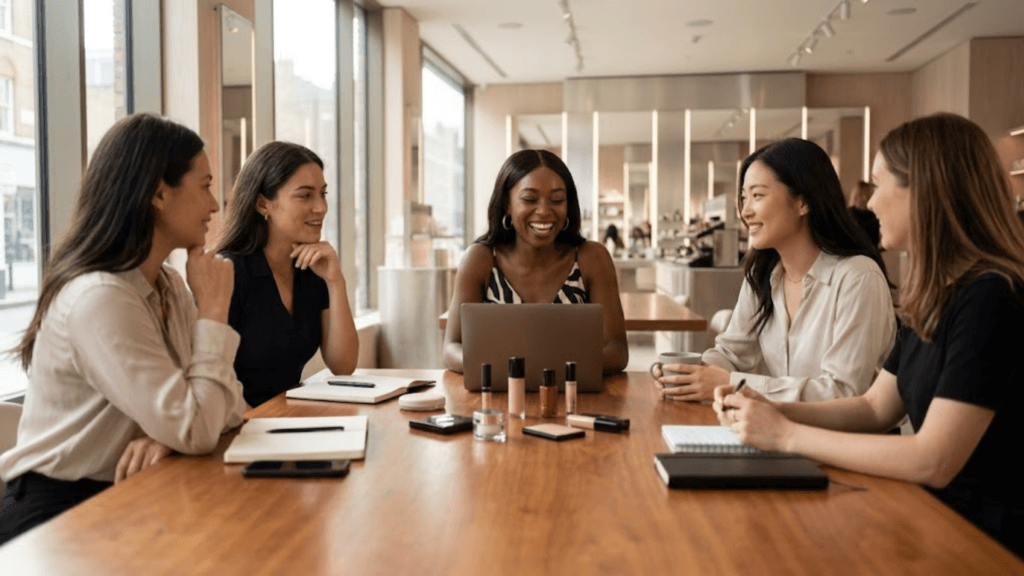
Taken together, the actual research points toward one clear conclusion: makeup habits reflect a mix of social, practical, cultural, and personal motives, not a single underlying type of woman. A minimal makeup routine might reflect genuine self-acceptance for one person and simple convenience or workplace norms for another. The confident personality lists floating around online make for satisfying reading, but the science behind them is far more uncertain than they let on.