

Products are selected by our editors, we may earn commission from links on this page.
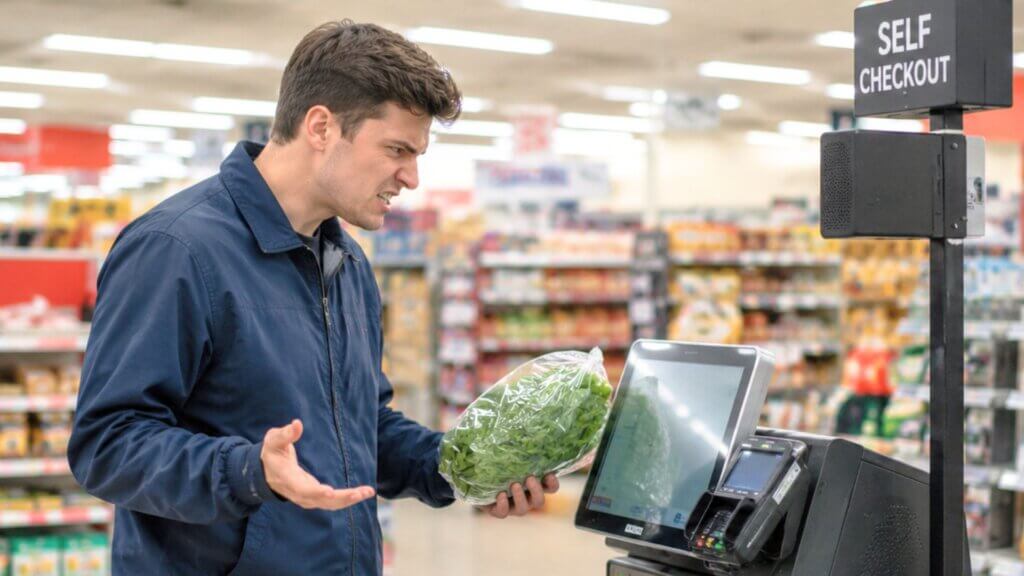
Brock Perkins holds up his grocery haul in a TikTok video and says something that stops scrollers mid-swipe: he never uses the self-checkout lane. Not because it’s broken, not because it’s slow. He’s got specific reasons. Now, shoppers who’ve never met him start agreeing with a stranger’s grocery store confession.
This article was created with the assistance of AI and reviewed by our editorial team for accuracy and clarity.
Perkins Says Self-Checkout Is Costing Us Our Communities
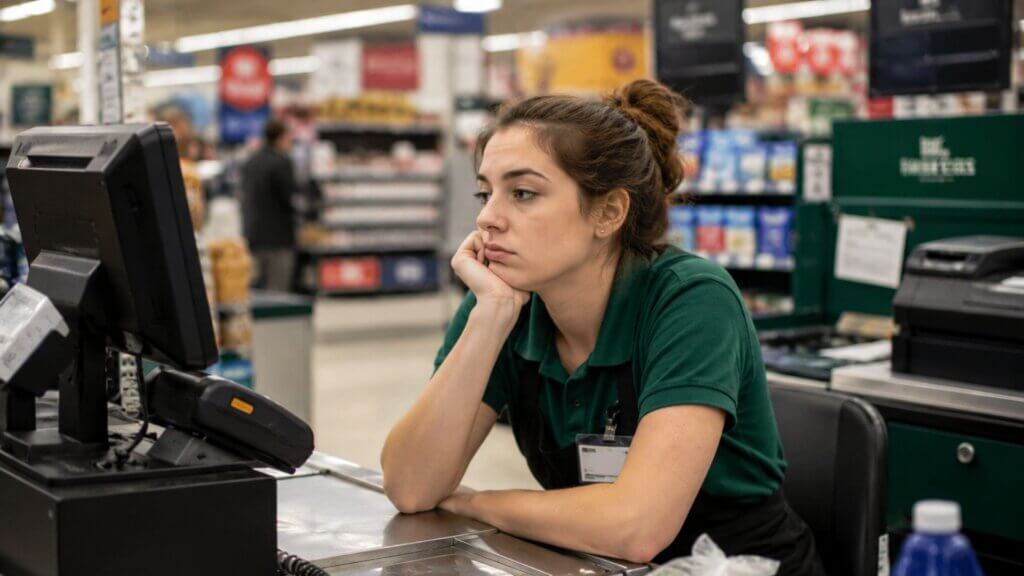
“It’s gonna help you connect back to your community,” Perkins says in his video, pointing out that at most stores now, two cashiers stand idle while every register light blinks at the self-checkout kiosks. He argues that swapping a few seconds of small talk for a solo scan-and-bag routine quietly erodes something. Trauma-informed coaches back the idea that brief exchanges with strangers measurably lift mood.
Shoppers Say They’re Doing Unpaid Work for the Store
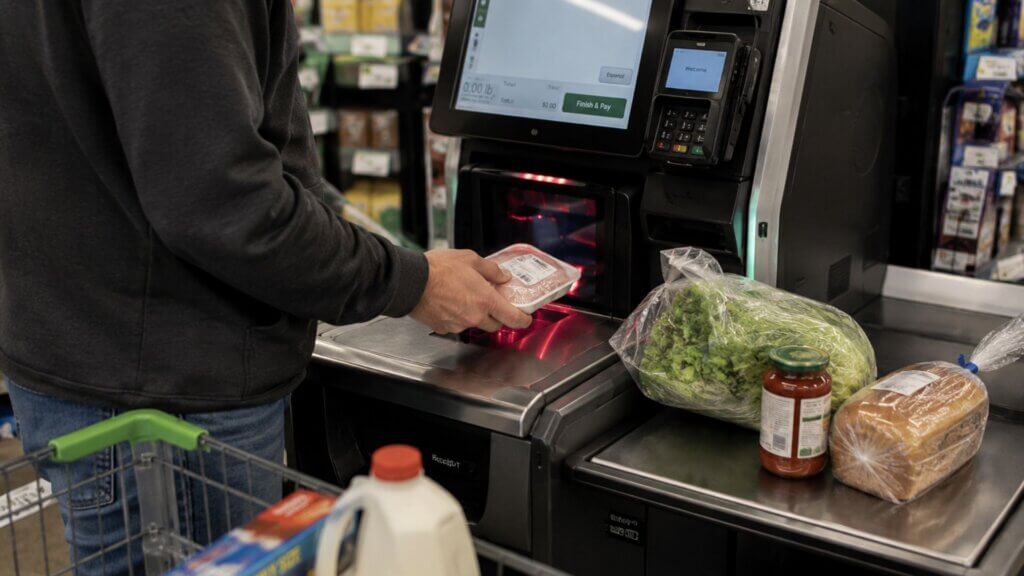
Scanning, bagging, and fixing your own errors used to be a cashier’s job. Now shoppers do it themselves, and many resent it. Surveys on self-checkout adoption describe a split reaction researchers call “value co-creation” versus “value extraction,” where some shoppers feel empowered by control, and others feel used as free labor. That resentment isn’t rare. It shows up repeatedly in customer satisfaction research as a real driver of dissatisfaction, not just internet griping.
Scanning Your Own Groceries Taxes the Brain More Than You’d Think
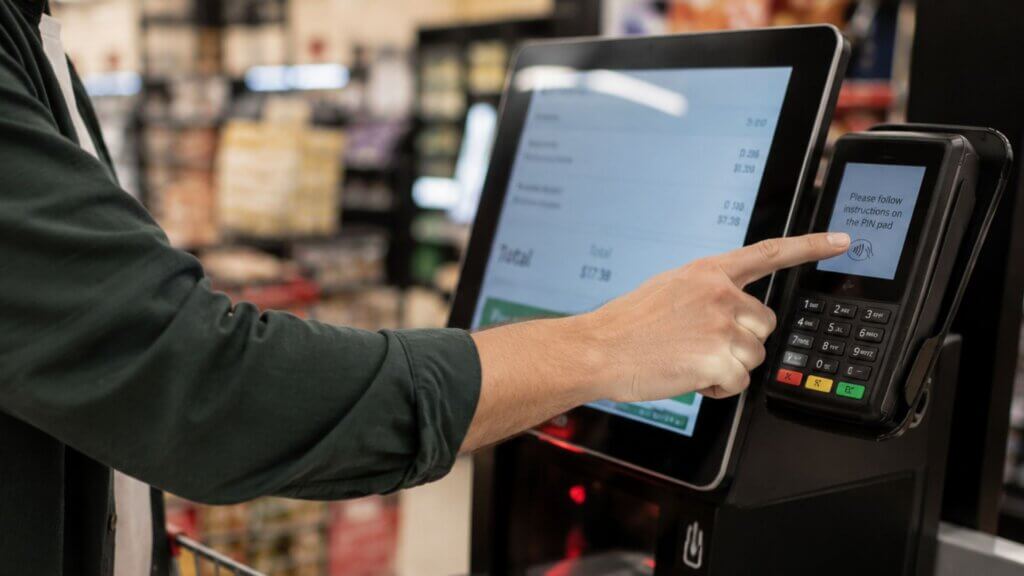
A self-checkout screen looks simple until you’re standing in front of it after a ten-hour shift, trying to remember which button weighs the produce. Studies on cognitive workload find that self-checkout use spikes mental effort, especially when shoppers are rushed or tired. That spike pushes people toward feeling like the machine is extracting labor from them rather than serving them. A tired brain does not want to troubleshoot a barcode scanner. It wants a cashier.
One Wrong Scan Can Turn a Quick Trip Into a Standoff
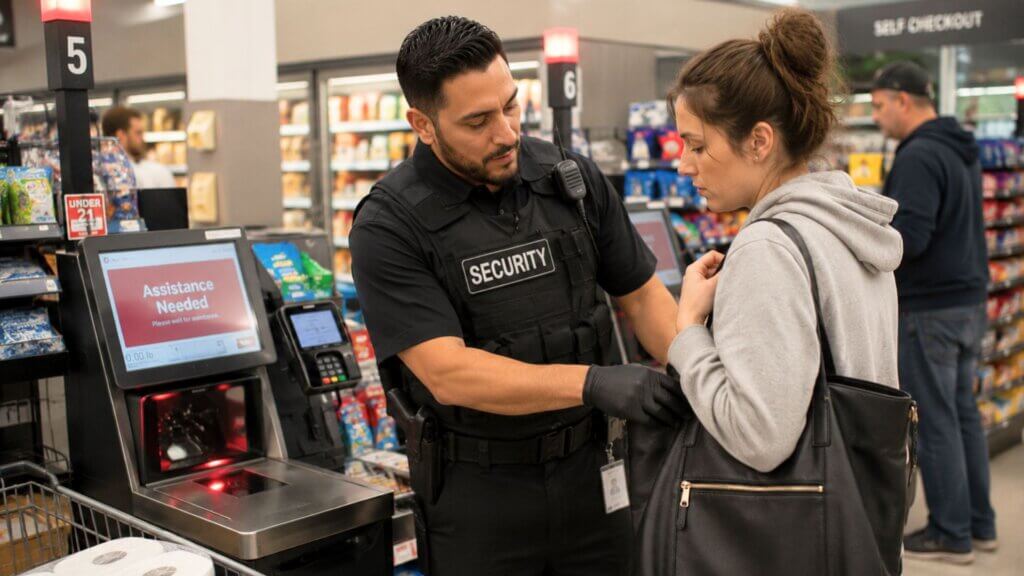
Self-checkout anxiety is a documented phenomenon, not just a personality quirk. Shoppers who are less comfortable with technology report real dread over accidentally triggering the “unexpected item in bagging area” alert, or worse, being flagged for suspected theft. That fear alone is enough to send some customers straight to a staffed lane every time, regardless of how long the line is. The machines were built to remove friction. For a large slice of shoppers, they added it.
The “Faster” Checkout Line Isn’t Always Faster
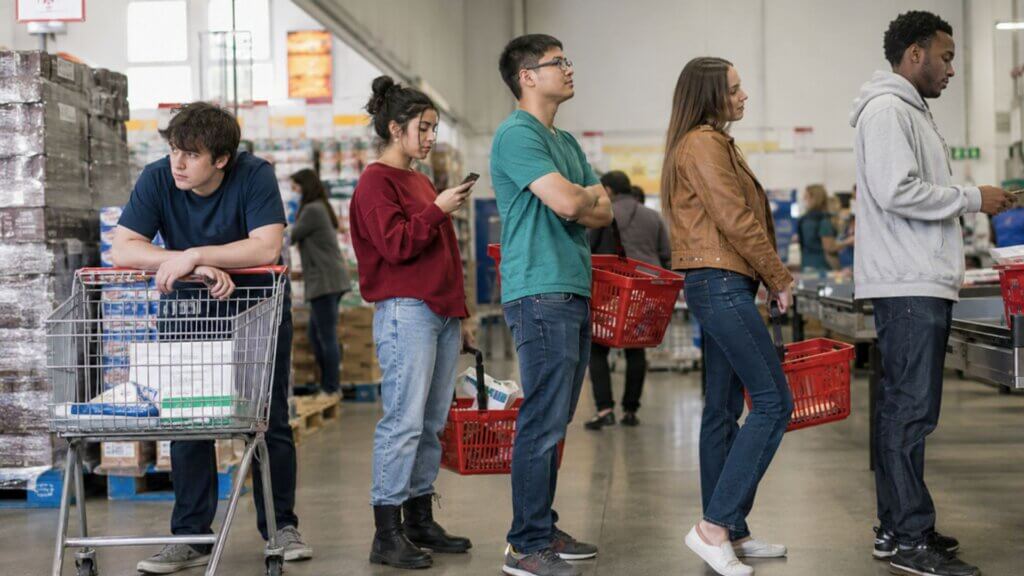
Self-checkout was sold on speed, but that promise falls apart during rush hour. Machines misread items, scales flag weight mismatches, and inexperienced users fumble through prompts, and all of it stacks up into waits that can outlast a staffed register. Perkins’ video taps into this directly. Errors don’t just cost seconds. They break the momentum of the entire transaction, forcing shoppers to flag down the one employee assigned to watch six kiosks at once.
Self-Checkout Satisfaction Drops the Moment Help Disappears
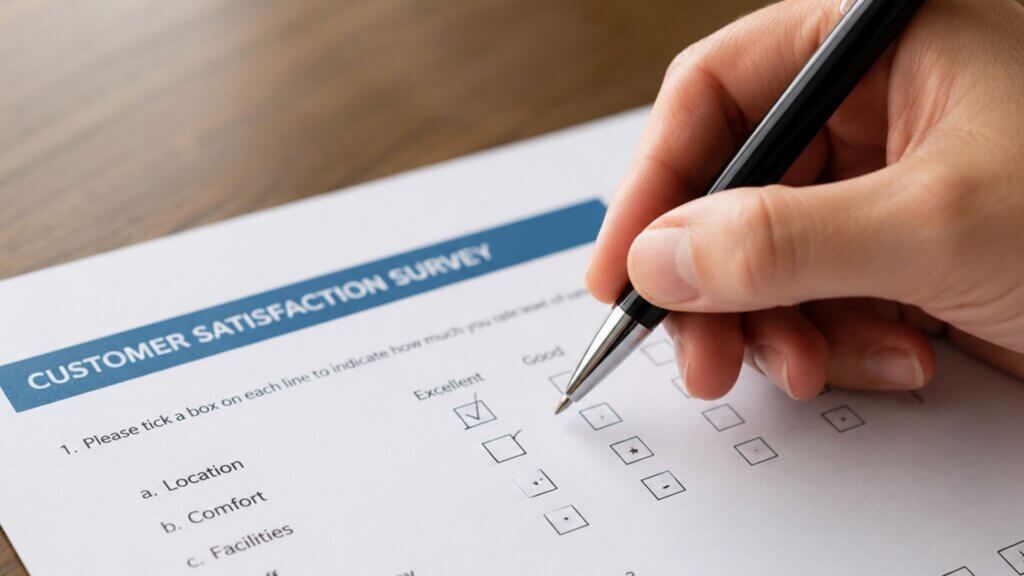
A Turkish supermarket study surveying 275 shoppers found that perceived service quality directly shapes whether people come back. Take away visible staff support, and satisfaction slides even if the transaction itself goes smoothly. Shoppers don’t just want a fast checkout. They want to feel like someone has their back if something goes wrong. Self-checkout, by design, removes that safety net, and customers notice the absence more than retailers expected.
Self-Checkout Wins With a Basket of Five, Loses With a Cart of Fifty
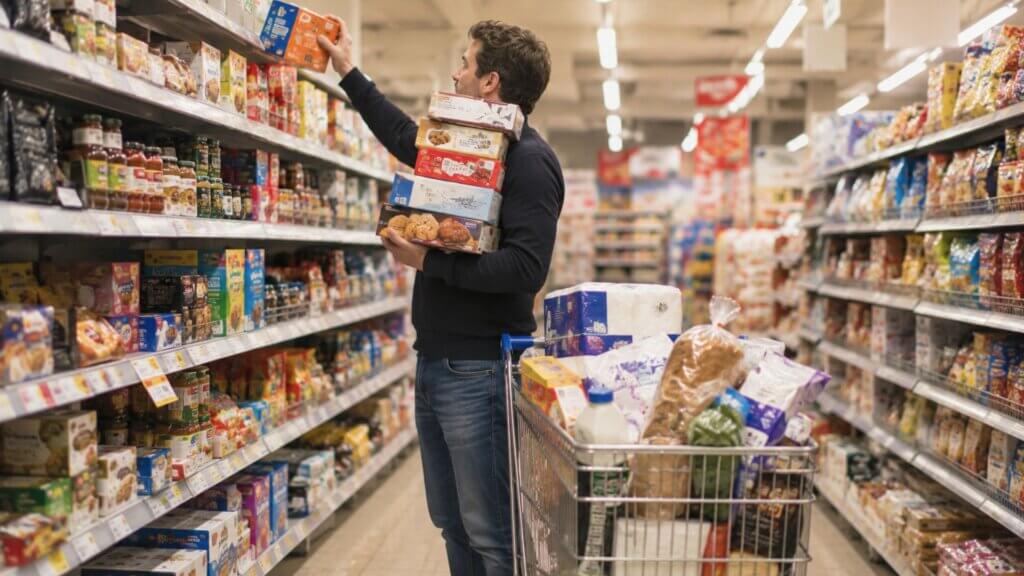
The math on self-checkout only works in narrow conditions. A shopper grabbing milk and bread breezes through. A shopper with a full cart hits a wall: weighing produce, bagging fragile items, scanning barcodes buried under other groceries. What was marketed as a universal upgrade turns out to be a tool built for a specific kind of trip. Outside that narrow window, a staffed lane handles the same cart in a fraction of the time.
Retailers Are Quietly Struggling With Their Own Machines
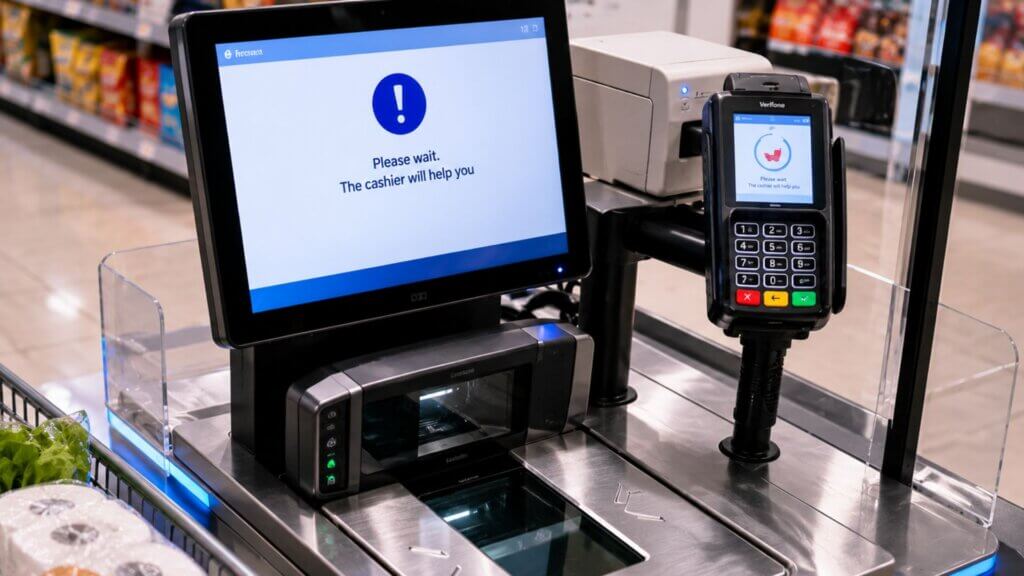
Self-checkout was supposed to cut labor costs, but stores now spend heavily on machine maintenance, monitoring stations, and loss prevention staff to watch for errors and theft. A Malaysian retail study found that technical malfunctions and slow response times consistently drag down satisfaction scores. The efficiency retailers banked on gets eaten up by the very systems meant to deliver it. Some chains have started quietly scaling self-checkout back.
The Answer Isn’t Choosing a Side, It’s Keeping Both Lanes Open
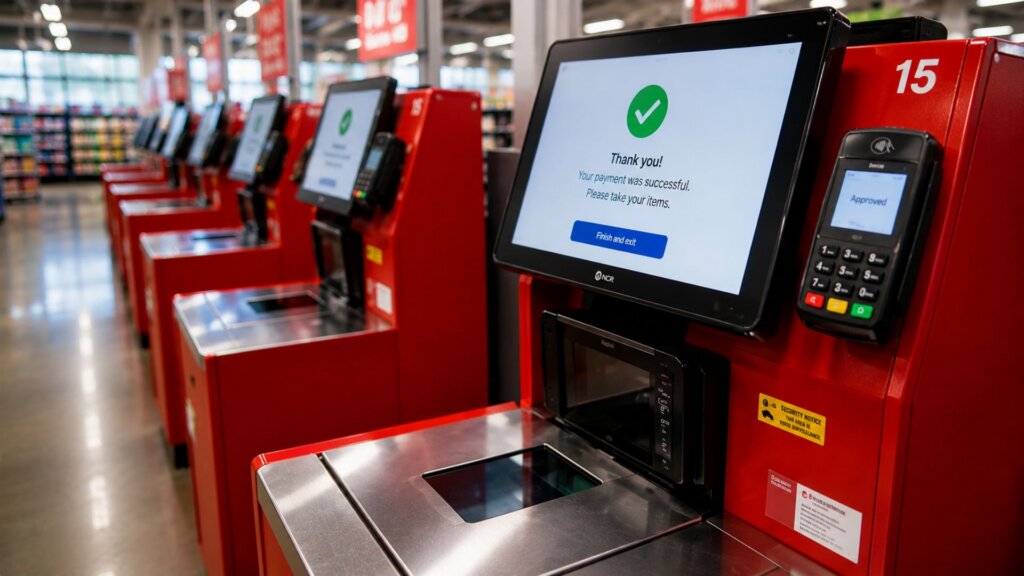
Perkins never argued for shutting down self-checkout entirely, and neither does the research. Some shoppers want speed and solitude. Others want a cashier who remembers their name and doesn’t care if they’re weighing bananas wrong. Stores that keep both options intact see steadier loyalty than those betting everything on automation. The lesson from a viral TikTok video turns out to match years of retail data: taking away the choice is the actual mistake.