

Products are selected by our editors, we may earn commission from links on this page.

On March 12, 2026, the American Society of Plastic Surgeons told patients to research cosmetic procedures and the people performing them before committing to anything. The group represents roughly 12,000 doctors in the United States. Its statement followed a joint investigation by KFF Health News and NBC News into allegations of serious injuries and deaths connected to cosmetic surgery chains. Scott Hollenbeck, the society’s immediate past president, put the reasoning plainly to KFF: plastic surgery is real surgery with real risks, and the risk of complications is never zero. The society named liposuction, Brazilian butt lifts and the package of procedures marketed as a Mommy Makeover as the ones patients should examine most carefully.
This article was created with the assistance of AI and reviewed by our editorial team for accuracy and clarity.
Advertising language is not a credential

Patients often read a clinic’s marketing as evidence of qualification, and that assumption is where the investigation found trouble. Several lawsuits cited by KFF Health News and NBC News accuse cosmetic surgery companies of hiring poorly trained doctors and running advertising that plays down safety risks. The companies dispute those allegations. The gap matters because the terms used in cosmetic advertising are not regulated the way credentials are. A practice can call itself a cosmetic surgery center without every physician inside it holding surgical board certification. Nothing in a clinic’s name, its before-and-after gallery, or its social media following establishes what training the operating physician completed.
What board certification actually certifies

Board certification is the specific thing the society is telling patients to confirm. The American Board of Plastic Surgery, one of the member boards of the American Board of Medical Specialties, requires completion of an accredited residency in plastic surgery, then written and oral examinations, then periodic recertification. A medical license is a separate and much lower bar. State licensure permits a physician to practice medicine, and in most states it does not restrict which procedures that physician may perform. A doctor trained in another specialty entirely can legally offer liposuction. Certification by a board that sounds similar but is not recognized by the American Board of Medical Specialties does not carry the same residency requirement.
The money moving through these procedures

Some cosmetic procedures covered in the investigation cost up to $20,000. That figure sits outside the insurance system almost entirely, since elective cosmetic work is rarely covered, which means the transaction is direct between patient and practice. That structure shapes the incentives around it. There is no insurer reviewing medical necessity, no prior authorization step, and no third party examining whether the facility suits the procedure. Financing offers and package pricing fill the space insurance normally occupies. For a patient, the practical consequence is that the usual outside checks on a surgical decision are absent, and the verification work falls to them.
The California case at the center of the reporting

The investigation focused in part on Heidi Regenass, a plastic surgeon in California. Malpractice lawsuits allege that three patients died within a span of months after she performed liposuction and fat transfer procedures. Regenass has denied negligence in her court filings. One of the suits was settled in 2024, and two remained pending as of March 2026. Separately from the lawsuits, the California Medical Board filed a complaint on February 9 accusing Regenass of repeated negligent acts in the case of a 49-year-old woman who underwent liposuction and fat transfer in 2022. The board’s filing states that the surgeon failed to document a proper examination and did not keep adequate records.
How to check a surgeon before you book

Two verifications take a few minutes each. The American Board of Plastic Surgery maintains a public directory where a patient can enter a physician’s name and see whether that certification is current. Every state medical board publishes a license lookup that shows license status and, in most states, any disciplinary action already finalized against that physician. The second item the society flags is the facility. Accrediting bodies including the American Association for Accreditation of Ambulatory Surgery Facilities, the Accreditation Association for Ambulatory Health Care, and the Joint Commission inspect operating rooms for equipment, staffing and emergency protocols. Each maintains a searchable list of the facilities it has accredited.
Finalized discipline is public, open investigations are not

This is the gap the investigation exposed, and it is the one patients are least likely to anticipate. A state board license lookup shows completed disciplinary actions. It generally does not show that a physician is currently under investigation, because those files stay confidential until the board files a formal accusation. TJ Watkins, a member of California’s medical licensing board, argued the public should be told. If you were really protecting the patients, Watkins said, there would be a notice right now that says this doctor is being investigated. The practical result is that a clean lookup result can coexist with an active inquiry, and the patient searching that name sees only the first.
A complaint from a patient’s family moved one case

Tamala Smith died in 2023 after cosmetic surgery performed by Regenass. Smith’s daughter subsequently filed a complaint with the California Medical Board asking it to investigate. That sequence shows how much of the oversight system runs on outside reporting rather than automatic review. State medical boards are complaint-driven bodies. No notification reaches a board when a patient dies after an elective procedure in a private facility, and no routine audit scans outcomes across practices. Someone has to file. The complaint from Smith’s daughter is the step that put the matter in front of the board, and without it the board would have had no case before it.
Why the society pointed at these specific procedures
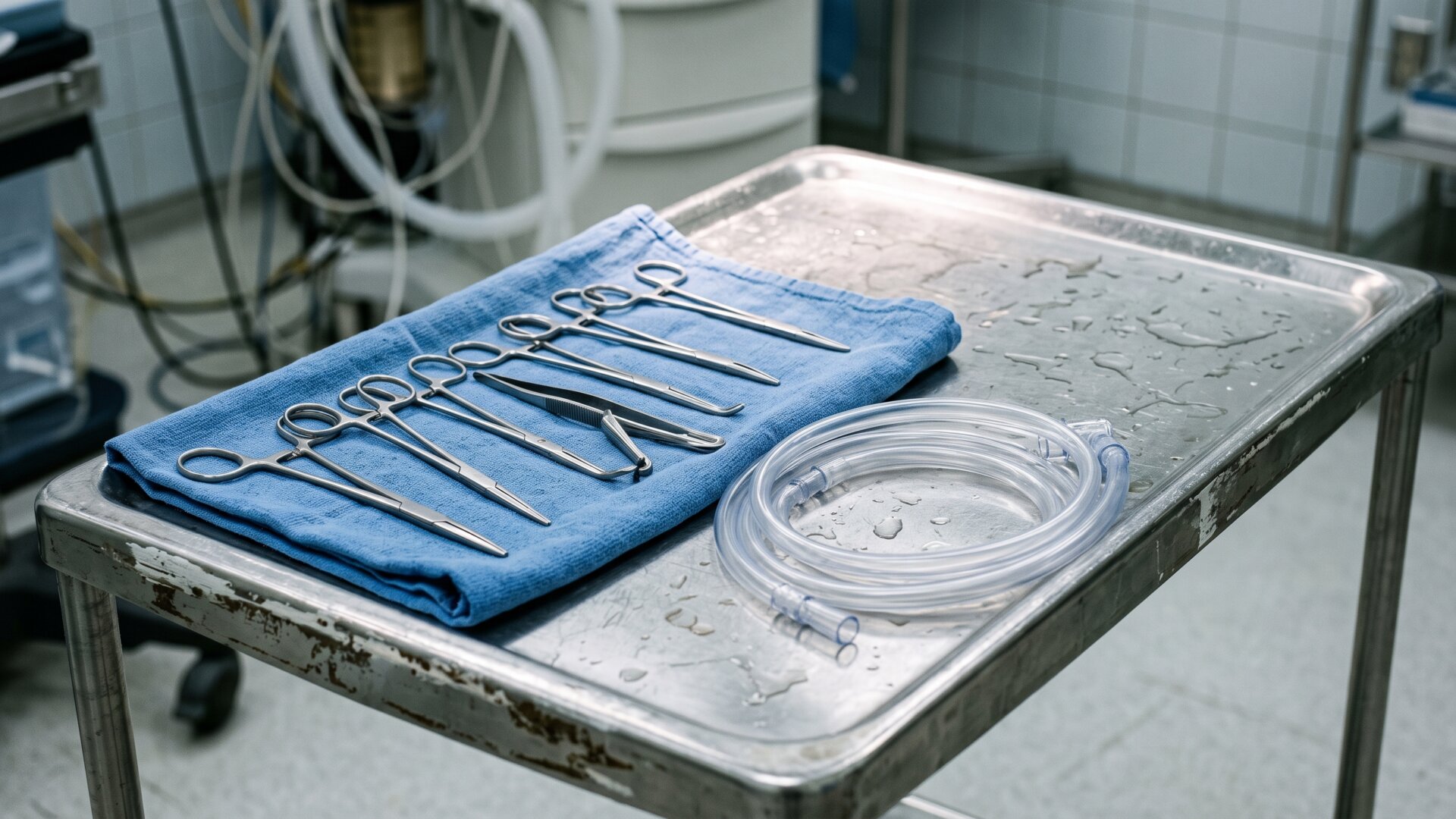
The three procedures named in the advisory, liposuction, Brazilian butt lifts and Mommy Makeovers, share features that explain the selection. All three move or remove substantial volumes of tissue. Liposuction and fat transfer, the pair at issue in the Regenass filings, are frequently performed together as a single operation. The Mommy Makeover is not one procedure but a marketing term for several combined in one session, often abdominoplasty with breast surgery. Hollenbeck’s framing for KFF applies most directly here: these are operations, performed under anesthesia, with the complication profile that implies. The length of a combined session and the volume of tissue involved are the variables that distinguish them from minor office work.
The investigation also produced a transparency demand

The reporting did more than prompt advice to patients. It generated calls for state boards to disclose when a physician is under active investigation, a change that would alter what a license lookup shows rather than what any individual patient asks. Watkins, who sits on the California board, made that case directly in the reporting. As of March 2026, the Regenass matters had not been resolved. Two malpractice suits were pending, one was settled in 2024, and the board’s February 9 complaint had been filed but not adjudicated. Until any rule changes, the verification sits with the patient: confirm the board certification, confirm the facility accreditation, and ask the surgeon directly whether any investigation is open.