


Products are selected by our editors, we may earn commission from links on this page.
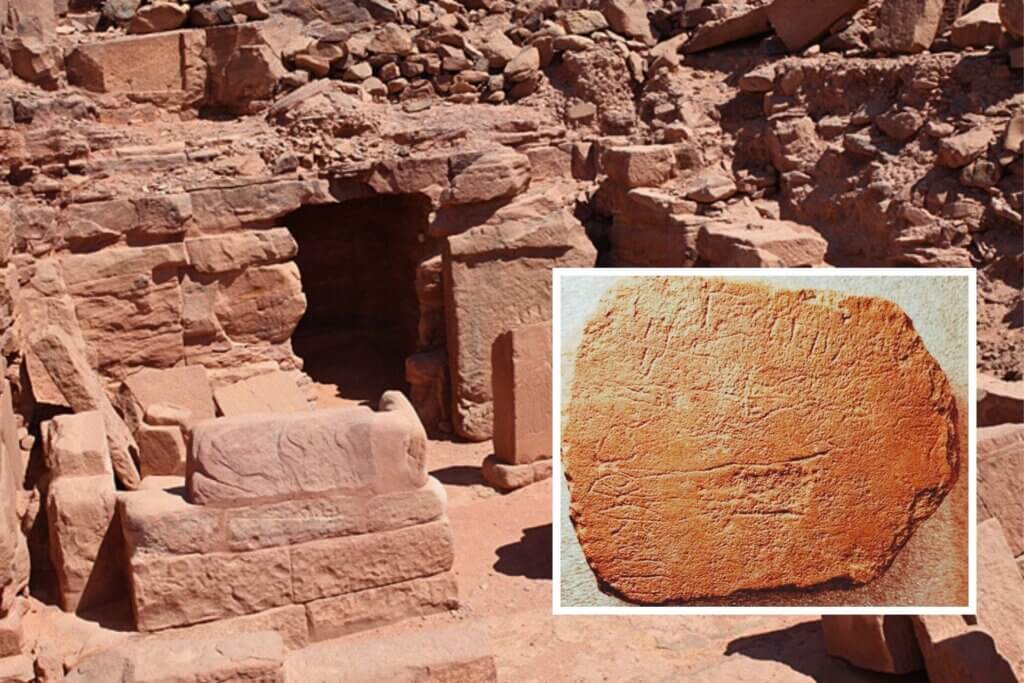
A set of ancient inscriptions carved into the walls of Egyptian mining caves is once again at the center of debate over the Bible’s earliest stories. Dating back roughly 3,800 years, the markings were left by Semitic-speaking workers at the turquoise mines of Serabit el-Khadem in the Sinai Peninsula. While the inscriptions themselves are not new, renewed attention has followed a recent reinterpretation that has prompted fresh claims about their possible connection to biblical figures and events.
The inscriptions are written in what scholars call proto-Sinaitic or proto-Canaanite script, widely regarded as one of the earliest known alphabetic writing systems. According to the Biblical Archaeology Society’s analysis of the site, these symbols represent a key transitional moment between Egyptian hieroglyphs and later alphabets used in Hebrew, Greek, and Latin.
What has stirred controversy is how some modern interpretations have framed the inscriptions. In particular, independent researcher Michael S. Bar-Ron has proposed a reinterpretation of one inscription that he argues reflects Northwest Semitic religious language familiar from later biblical tradition. His work has drawn public attention, even as many scholars caution that such conclusions go beyond what the inscriptions can reliably support.
What Was Found at Serabit el-Khadem
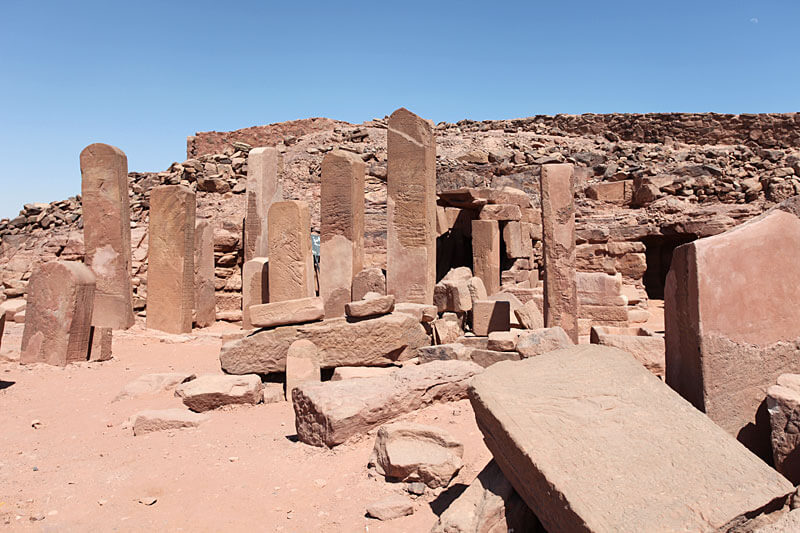
Serabit el-Khadem was an Egyptian mining complex active for centuries, particularly during the Middle Kingdom. Egyptian expeditions came to the area for turquoise, a valuable material used in jewelry and religious objects. Alongside hieroglyphic inscriptions dedicated to the goddess Hathor, researchers discovered simpler, alphabetic markings scratched into rock walls by Semitic laborers working at the site.
These inscriptions were first documented in the early 1900s by archaeologist Sir Flinders Petrie. Later scholars identified recurring symbols, including an ox head, water lines, and a human figure, which correspond to early alphabetic letters that eventually evolved into familiar forms like A, M, and R. The inscriptions are typically short and fragmentary, making translation difficult and often disputed.
One frequently recurring term appears to reference “Baalat,” a Semitic deity whose name means “Lady,” likely associated with Hathor at the mining site. This has led researchers to conclude that Semitic workers adapted their own religious traditions within an Egyptian religious landscape, rather than recording a single biblical narrative.
Why Some See Biblical Connections and Why Scholars Push Back
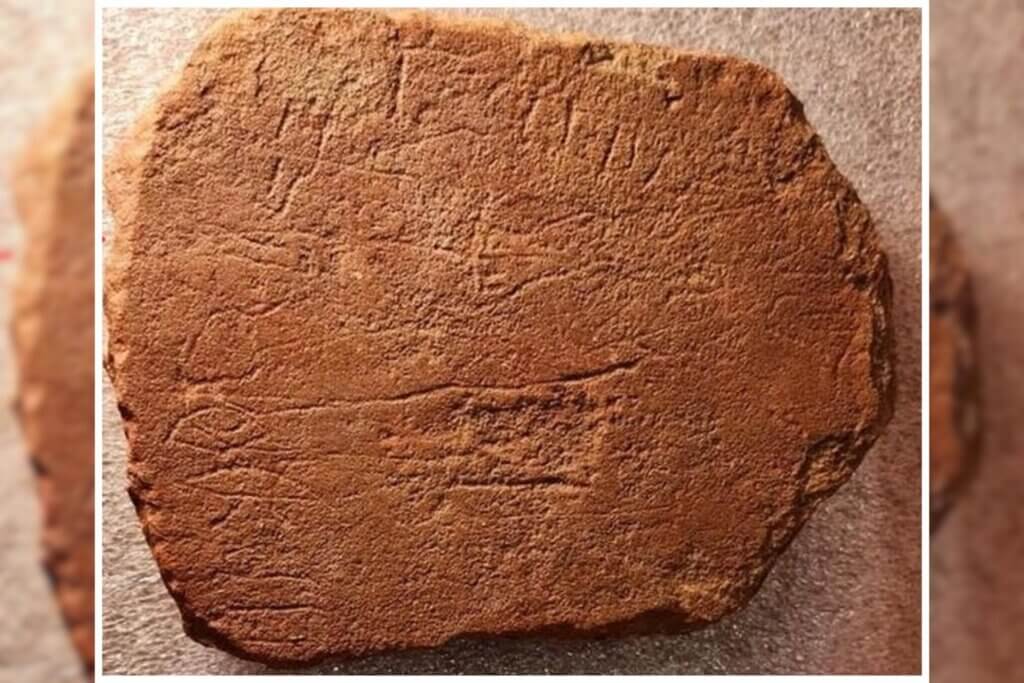
Recent attention has focused on a particular inscription often labeled Sinai 357, which has become central to renewed biblical debate. Michael S. Bar-Ron, an independent researcher, has argued that several characters in the inscription can be read as part of a Northwest Semitic phrase that includes the name “Moses”. In analysis discussed by National Geographic, Bar-Ron suggests the sequence of symbols may represent an early Semitic devotional text rather than a simple mining record, raising the possibility that the inscription reflects religious language later preserved in the Hebrew Bible.
Bar-Ron’s interpretation hinges on how individual symbols are identified and read. He argues that certain characters correspond to consonantal sounds that, when read together, resemble the name Moses, written without vowels as was typical in early Semitic scripts. Bar-Ron has emphasized that his work does not claim definitive proof of the biblical figure or the Exodus, but rather proposes that the inscription may preserve religious or personal names familiar from later Israelite tradition.
Other scholars have responded with caution. Aren Maeir Wilson-Wright, an assistant professor of Hebrew Bible and Semitic languages at the University of Texas, has argued that the same characters can be read differently and more plausibly form a votive dedication to a deity. Writing for the Journal of the American Oriental Society, Wilson-Wright and other epigraphers note that proto-Sinaitic inscriptions lack vowels and standardized grammar, making name identification highly speculative. They also stress that Hebrew had not yet emerged as a distinct written language at the time most scholars date the inscription, which they place between roughly 1850 and 1550 BCE.
What the Inscriptions Actually Tell Us About the Ancient World
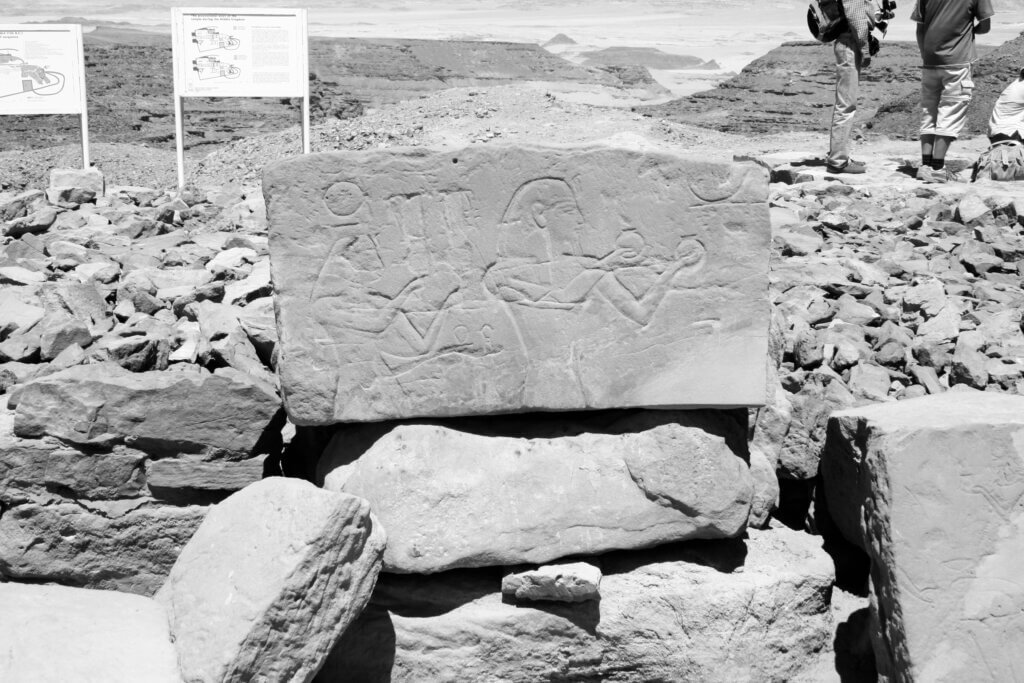
Rather than confirming biblical stories, researchers say the inscriptions offer something equally important: a glimpse into how writing itself emerged. According to the Biblical Archaeology Society, the miners at Serabit el-Khadem simplified complex Egyptian hieroglyphs into symbols representing sounds rather than ideas, a breakthrough that made writing accessible beyond elite scribes.
They also reveal cultural overlap. The presence of Semitic religious terms alongside Egyptian deities suggests a shared, blended environment where workers brought their beliefs into imperial systems rather than existing in isolation. This context helps historians understand daily life in frontier zones of the ancient world, where labor, religion, and language intersected.
For scholars, the renewed debate highlights a recurring tension between popular storytelling and careful archaeology. While the inscriptions do not provide evidence for Moses or the Exodus, they remain historically significant for what they do document: the earliest steps toward alphabetic writing and the lived experiences of Semitic workers in ancient Egypt. As interest in the biblical past continues, researchers say these inscriptions remind us that history is often more complex, and more fascinating, than simple confirmation stories.