


Products are selected by our editors, we may earn commission from links on this page.

Astronomers have identified an extraordinary, ultra-massive structure that challenges current cosmic theories, prompting a wave of careful analysis and heated debate. Below are ten focused reflections that explain why this finding matters, how researchers are testing it, and what it could mean for our picture of the universe.
A surprising discovery

A team measured signals that point to an object far heavier and more compact than expected, a result that immediately raised eyebrows among specialists. Its existence contradicts straightforward predictions from standard formation models.
A clash with expectations
The anomaly forces a direct confrontation between observation and theory, because models that reproduce the large scale universe struggle to produce something so extreme in the available cosmic time. That mismatch is the core of the controversy.
Unusual internal structure
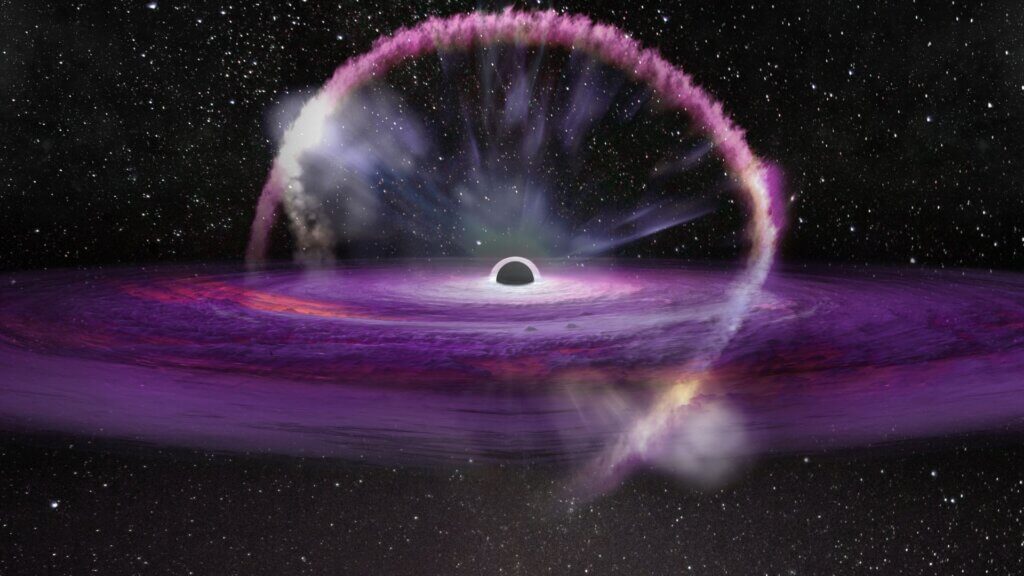
Beyond sheer mass, the target shows a layered configuration, with dense cores inside a surprisingly coherent outer region, a setup that standard collapse scenarios rarely produce. This spatial arrangement deepens the theoretical puzzle.
How astronomers investigate
Researchers combine imaging, spectroscopy, and lensing analysis to infer mass and composition, then subject those results to independent checks. The work is painstaking, statistical, and designed to eliminate instrumental or processing errors.
The role of gravitational lensing

Light bending by intervening matter permits indirect weighing of remote systems, and lensing patterns were central to the original claim. Because these signals are subtle, teams are reexamining assumptions about foreground structure and modeling choices.
Why it would rewrite history

If confirmed, this structure implies that mass assembly in the early universe happened more efficiently than our equations allow, which would ripple through ideas about dark matter, star formation, and cosmic timelines. Any proposed fix must also fit the vast body of existing observations.
Scientists’ caution in public messaging

Researchers balance enthusiasm with restraint when describing outliers, because premature hype can mislead the public and misrepresent uncertainty. Clear analogies and measured explanations help audiences grasp both the significance and the limits of current evidence.
The scientific process on display

This episode highlights how science self-corrects, as teams reanalyze data, invite replication, and consider alternate hypotheses until a consensus emerges or models are revised. That iterative cycle is the best tool we have to separate real anomalies from artifacts.
Data integrity and methodology

Robust claims require rigorous pipelines, transparent code, and careful handling of uncertainties, practices increasingly adopted across astronomy to avoid false positives. Cross-disciplinary scrutiny by statisticians and computational experts strengthens confidence.
Rethinking our cosmic narrative

Whether this behemoth forces a major theoretical adjustment or is eventually accommodated by refined measurements, its discovery reasserts that the universe still holds surprises. Such stubborn findings are the seeds of deeper understanding, and they push the next generation of researchers to rethink assumptions.