


Products are selected by our editors, we may earn commission from links on this page.

A high-profile exchange between NASA and Harvard astrophysicist Avi Loeb has renewed public curiosity about 3I/ATLAS, the interstellar visitor passing through our Solar System. Below is a clearer, friendlier rewrite that keeps the facts accurate, smooths the syntax, and adds one extra line in each paragraph so readers have a little more context and explanation.
Context of the announcement
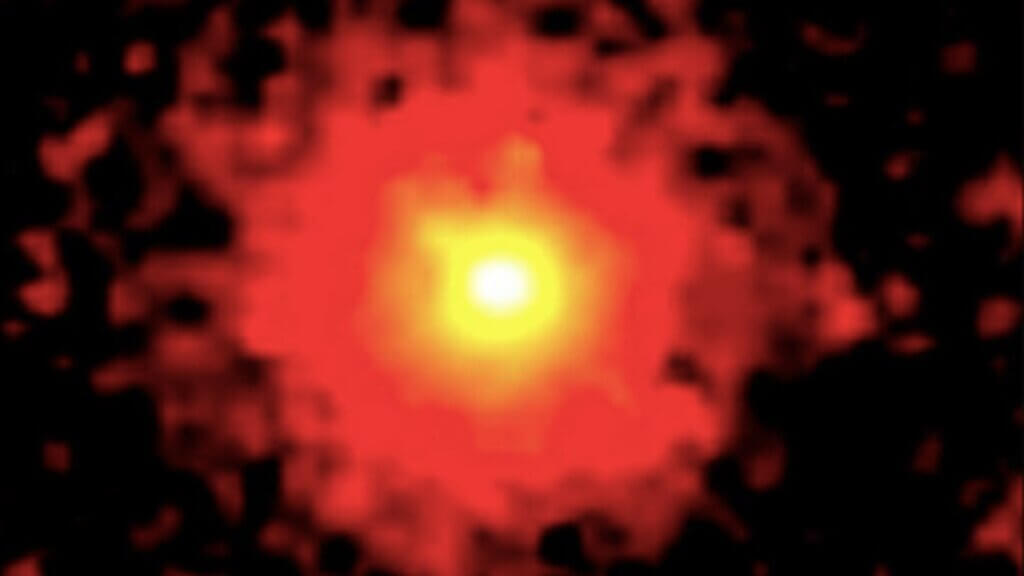
At a recent NASA press briefing, agency scientists presented new close-up images and concluded that 3I/ATLAS shows comet-like behavior, including gas and dust being released as it warmed near the Sun. The images and data came from several spacecraft and telescopes that captured the object during its journey through the inner system.
A contrasting view from Harvard
Avi Loeb, a Harvard professor, publicly disagreed with NASA’s confident classification, saying the evidence does not yet rule out an artificial origin and that the unknowns deserve more emphasis. He has pledged to examine fresh images and measurements himself, and he has published essays explaining his objections.
Why Loeb thinks more caution is needed

Loeb argues that scientists should highlight what remains unexplained instead of presenting a settled verdict, because anomalies can point to new physics or unexpected origins. He urges the community to treat unusual data as potential clues, not just noise, and to keep an open but critical mind.
How a technological object could look comet-like

Loeb suggests a spacecraft that traveled through cold interstellar space might accumulate layers of dust mixed with ices, which would sublimate and produce a coma and tail when illuminated by the Sun, mimicking cometary activity. That scenario would explain how an artificial object might exhibit behavior we normally associate with natural comets.
A historical cautionary analogy

To stress the risk of premature conclusions, Loeb invokes the Trojan Horse story and asks readers to remember that deceptive appearances have misled observers before. His point is modest: appearances can be informative, yet they are not definitive without careful testing.
Observed anomalies that attract attention

Researchers including Loeb point to several puzzling features, for example, inferred mass estimates much larger than prior interstellar visitors and jet-like structures that behave oddly, which some interpret as signs of fragmentation, unusual composition, or other surprises. Those anomalies are why a minority of scientists are asking for more targeted observations before closing the case.
Potential implications, and why they matter
If any anomalous behavior turned out to be technological in origin, it would raise urgent scientific and policy questions, such as whether the object could be sending small probes or whether new observation campaigns are needed. For now, the prevailing view is cautious curiosity rather than alarm, but the possibility underscores why thorough analysis matters.
A date to watch on the calendar

Loeb has said that 3I/ATLAS’s closest approach to Earth on December 19, 2025 will be an important milestone for collecting decisive data, and several reports give that date and the approximate distance when observations will be most informative. Observers worldwide are planning continued monitoring through that window to reduce uncertainties.
NASA’s broader scientific perspective
NASA scientists emphasize that 3I/ATLAS most closely matches a comet from an unusually old star system, and they describe the object as a rare window into deep cosmological history rather than as evidence of technology. That interpretation is based on composition measurements and the way the object responded to sunlight and gravity in multiple datasets.
Public reaction and the importance of evidence

High-profile commentary and viral videos have amplified debate, reminding us how quickly speculation spreads and why clear, transparent communication and peer-reviewed analysis are essential. In the end, patient, careful observation and open scientific discussion are the best tools for separating intriguing possibilities from premature conclusions.