


Products are selected by our editors, we may earn commission from links on this page.

On the final day of an archaeological dig in northwestern Bulgaria, researchers uncovered something far more intimate than stone walls or broken pottery. Buried nearly 20 feet underground, a pure gold ring emerged from the soil; one that had likely sealed a marriage nearly 1,800 years ago. The discovery, made at the ruins of the ancient Roman city of Bononia, offers a rare, human glimpse into love, commitment, and ritual at the edge of the Roman Empire.
Unearthed at an Ancient Roman City on the Danube

The ring was discovered at Bononia, a Roman settlement that once stood as a strategic military and trade hub along the Danube River. Founded in the first century C.E. as a fortress, Bononia later grew into a bustling outpost that connected the empire’s borders to major Roman cities. Archaeologists have been excavating the site for more than a decade, slowly piecing together how daily life unfolded so far from Rome’s center.
Why the Depth of the Discovery Matters

The ring was found nearly six meters below the surface, a depth that places it firmly in the late second to early third century. This layer corresponds to a period when Roman customs, governance, and social traditions were well established even in frontier cities. For archaeologists, depth is more than distance; it’s a timestamp that anchors objects to a specific moment in history.
A Gold Ring That Symbolized Marital Fidelity

Weighing more than 23 grams and made of pure gold, the ring was no simple ornament. Experts believe it functioned as a wedding ring, exchanged during a Roman marriage ceremony. According to the excavation’s scientific director, the engravings symbolized marital fidelity; an ideal deeply woven into Roman family life, law, and inheritance.
The Engravings That Tell a Personal Story

At the center of the ring is an oval signet plate engraved with the image of a married couple. Raised fluted grooves run along the sides, adding both decoration and symbolism. These details weren’t mass-produced flourishes; they were intentional marks meant to reflect unity, status, and commitment. Nearly two millennia later, the figures remain visible, preserving a moment of shared identity between two people long gone.
Likely Crafted by Skilled Local Goldsmiths
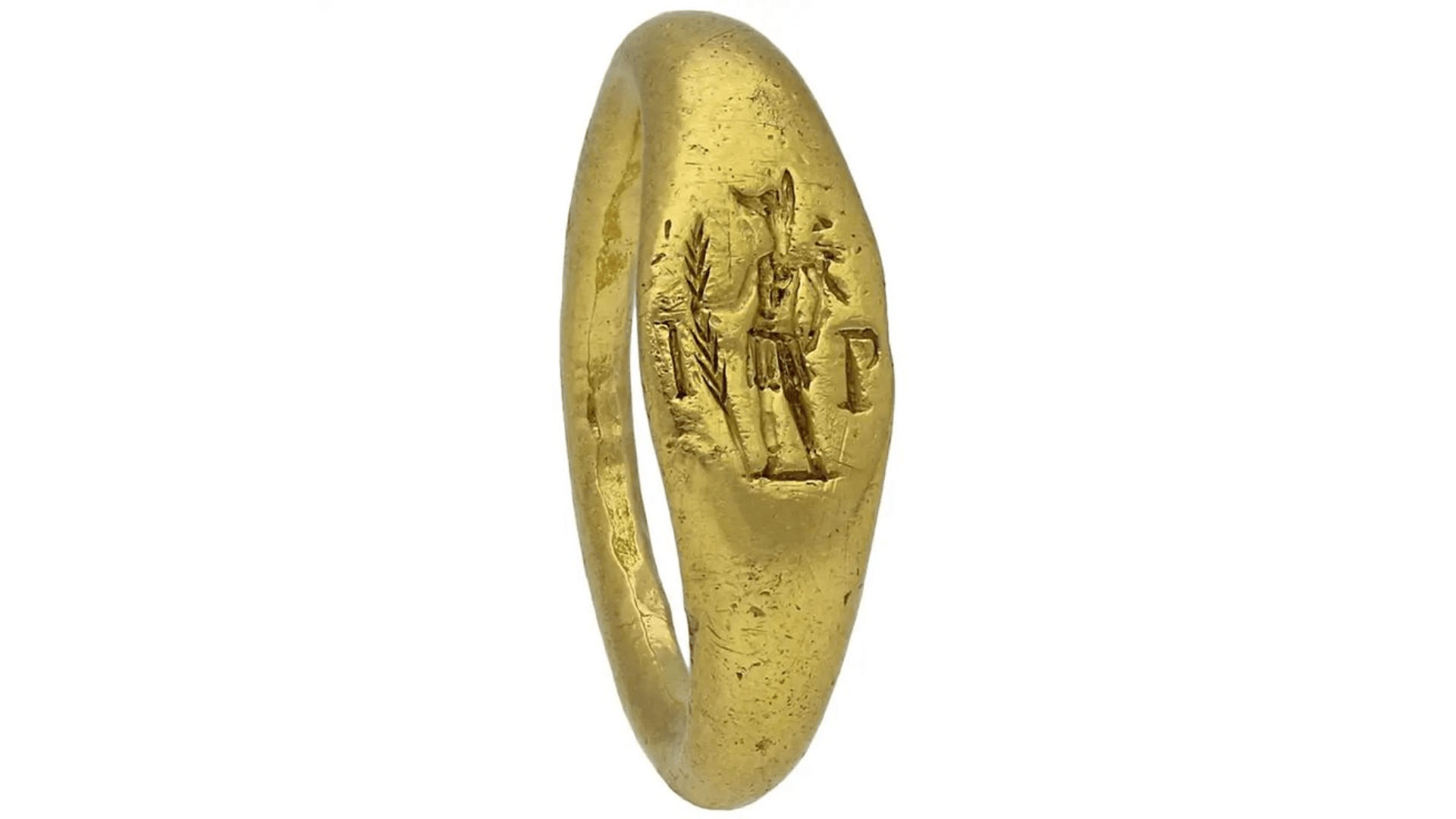
Researchers believe the ring was made locally, possibly in the Roman city of Ratiaria, located near present-day Archar. Ratiaria was known for its artisans and workshops, including goldsmiths who served both military elites and civilians. The craftsmanship of the ring suggests access to skilled labor and resources, reinforcing the idea that even border cities enjoyed refined Roman material culture.
What the Ring Reveals About Roman Life on the Empire’s Edge

Although Bononia sat near the empire’s frontier, the ring suggests that residents closely followed the same marriage customs practiced in Rome’s core cities. This challenges the idea that frontier settlements were culturally isolated. Instead, it shows how Roman traditions, especially those tied to family and law, extended across vast distances.
A Rare Artifact That Humanizes Ancient History

Unlike weapons or architectural remains, personal items like wedding rings bridge the gap between modern readers and ancient lives. This ring doesn’t just tell historians about trade or craftsmanship; it hints at affection, promises made, and a private ceremony that once marked the beginning of a shared life.
Found on the Last Day of Excavation

The timing of the discovery adds another layer of intrigue. After 11 consecutive years of excavation at Bononia, the ring was found on the final day of the current season. Archaeologists are now preparing the site for winter conservation, making the find a fitting—and emotional—capstone to this year’s work.
Why This Ring Still Matters Today

This 1,800-year-old wedding ring reminds us that while empires rise and fall, human rituals endure. Love, commitment, and the desire to mark important moments with lasting symbols are not modern inventions. Preserved in gold and soil, this ring carries a quiet message across centuries: even at the edge of a vast empire, people lived, loved, and promised their futures to one another.