

Products are selected by our editors, we may earn commission from links on this page.
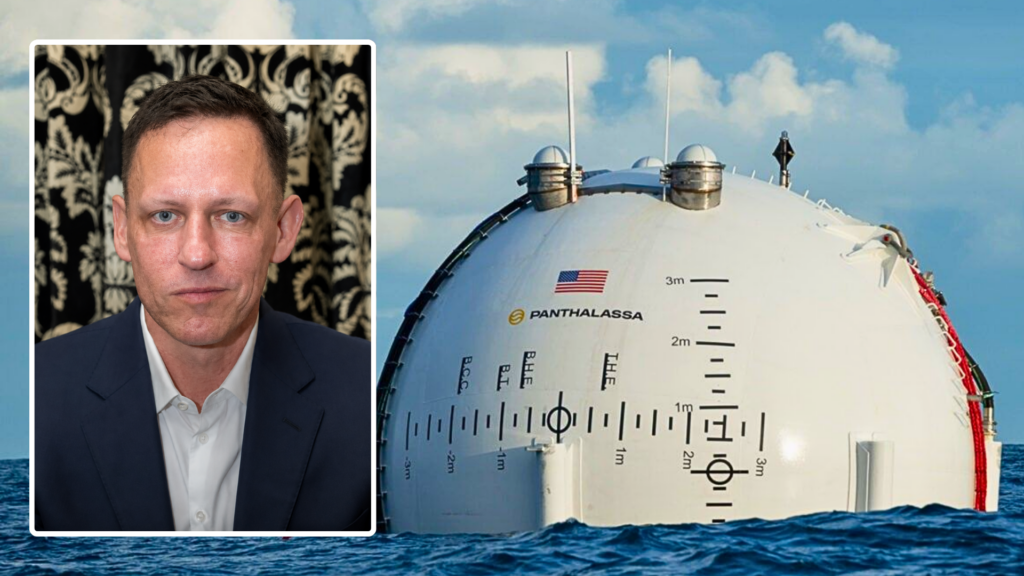
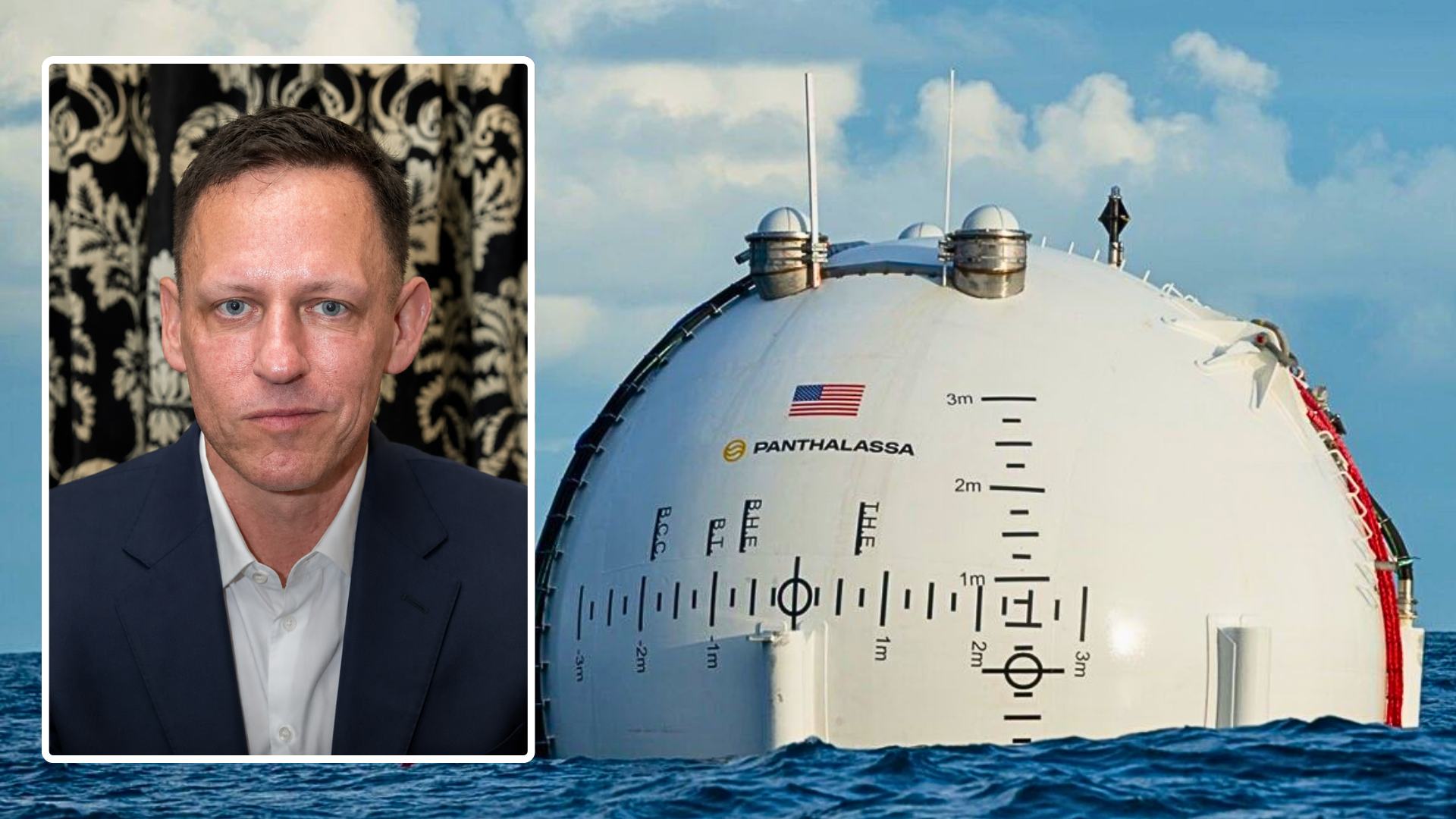
Imagine a steel tower nearly as tall as Big Ben, floating silently in the open Pacific, running AI at full speed without burning a single drop of fossil fuel. That is not a concept sketch. That is what Oregon-based startup Panthalassa is building right now, and it just secured $140 million in Series B funding led by Peter Thiel, valuing the company at close to $1 billion. The ocean, once a barrier, is now a power source.
The timing is not coincidental. AI’s electricity appetite is growing faster than grids can handle. In many regions, power operators are already straining to keep pace with demand, while communities are pushing back against new land-based data centers over noise, land use, and energy diversion. The search for alternatives has gone from creative to radical, and Panthalassa may be the most radical bet yet.
The company has spent a decade developing this technology, running sea trials with prototypes called Ocean-1, Ocean-2, and Wavehopper in 2021 and 2024. What Thiel and a roster of Silicon Valley heavyweights are funding now is not an idea on paper. It is a company ready to manufacture at scale, with commercial deployments targeted for 2027. But can the ocean truly become the backbone of AI infrastructure?
How a Wave Becomes a Supercomputer
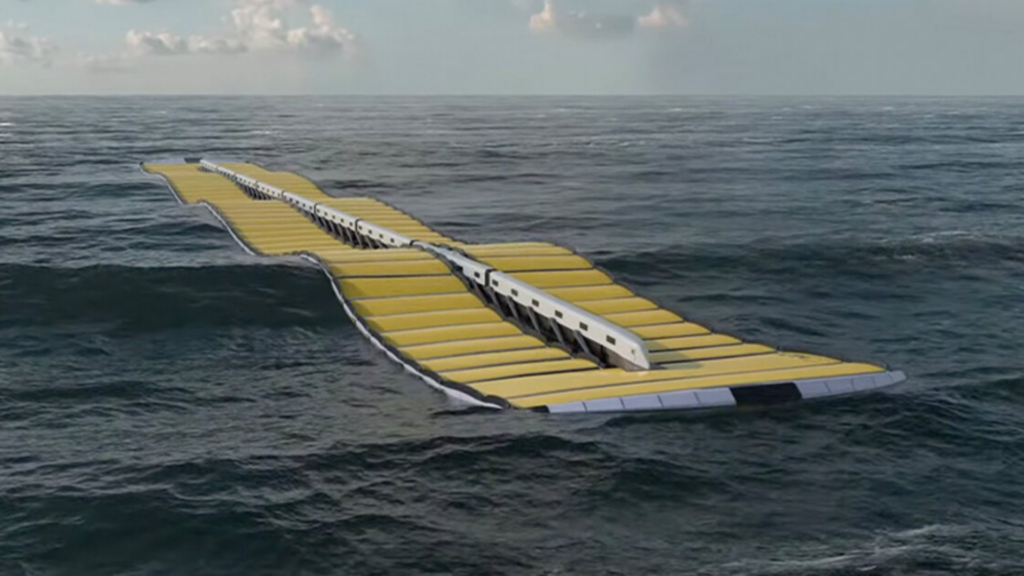
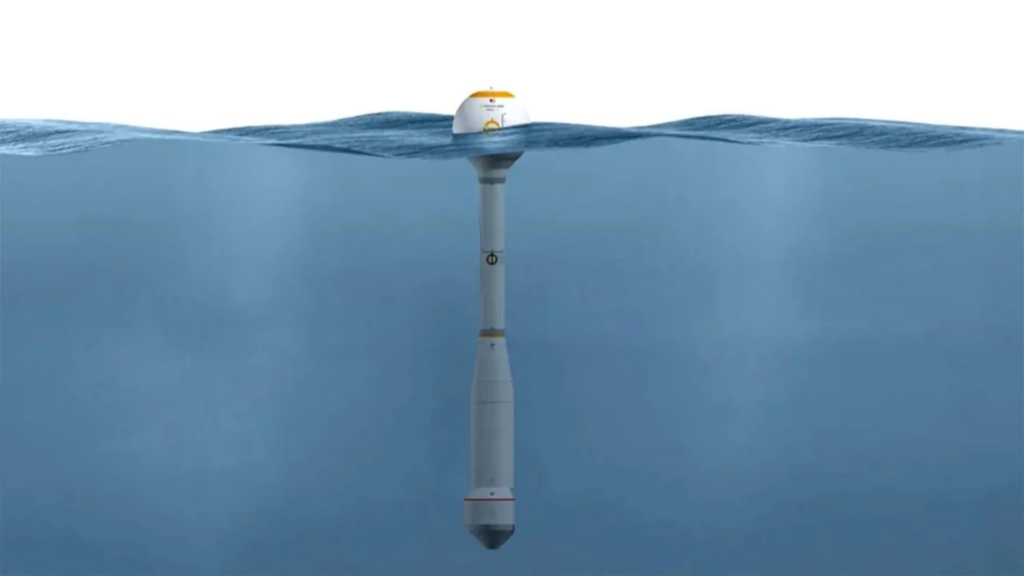
Panthalassa’s “nodes” are 85-meter-long solid steel structures, most of which sit below the waterline. The bobbing motion of ocean waves forces water through an internal turbine to generate electricity, which powers AI chips sealed inside a hermetically closed container cooled by seawater. No engine. No emissions. No connection to any grid. The system receives and sends data to users on land via SpaceX’s Starlink satellite network.
The nodes are towed horizontally out to sea, then flip upright and propel themselves to their destination using only the shape of their hull. Once deployed, they operate autonomously in remote ocean zones, far from shipping lanes. The design is deliberately simple: no hinges, flaps, or gearboxes that could fail in harsh conditions. This also makes the nodes faster and cheaper to build at scale, using only what Sheldon-Coulson calls “earth-abundant materials” such as steel.
According to Garth Sheldon-Coulson, co-founder and CEO of Panthalassa, the company’s core insight was straightforward: use the electricity where it is generated. “We will never be transmitting electricity back to shore,” he said. That one decision separates Panthalassa from every ocean energy project that came before it, most of which struggled precisely because transmitting power back to land erased the cost advantage. Keeping compute and energy together at sea changes the entire equation.
The Investors Who Think This Is the Frontier

Peter Thiel, co-founder of PayPal and Palantir, is leading the round through his personal fund. His previous backing of the company came through Founders Fund in 2018. His endorsement this time is direct and unambiguous. According to Thiel, “The future demands more compute than we can imagine. Extra-terrestrial solutions are no longer science fiction. Panthalassa has opened the ocean frontier.” For Thiel, this is consistent with a broader worldview: that civilizational-scale problems require civilizational-scale imagination.
The investor lineup extends well beyond Thiel. Salesforce CEO Marc Benioff, PayPal and Affirm co-founder Max Levchin, and venture legend John Doerr, an early backer of Google, Amazon, Uber, and Netscape, all joined the Series B round. According to Doerr, Panthalassa is “a game changer in addressing global energy needs and clean power generation.” Institutional players including Hanwha Asset Management, Fortescue Ventures, and Super Micro Computer also participated.
The team behind the technology is just as striking as the investors backing it. Panthalassa employs former engineers from SpaceX, Boeing, NASA, Tesla, and Apple. Co-founder Brian Moffat previously worked at Disney’s Imagineering unit and at Google. Engineering director Dan Place worked on the drone ships SpaceX used to catch its reusable rockets.
Clean Power at Civilizational Scale, or a Very Expensive Gamble?
Sheldon-Coulson is clear about what wave energy can do that solar and wind alone cannot. “In our target regions, the waves are created by the wind, and the wind is created by heat from the sun,” he said. “Waves are twice-concentrated sunlight and they keep going even when the wind stops.” That built-in storage property means power generation is continuous, 24 hours a day, something intermittent renewables have long struggled to guarantee for always-on computing workloads.
Panthalassa plans to deploy its Ocean-3 pilot nodes in the northern Pacific this year, with full commercial systems following in 2027. The new funding will complete its pilot manufacturing facility near Portland. If the Ocean-3 series performs as expected, the company could begin selling AI inference capacity generated entirely at sea, beamed to customers via satellite, with no grid connection and no carbon footprint attached to the computer.
Still, the ocean is unforgiving, and no wave energy startup has yet scaled to commercial viability at this level. Corrosion, extreme weather, and the sheer logistical complexity of maintaining autonomous hardware far from shore are real obstacles, not theoretical ones. What Panthalassa is attempting has never been done before at this scale. Whether it reshapes the AI infrastructure race or becomes a cautionary tale about the cost of ambition depends entirely on what happens when those first Ocean-3 nodes hit open water.