


Products are selected by our editors, we may earn commission from links on this page.

Your body doesn’t always send an obvious warning before a blood clot becomes dangerous. Clots normally form to stop bleeding after an injury, but they can also develop in an artery or vein with no clear trigger at all. Some clots cause no symptoms whatsoever until a serious complication develops. Knowing the subtle signs, spread across different parts of the body, can make the difference between catching a problem early and facing a genuine medical emergency.
This article was created with the assistance of AI and reviewed by our editorial team for accuracy and clarity.
A Leg Cramp That Won’t Quit Could Signal Something Serious

People who’ve experienced a leg blood clot often describe it feeling like a persistent charley horse. This condition, called deep vein thrombosis, or DVT, typically forms in a major leg vein and causes aching, pain, and cramping. “Ignoring a blood clot in the leg for even a day can end up in a pulmonary embolism, which is much more dangerous,” says Kristine Arthur, MD, an internist at Orange Coast Memorial Medical Center. About 1 in 3 people with DVT develop this life-threatening complication.
Back Pain Can Point to a Clot Hiding Deep in the Abdomen

Back pain rarely gets mentioned as a blood clot symptom, but it can signal a clot in the pelvic area or the inferior vena cava, the body’s major abdominal vein. According to the American College of Cardiology, between 2.6% and 4% of people with DVT develop inferior vena cava thrombosis. Though considered rare, these clots can cause permanent damage if untreated, since they cut off blood flow to the extremities.
Skin That Suddenly Changes Color Deserves a Closer Look
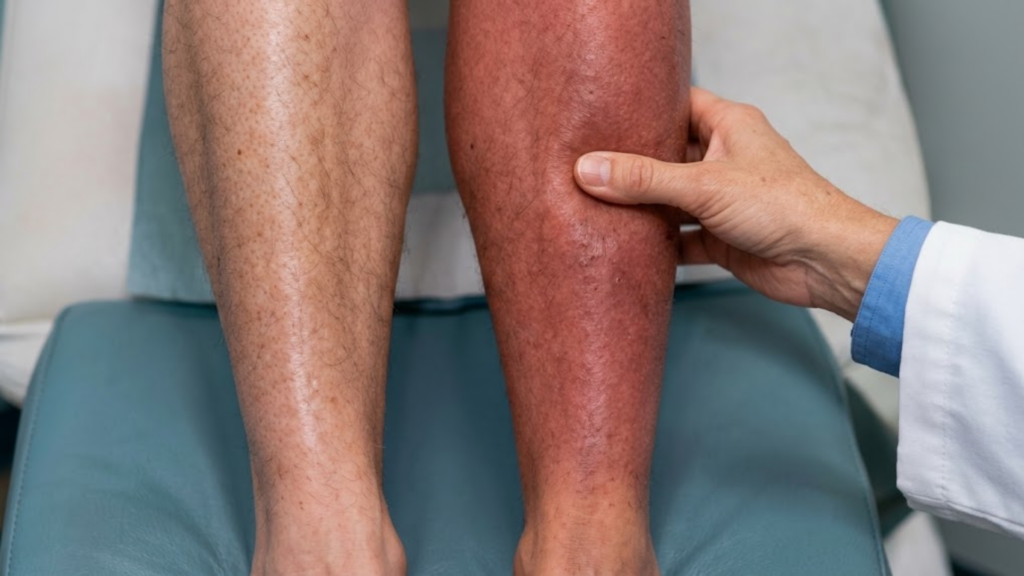
A blood clot disrupts normal circulation, and that disruption can show up visibly on the skin. If one leg appears redder or shows a different color compared to the other, a blood clot is one possible explanation worth checking. The CDC specifically flags this kind of skin discoloration as a symptom that warrants a doctor’s evaluation, particularly when it appears suddenly and affects only one limb.
Warm Skin Near a Suspected Clot Site Is a Real Clue
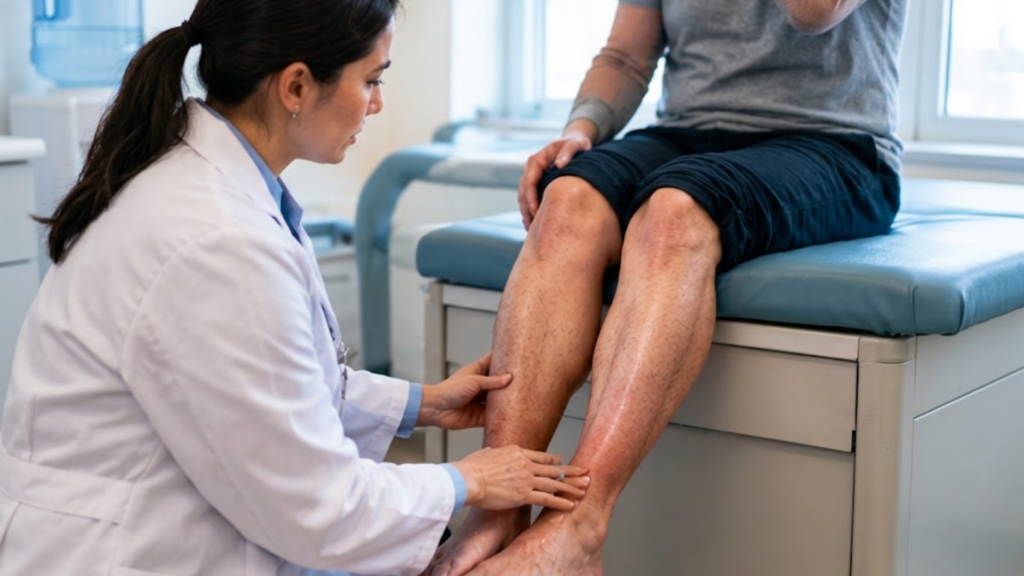
Temperature changes in the skin often accompany other clot symptoms. Just like discoloration, unusual warmth in a specific area results from disrupted blood flow. This symptom typically doesn’t appear alone. Warm skin, leg cramps, and discoloration tend to show up together, and anyone with an elevated risk for blood clots noticing this combination should contact a doctor rather than waiting to see if it resolves on its own.
Swelling Is One of the Most Common Signs, But Easy to Dismiss

According to the CDC, swelling in the arm, hand, foot, ankle, or leg ranks among the most common blood clot symptoms. The tricky part is that swelling has plenty of other possible causes too, from injury to simple fluid retention. That overlap makes it easy to dismiss, which is exactly why sudden, unexplained swelling in one limb deserves medical attention rather than assumption.
Unexplained Heavy Sweating Can Signal a Clot Near the Heart or Lungs

Excessive sweating rarely gets flagged as a blood clot symptom, but when it appears alongside other warning signs, it can point to a clot located in the lung or heart. These particular clot locations are especially dangerous and require immediate medical treatment. This symptom’s subtlety is exactly what makes it worth remembering, since sweating alone is easy to attribute to something far less serious.
Shortness of Breath Can Signal a Life-Threatening Emergency

A pulmonary embolism occurs when a blood clot blocks a vessel in the lung, and it can cause shortness of breath, difficulty breathing, and chest pain. Less commonly, it can also cause back pain. In more severe cases, blood pressure can drop suddenly, causing someone to pass out, or they may cough up blood. These symptoms represent a genuine medical emergency requiring immediate attention, not a wait-and-see approach.
Certain Situations Raise Your Risk of Developing a Clot

Beyond recognizing symptoms, understanding personal risk factors matters just as much. Prolonged sitting, such as during a long flight, raises clot risk significantly. So do injuries like fractures, major surgery, chronic conditions including heart and lung disease, extended bed confinement, pregnancy, and hormone use such as birth control pills. Anyone falling into these higher-risk categories should take even mild, unusual symptoms seriously rather than dismissing them.
When in Doubt, Let a Doctor Rule It Out

Many of these symptoms, cramping, discoloration, warmth, swelling, sweating, breathlessness, overlap with far less serious conditions, which is exactly what makes blood clots so easy to miss. None of these signs should be self-diagnosed or ignored simply because they resemble something more common. If a symptom appears suddenly, worsens, or shows up alongside another sign on this list, contacting a doctor promptly is the safest response, since some blood clot complications develop into medical emergencies within hours.