

Products are selected by our editors, we may earn commission from links on this page.

A newly studied planet just 25 light years from Earth is giving astronomers another reason to stay optimistic about the search for life beyond the solar system. Fresh research has revised the estimated mass of GJ 3378b, a rocky world orbiting a nearby red dwarf star, and the updated findings suggest it may be a far more Earth-like planet than scientists originally believed.
Earlier calculations placed the planet at around five times Earth’s mass, making it difficult to imagine conditions suitable for liquid water. However, the latest study, published in The Astrophysical Journal, estimates its mass at only 2.3 Earth masses. That difference could significantly improve the chances that the planet has a solid surface and a thinner atmosphere capable of supporting liquid water.
Scientists emphasize that this does not confirm the existence of life. Instead, it makes GJ 3378b a stronger candidate for future investigations aimed at understanding whether nearby rocky planets can maintain environments suitable for living organisms.
Habitable Zone Raises New Possibilities
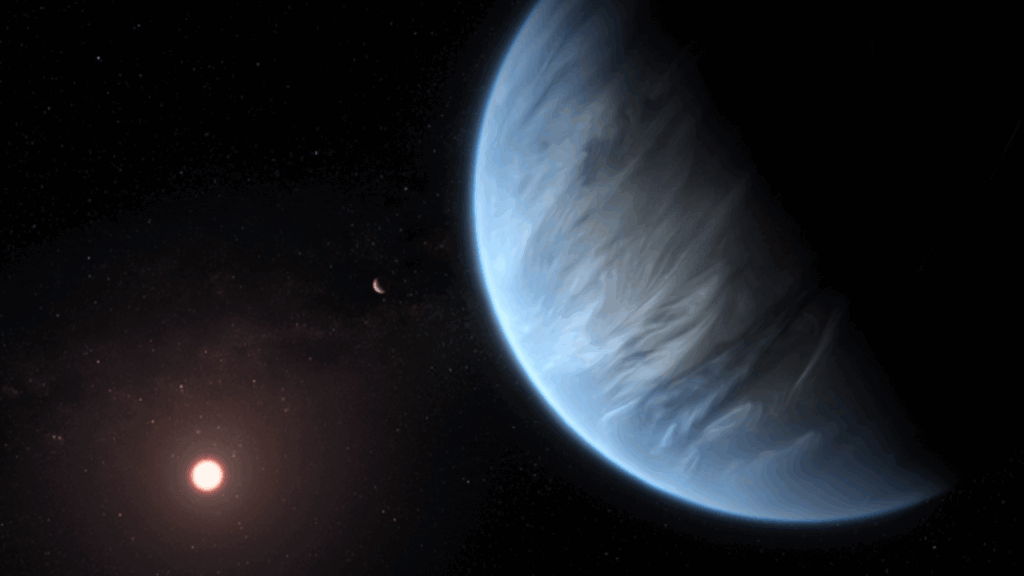
One of the strongest arguments in favor of GJ 3378b is its location within the habitable zone of its star. This region offers temperatures that could allow liquid water to exist under the right atmospheric conditions, making it one of the primary targets when scientists search for potentially life-supporting planets.
Researchers often describe water as the essential ingredient for life because every known organism on Earth depends on it. Finding planets where liquid water could remain stable greatly increases scientific interest, even though many other factors must also align before a planet can actually support life.
The revised mass estimate also strengthens the idea that GJ 3378b is a rocky planet rather than a small gas-rich world. Rocky surfaces provide a much more favorable setting for future studies looking for signs of oceans, weather systems, or other characteristics associated with habitable environments.
Radiation Still Presents A Major Challenge
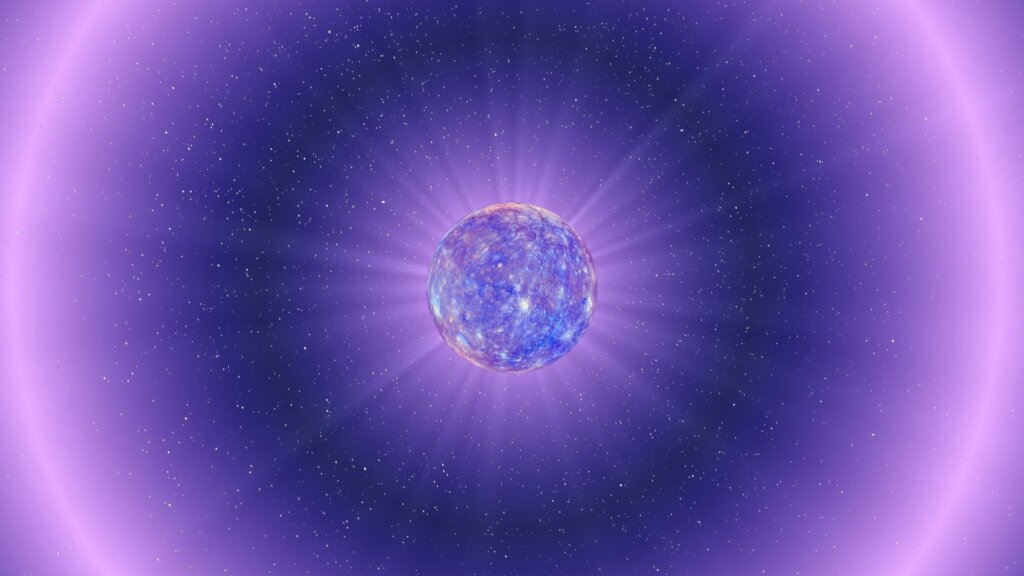
Despite the encouraging findings, GJ 3378b still faces significant obstacles that could limit its ability to host life. Because it orbits relatively close to its red dwarf star, the planet may be exposed to intense bursts of stellar radiation capable of damaging or even stripping away its atmosphere.
Without a stable atmosphere, liquid water would struggle to survive on the surface, even if temperatures remained favorable. Scientists say this uncertainty is one of the biggest questions surrounding the planet and cannot yet be answered with current observations alone.
Additional research will be needed to determine whether GJ 3378b has managed to retain enough atmospheric protection over billions of years. That answer could ultimately determine whether the planet is merely Earth-like in appearance or truly capable of supporting conditions favorable for life.
Future Telescopes Could Reveal The Answer

Astronomers expect the next generation of powerful observatories to play a key role in studying GJ 3378b more closely. Facilities such as the Giant Magellan Telescope, the Extremely Large Telescope, and the Habitable Worlds Observatory are designed to analyze distant planets in unprecedented detail.
These instruments may eventually detect atmospheric gases, measure surface conditions, and search for chemical signatures that could indicate biological activity. While such discoveries remain years away, planets like GJ 3378b have become high-priority targets because they are relatively close to Earth.
Originally discovered in 2024, orbiting a red dwarf, GJ 3378b has quickly become one of the most intriguing nearby exoplanets. As measurements become more precise and observation technology advances, this neighboring super Earth could provide valuable clues about how common habitable worlds may be throughout the Milky Way.