

Products are selected by our editors, we may earn commission from links on this page.
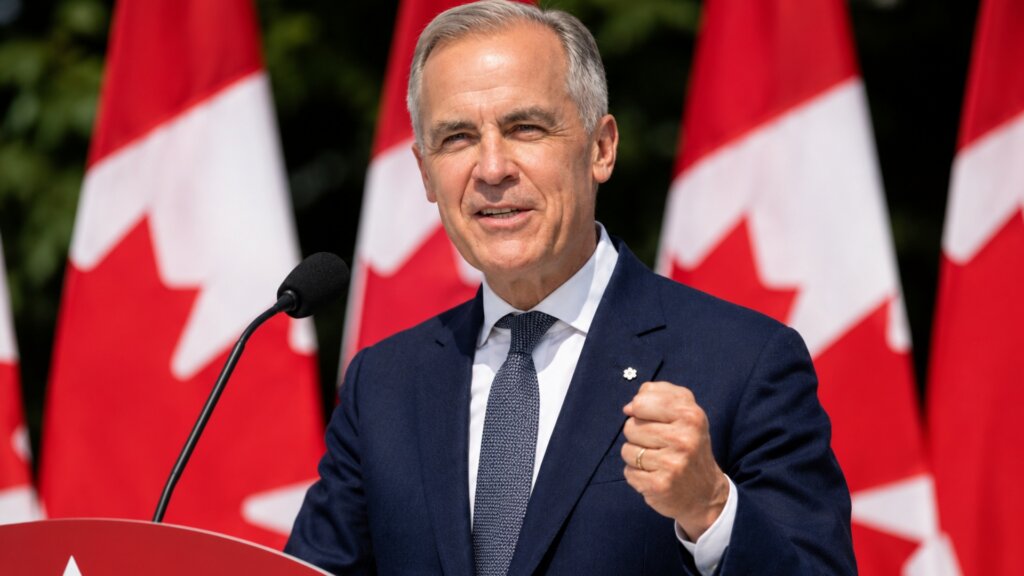
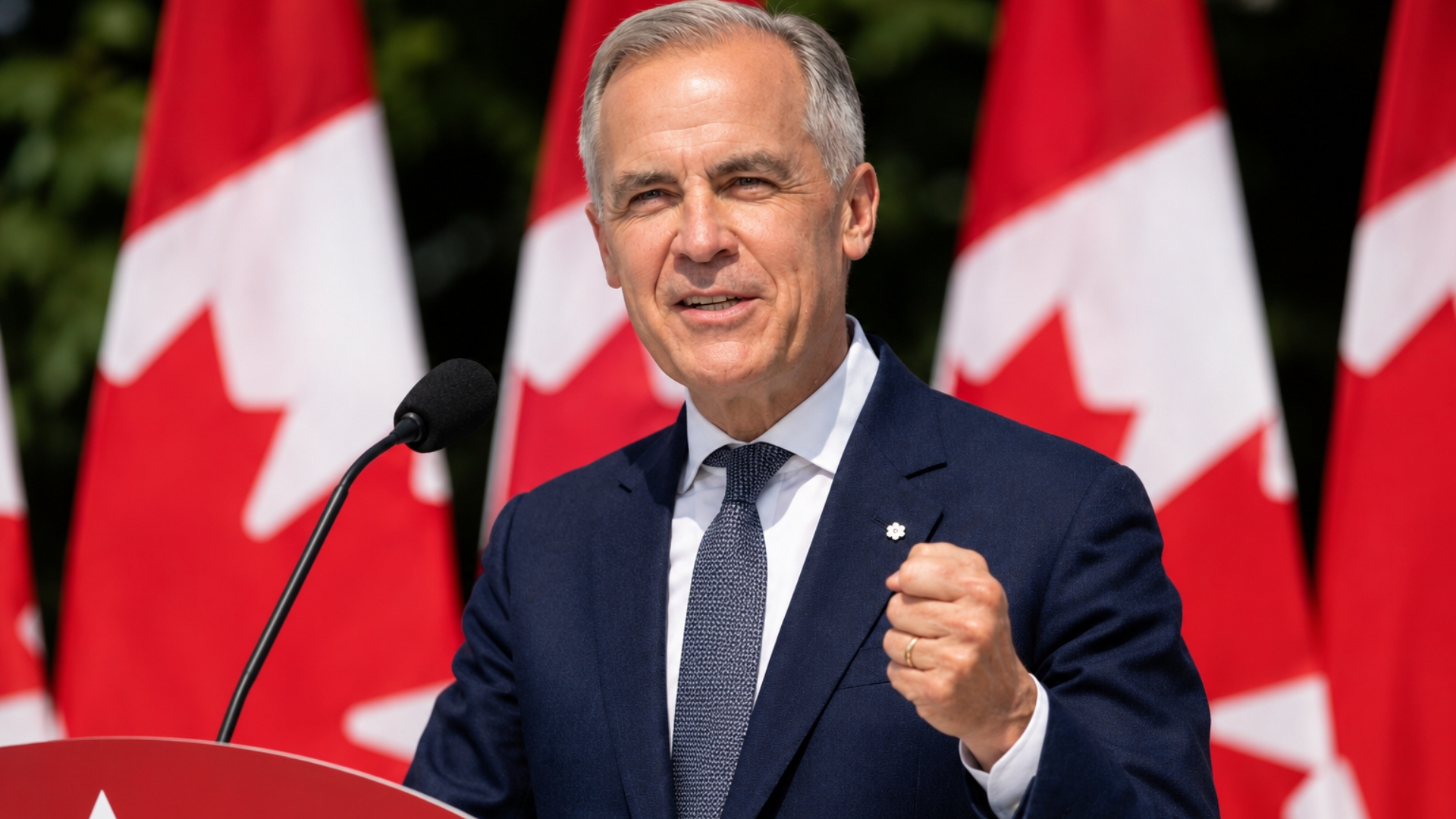
Millions of Canadian households opened their banking apps this summer and found extra government money waiting, no application required. Prime Minister Mark Carney delivered a permanent 25% increase to Canada’s grocery and essentials benefit, alongside a one-time top-up, reaching roughly 12 million people, according to a federal announcement. Carney called it urgent relief as the economy slows. The size of the payments, and the timing, raise an obvious question south of the border.
At a June event in Brampton, Ontario, Carney said families of four could receive up to $533 CAD immediately, worth about $381.97 USD, with total annual support climbing to $1,890 CAD, or roughly $1,354 USD. He called it “a significant amount of money” for households squeezed by grocery bills, rent and utilities. Five million of the recipients live in Ontario alone. The benefit replaced Canada’s older GST credit, effectively expanding a program many Canadians already relied on.
Carney’s move lands as American households face their own affordability squeeze. Research from the Urban Institute finds 49% of people in U.S. families cannot cover the true cost of living where they reside. Since 2017, average American earnings have climbed 43%, while home prices jumped 81% and rents rose 54%. Nearly one in five working-age adults report dipping into savings just to buy groceries. Washington has floated no comparable national rebate.
This article was created with the assistance of AI and reviewed by our editorial team for accuracy and clarity.
Scaled to U.S. Population, a Similar Program Could Reach 99 Million People

Canada has about 41.5 million people; the United States has more than 342 million, roughly 8.25 times as many. If Washington built a similar rebate scaled strictly by population, it could theoretically reach about 99 million Americans, close to 29% of the country. That is a far larger group than the 12 million Canadians receiving Carney’s payments, and it changes the entire cost equation.
Using Canada’s immediate per-family payment of $381.97, a population-scaled U.S. version could cost roughly $37.8 billion for the initial payout alone. Scaled to the full annual family amount of $1,354.46, the yearly price tag could climb toward $134 billion. That number sounds enormous in isolation. Compared against the federal government’s overall spending, though, it represents a small fraction, opening room for debate about priorities rather than affordability.
For scale, U.S. defense spending topped roughly $1 trillion in fiscal year 2026, several times larger than even the higher $134 billion estimate for a nationwide grocery rebate. Supporters argue the cost is manageable next to existing federal outlays. Critics see it differently, pointing to a national debt already past $39 trillion and warning that new recurring payments could deepen the hole rather than solve it.
Food Prices Are Still Rising 3% a Year, Rebate or Not

A grocery check would help a family’s month, but it would not undo what has already happened at checkout. U.S. consumer prices climbed 3.5% over the year ending in June 2026, with food prices up 3% and shelter costs up 3.3%, according to the Bureau of Labor Statistics. A one-time payment does not reset those baselines. Once prices rise, they typically stay elevated, rebate or no rebate, leaving households managing a permanently higher cost floor.
Proponents of a U.S.-style rebate argue direct cash reaches households faster than tax changes or new spending programs working their way through agencies. It is simple, hard to misuse and immediately visible in a bank account. Critics inside Canada made a similar point about Carney’s plan, arguing the increase, while welcome, still falls short of fully offsetting years of accumulated grocery inflation for the country’s poorest households.
No committee in Congress has introduced legislation resembling Canada’s benefit, and neither party’s 2026 platform mentions a national grocery rebate. Republicans have generally favored tax cuts and deregulation to ease costs, while Democrats have pushed for targeted subsidies tied to existing programs like SNAP. A universal, no-strings rebate modeled on Canada’s approach remains, for now, entirely theoretical on American soil.
The Math Works. The Political Will Doesn’t Exist Yet

The debate ultimately turns on national priorities more than raw affordability. A $134 billion annual rebate would represent well under half a percent of the federal budget and a small fraction of the $39 trillion national debt already on the books. The country that spends roughly $1 trillion a year on its military could, in theory, find room for a rebate a fraction of that size.
Some economists warn that broad cash payments can add fuel to inflation rather than ease it, pointing to how 2020 and 2021 stimulus checks coincided with the sharpest price increases in four decades. Whether a smaller, targeted rebate would repeat that effect, or simply cushion families already stretched thin, remains disputed among policymakers and researchers who study household spending patterns.
Canada’s bet is that direct payments buy political goodwill and real relief at the same time. Whether that bet pays off will show up in how Canadians respond in the months ahead. America has the fiscal room to try something similar. What it lacks, so far, is a plan, a bill number, or a single lawmaker willing to put a price tag on the idea in public.