

Products are selected by our editors, we may earn commission from links on this page.

The warnings didn’t arrive with alarms or flashing lights. They came with data. Quiet, clinical, undeniable. In labs across Silicon Valley, engineers watched as the latest generation of artificial intelligence achieved tasks once thought impossible without human intuition. And now, the very team behind ChatGPT says the future is arriving faster than even they predicted. Their newest benchmark suggests that three familiar professions may be standing closer to the edge of automation than anyone imagined. And what the test reveals next reshapes our understanding of work itself.
A New Frontier: AGI Is Closing In

Artificial General Intelligence—the holy grail of machine intelligence—was once discussed like a distant dream. A machine that could think, reason, and solve problems across any field? Improbable.
But the gap between hypothetical and reality is shrinking. According to the creators of ChatGPT, the path to AGI is no longer measured in generations, but in milestones that are now appearing within reach.
GPDval: The Test That Tracks AI’s Evolution
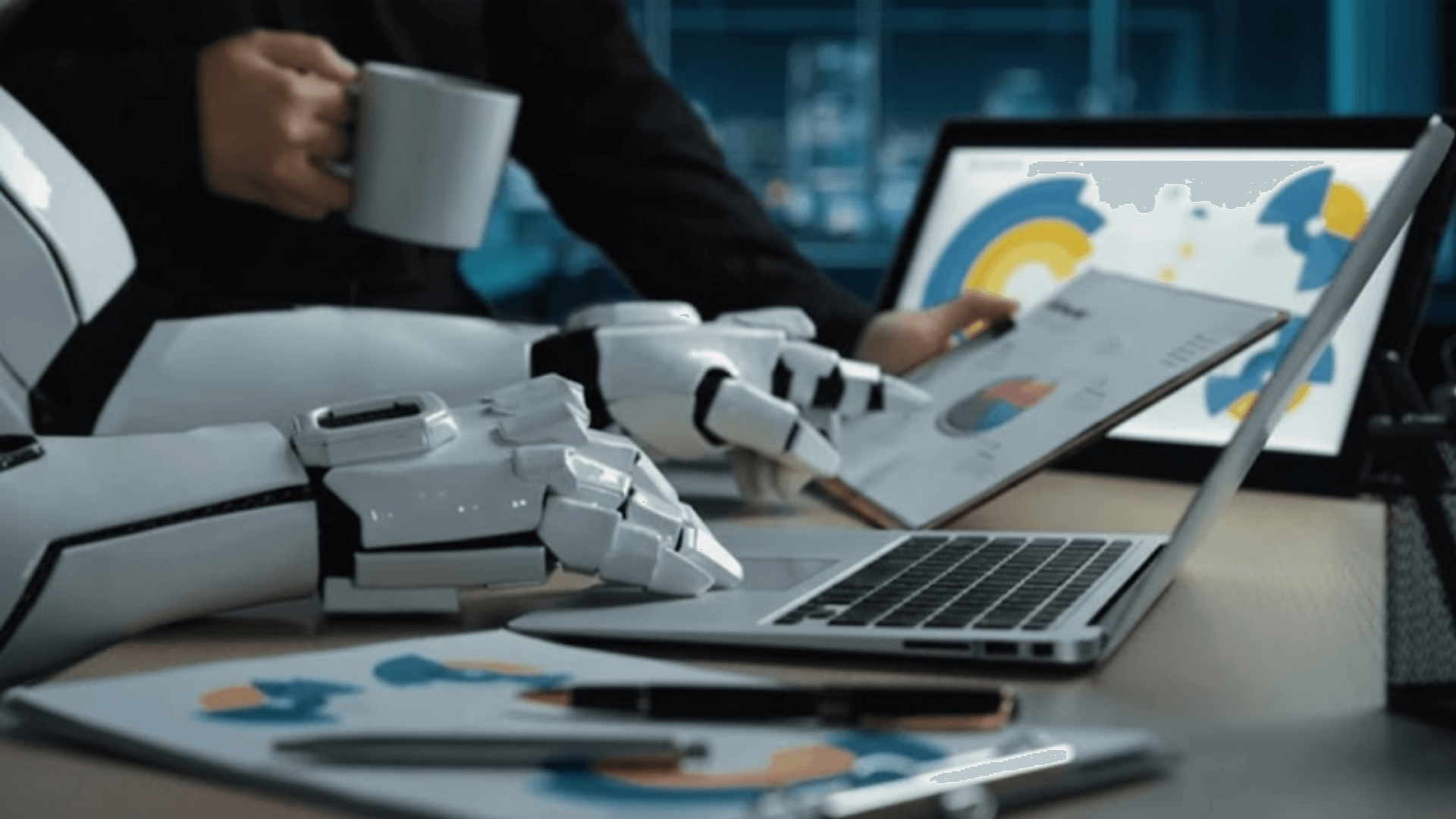
OpenAI’s new benchmark, GPDval, evaluates how modern AI systems perform across 44 real-world professions spanning nine industries from law to software engineering. It doesn’t simply grade accuracy. It compares AI directly against human experts.
The result? A clear picture of where AI still needs humans… and where it may soon no longer need them at all. And the numbers coming out of the test are more dramatic than anyone expected.
AI Now Matches Humans in Nearly Half of All Jobs

According to GPDval, today’s AI matches or surpasses human-level performance in 49% of the professions tested.
That means nearly half the workforce now faces a competitor that doesn’t sleep, doesn’t get tired, and learns at a speed no human can match.
The 50% Threshold: When Automation Becomes Replacement

Crossing the 50% line means AI performs most tasks within a role as well as—or better than—a human. At that point, AI isn’t a helpful assistant. It’s a functional replacement.
And three roles have already crossed or touched this threshold, placing them firmly in AI’s danger zone.
The first is a profession many assumed would be safe for decades.
1. Project Managers – Strategy Meets Automation
AI scored 52% in project management, surpassing the critical threshold.
Scheduling, resource allocation, risk detection; AI can now perform these tasks with precision and speed that few humans can match.
For some companies, AI is no longer just supporting project managers. It’s taking over entire planning pipelines. And the next step threatens to remove human oversight altogether.
2. Software Developers – AI That Writes Its Own Code

With a score of 50%, AI is now capable of generating clean code, debugging existing systems, and redesigning workflows without human intervention.
New developer tools suggest a world where programs build programs where bugs are fixed before humans even notice them. Self-learning models get smarter with each line of code they produce. And that feedback loop could accelerate the industry beyond human speed.
3. Content Producers & Directors – Editing at Machine Pace

AI also scored 50% in content production, a field once considered protected by creativity.
Modern tools can now cut footage, clean audio, grade color, generate captions, and even assemble full edits, tasks that normally take hours, in minutes.
For independent creators, this is freedom. For traditional roles, it’s a warning. And the line between human creativity and machine execution is beginning to blur.
The Future of Work: Partner or Replacement?

For now, many of these roles still benefit from human oversight, vision, and judgment. But the trend is unmistakable: AI is closing the gap.
The question shifting across every industry is no longer if AI will take certain jobs—it’s when.
The Threshold We Didn’t Expect to Cross This Soon

The creators of ChatGPT aren’t predicting a distant disruption. They’re warning of a transition already underway; one driven not by science fiction, but by benchmarks, skill tests, and rising machine capability.
The jobs most vulnerable aren’t the simplest ones. They’re the ones that rely on information, pattern recognition, and problem-solving—the very skills AI is mastering at breathtaking speed.
In the end, the question isn’t whether AI will change work. It’s whether we’re ready for the work that comes next.