

Products are selected by our editors, we may earn commission from links on this page.
It started as a synchronized dance in uniform. It ended with eight terminations delivered on a Sunday, the one day Chick-fil-A famously keeps its doors closed. A group of Florida employees recorded a TikTok video inside the restaurant, performed to a popular audio track, and posted it online. Within hours, the clip had been viewed more than 7.5 million times. By the time the weekend was over, every single person in the video had lost their job. The employee who filmed and posted the footage described what happened next in a follow-up post that has since added fuel to an already burning debate.
The video showed the group performing a choreographed routine inside the restaurant. Several employees shook their chests toward the camera. At one point, a male staff member turned around and twerked. All of them were in uniform. The employee who posted the clip, who goes by the username Land(i)n on TikTok, said he was caught off guard by the company’s response. He had posted viral content from the same workplace before, he claimed, without facing any disciplinary action. “It wasn’t that serious,” he said in his follow-up post. Chick-fil-A’s management apparently disagreed.
The firings were delivered on a Sunday, a detail that did not go unnoticed online, given that Chick-fil-A closes every location on Sundays specifically to give employees rest and, for those who observe it, time for religious worship. The timing added a layer of irony that the internet seized on quickly. “Every single last one of us got fired,” Land(i)n confirmed. What followed was a split-screen debate across social media about workplace conduct, corporate identity, and whether eight people dancing on TikTok deserved to lose their livelihoods over it. That debate is still running.
Why Chick-fil-A Is Not Just Any Fast Food Chain
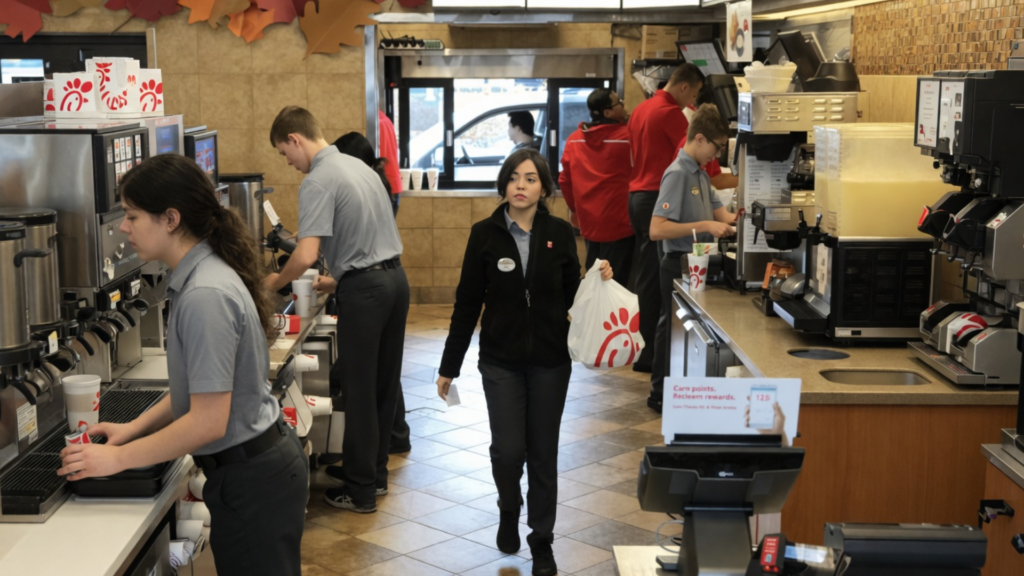
Most fast food employers would handle a viral employee TikTok with a warning, a policy reminder, or a quiet conversation with a shift manager. Chick-fil-A is not most fast food employers, and understanding why requires understanding what the company says it actually is. Its corporate purpose statement does not use the language of customer service or operational excellence. It states a commitment “to glorify God by being a faithful steward of all that is entrusted to us.” That framing is not marketing copy buried in an annual report. It is the stated organizing principle of the entire enterprise.
That identity shapes everything from the Sunday closure policy to the customer service culture that has made Chick-fil-A consistently one of the highest-rated fast food chains in American consumer surveys. Employees are trained to say “my pleasure” rather than “you’re welcome.” Locations are known for a level of service attentiveness uncommon in the quick-service industry. The brand has built its reputation on a specific and deliberate image, and that image extends to how its employees present themselves in public including, in 2025, on social media platforms watched by millions of people while the workers are visibly in uniform.
Critics of the firings have argued that dancing employees are harmless, that the video showed young people having fun at a job that pays entry-level wages, and that terminating eight workers over a TikTok is a disproportionate corporate response. Defenders of the decision have pointed to the same context: the employees were in uniform, on company property, performing provocative movements that they then broadcast to millions of viewers under imagery directly tied to the Chick-fil-A brand. Whether the response was proportionate or excessive depends almost entirely on which of those two frames you apply first.
The TikTok Workplace Divide and Why This Story Hit a Nerve Nationally
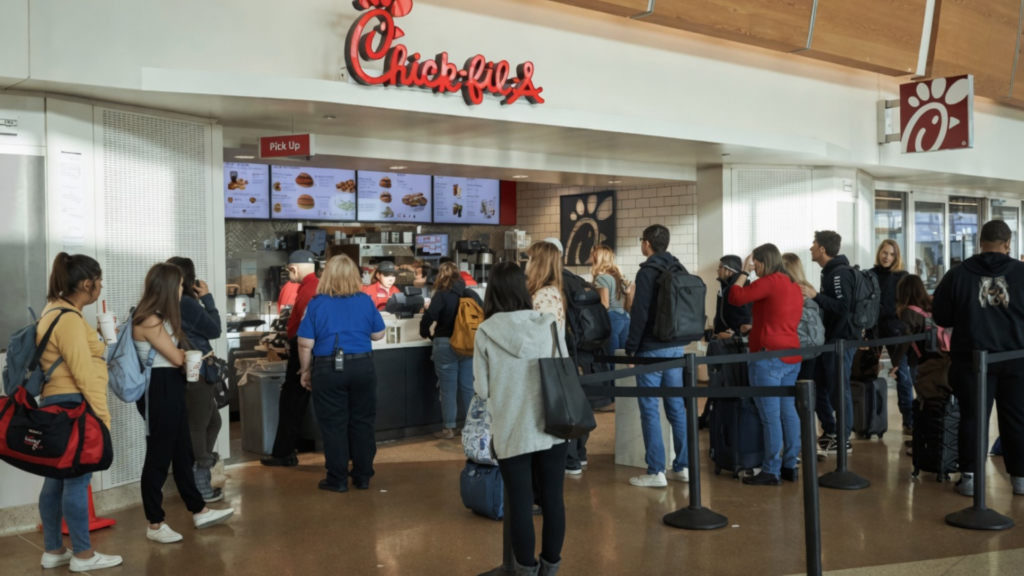
The Chick-fil-A firings arrived in the middle of a broader, unresolved argument about what employees owe their employers in the age of social media. A generation of workers has grown up treating TikTok, Instagram, and YouTube as natural extensions of daily life, including daily work life. Filming behind-the-scenes content from a shift, reacting to a difficult customer, or doing a dance in a break room has become a normal form of expression for millions of young Americans in service jobs. The line between personal content and professional conduct has never been blurrier.
Employers across industries have been slow to establish clear policies and even slower to enforce them consistently, which creates exactly the situation Land(i)n described: posting workplace content repeatedly without consequence, right up until the moment the consequence arrives at scale. When a video stays at 5,000 views, it rarely reaches HR. When it hits 7.5 million, it becomes a brand event. The inconsistency of enforcement; quiet tolerance followed by sudden termination, is one of the reasons these stories generate such strong reactions. Workers feel blindsided. Companies feel their hand was forced. Both are often telling the truth.
The incident has landed differently depending on who is watching. Older viewers and current business owners have largely sided with Chick-fil-A, arguing that employees representing a company’s brand on camera have an obvious professional responsibility, especially at a chain with a well-known and specific public identity. Younger viewers and service industry workers have largely sided with the employees, pointing to low wages, high turnover, and a power imbalance that makes it easy for large companies to make examples of entry-level workers without meaningful accountability. Both responses are genuine, and neither is going away.
Eight Jobs, 7.5 Million Views, and the Question No Policy Has Answered Yet

Land(i)n said the video was intended as a joke. That is almost certainly true. It is also almost certainly true that everyone who appeared in it understood they were in uniform, inside the restaurant, and posting to a public platform. Those two things can both be true simultaneously, and the tension between them is what makes this story feel unresolved even after the terminations are confirmed. Intent and impact are different measurements, and corporate HR departments tend to care considerably more about the second one than the first especially when the impact is 7.5 million views and a trending hashtag.
For the eight former employees, the practical consequences are immediate and concrete: lost income, lost references from that employer, and a viral story attached to their workplace identities at an early stage of their working lives. For Chick-fil-A, the consequences are reputational and double-edged: the brand’s core customer base likely views the terminations as consistent with its values, while a younger demographic sees them as confirmation that large companies will sacrifice entry-level workers to protect a corporate image without a second thought. Both reactions probably showed up in the same restaurant this week.
The deeper question this story raises has no clean answer yet: in a world where every employee carries a broadcast-capable device and platforms like TikTok reward exactly the kind of content that got these eight people fired, what does a workable social media policy for hourly service workers actually look like? Chick-fil-A enforced its standards. The employees learned where the line was by crossing it publicly. Millions of people watched and picked a side. The video is still out there. And somewhere in Florida, eight people are looking for new jobs because of a dance that took less than a minute to film and less than a day to cost them everything.