

Products are selected by our editors, we may earn commission from links on this page.
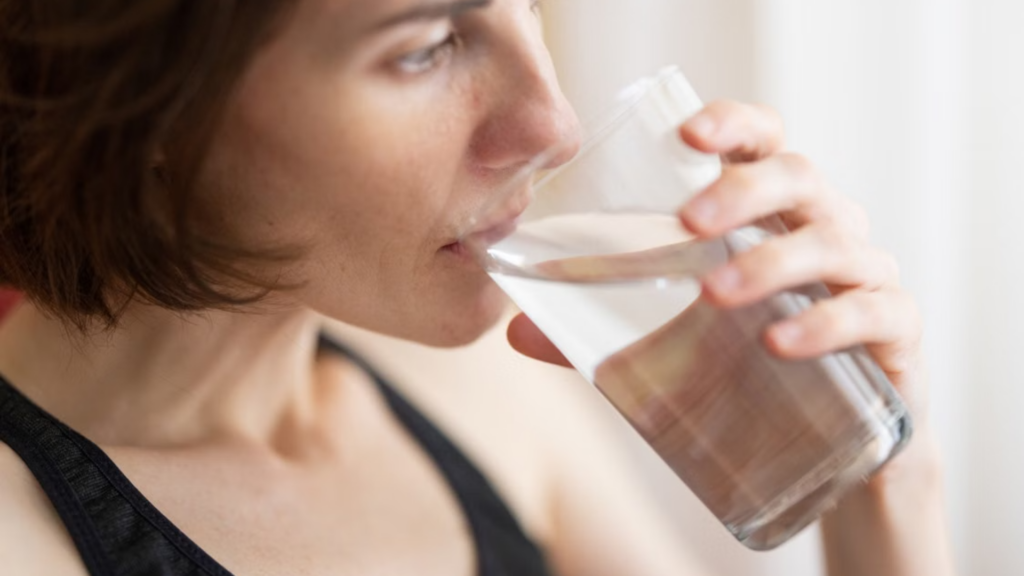
Drinking water with meals is often recommended as a simple way to feel fuller and potentially eat less. But new research is challenging that widely held assumption, finding that people who drank more water during meals actually tended to consume more food overall.
The findings come from a secondary analysis of two randomized crossover studies involving 86 adults who ate controlled lunches in a laboratory setting. Researchers examined how much water participants drank, how often they switched between bites and sips, and how much food they ultimately consumed.
The study does not mean drinking water is unhealthy or that people should avoid it while eating. Instead, it suggests that water consumed during a meal may not have the appetite-suppressing effect that some popular weight-management advice has suggested.
What the New Study Found About Water and Food Intake

Researchers analyzed data from two crossover experiments in which participants ate either beef chili or chicken tikka masala along with water. The meals were served in different levels of spiciness, and researchers used video recordings to measure drinking behavior, including the number and size of sips and how frequently participants switched between food and water.
Across the meals, greater water consumption was associated with greater food intake. People who switched more frequently between bites and sips also tended to eat more, although the researchers found that the effect of spiciness itself, which slowed eating and reduced food intake, was not changed by water consumption or drinking behavior.
The results challenge the idea that simply adding more water to a meal will automatically make someone consume fewer calories. The researchers emphasized that their analysis was based on existing experimental data, so it should be viewed as evidence that challenges a common assumption rather than proof that drinking water causes people to overeat.
Why Water May Not Keep You Full for Long
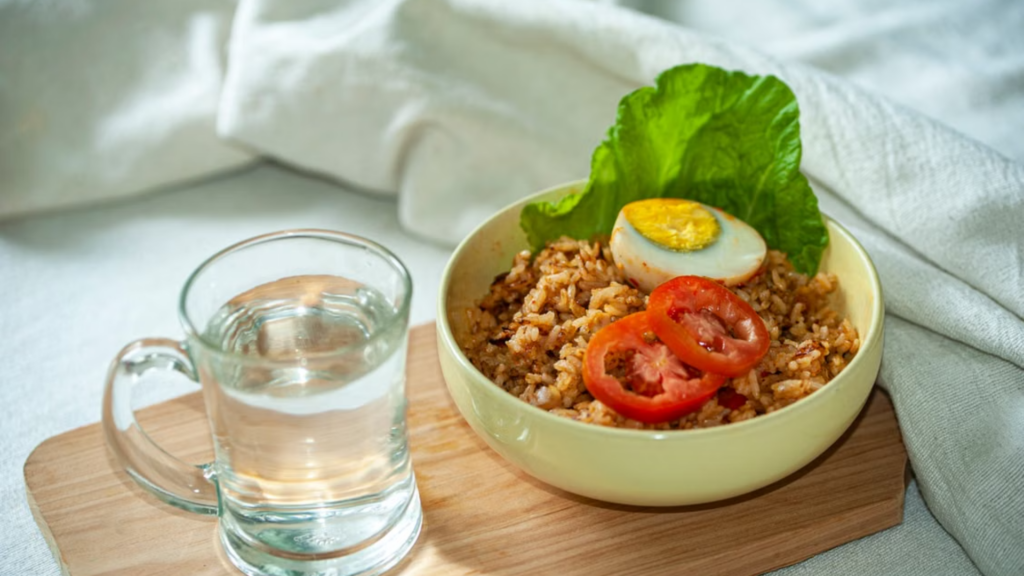
One possible explanation is that the fullness produced by drinking water may be temporary. Water can increase the volume inside the stomach, but liquids generally move through the stomach relatively quickly, meaning the physical sensation of fullness may not last long enough to substantially reduce the amount of food consumed during a meal.
Earlier research has produced a more complicated picture. A study published in the American Journal of Clinical Nutrition found that drinking water alongside a meal did not significantly reduce subsequent food intake, while adding water directly into food to create a higher-volume, lower-energy-density meal did increase fullness and reduce energy intake.
Other research has also found that drinking water before a meal can reduce food intake in some groups, particularly older adults and some people who are overweight or obese. This means the timing of water consumption, a person’s age, and the composition of the meal may all influence whether water affects appetite.
Water Still Matters, Even If It Does Not Guarantee Smaller Meals
The latest findings suggest that drinking water during a meal should not be viewed as a guaranteed strategy for eating less. In the study, greater water intake and more frequent switching between food and water were associated with greater food consumption, challenging the popular belief that more water automatically creates lasting fullness.
At the same time, the research does not suggest that people should stop drinking water with meals. Water remains important for normal body functions and digestion, and health experts generally consider drinking water during or after meals safe for most people.
The bigger lesson is that appetite and eating behavior are more complicated than a single nutrition tip suggests. Drinking water can be a smart replacement for sugary beverages and can contribute to daily hydration, but people looking to manage their weight may need to consider the overall nutritional quality, volume, and energy density of their meals rather than relying on water alone to control how much they eat.