

Products are selected by our editors, we may earn commission from links on this page.
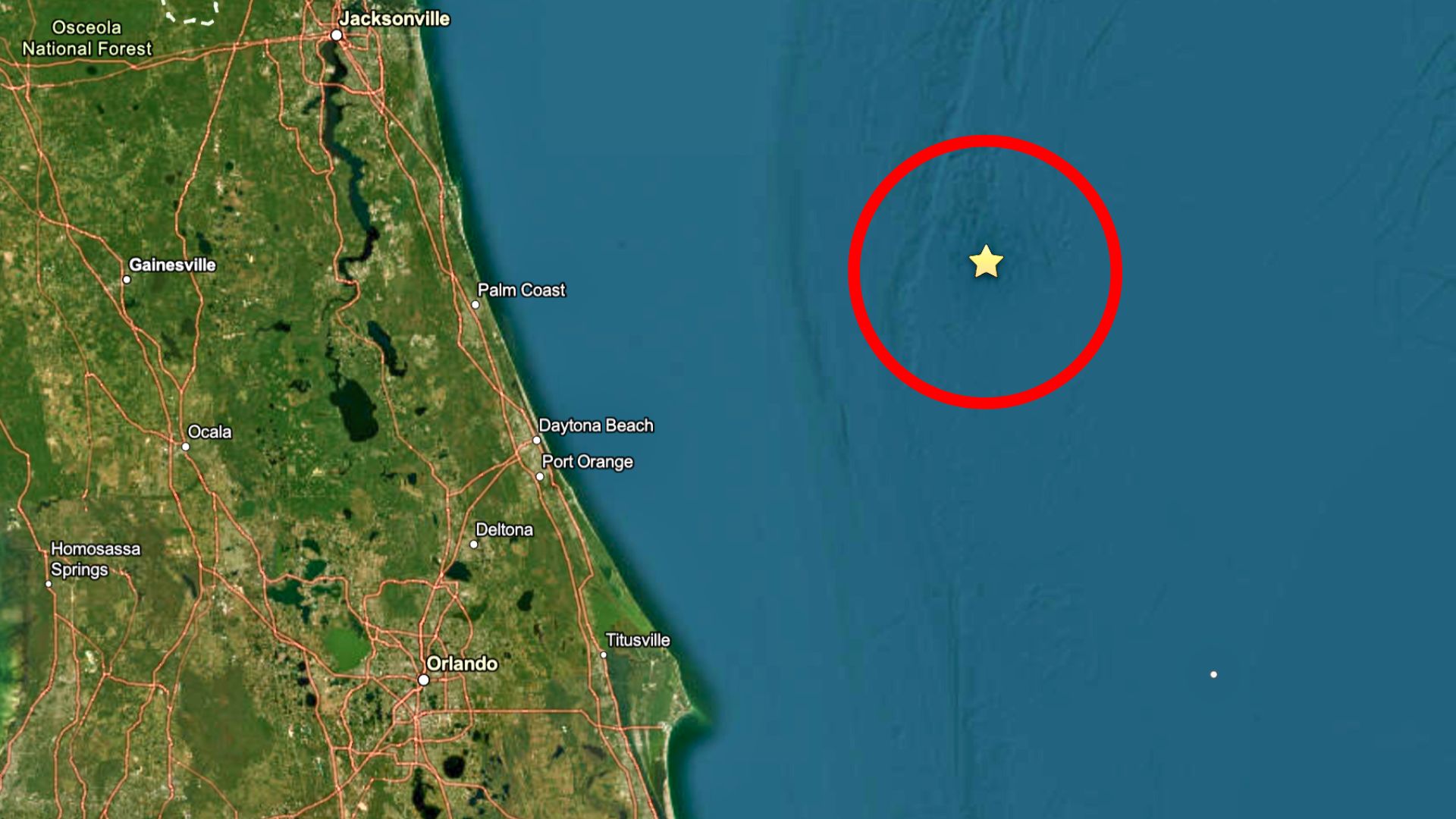
Did the ground shake, or did something explode offshore? That was the question facing people along Florida’s east coast after the U.S. Geological Survey recorded a magnitude 3.9 event at about 3:04 p.m. EDT on July 16, 2026, roughly 91 miles east-northeast of Ponce Inlet, just south of Daytona Beach. The entry immediately stood out because it was listed at a depth of zero feet and classified as an “experimental explosion,” not a conventional earthquake.
The USGS said the recorded ground motions were more typical of an explosion than a naturally occurring seismic event. That distinction mattered because Florida is not known for frequent earthquakes, and the unusual wording quickly drew attention from meteorologists and residents. CBS Miami meteorologist Nic Merianos said he had never seen such a classification before, while social media users questioned what kind of experiment could produce a reading comparable to a moderate tremor.
By the following day, local reporting identified testing of a new Navy destroyer as the source of the blast. No injuries or property damage were reported, and officials indicated the event was planned rather than accidental. Even so, the delay between the initial alert and a clear public explanation left many people wondering why an operation powerful enough to register on federal seismic monitors had not been more widely communicated.
What Full Ship Shock Trials Are Designed to Test
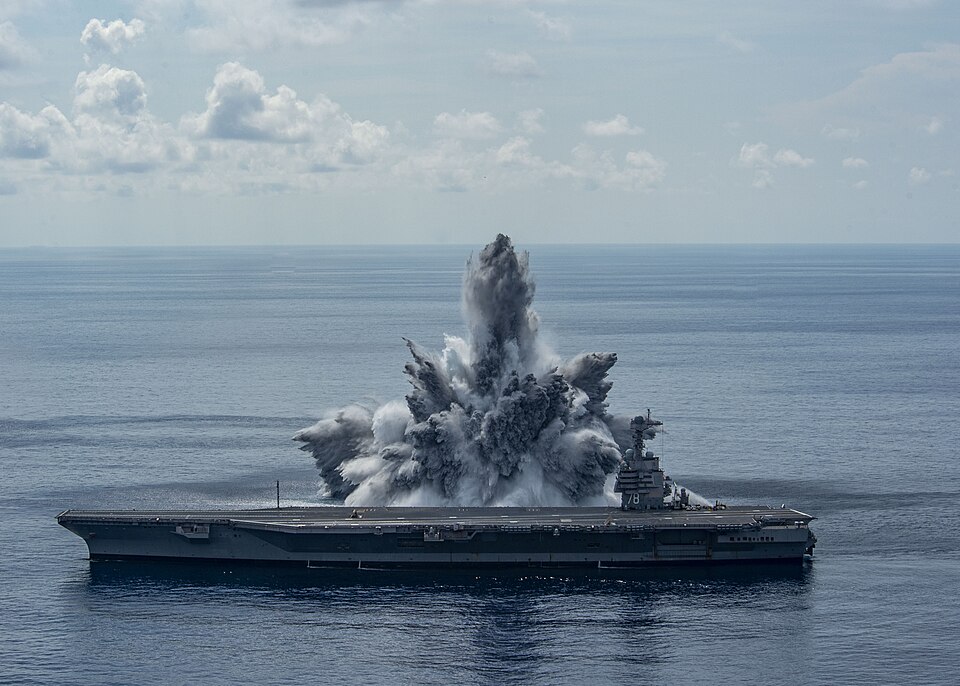
The explosion was tied to a Full Ship Shock Trial, a Navy testing program that uses controlled underwater detonations near newly built or substantially upgraded warships. The purpose is to recreate the shock generated by a nearby mine, torpedo, or other battlefield explosion and measure whether the vessel’s most important systems continue working.
These trials focus on more than whether a ship remains physically intact. Nearby blasts can disable propulsion, electrical systems, radar, communications, weapons controls, and other critical equipment without tearing open the hull. Sensors placed throughout the vessel allow engineers to track how the structure and onboard systems respond, helping them compare real-world performance with computer modeling and design expectations.
The Navy has conducted such tests for decades. The USS Gerald R. Ford underwent a widely publicized series of shock trials off Florida in 2021, producing a similar seismic signal in the same general region. Other tested ships have included the littoral combat ships USS Jackson and USS Milwaukee in 2016, the amphibious transport dock USS Mesa Verde in 2008, the amphibious assault ship USS Wasp in 1990, and the aircraft carrier USS Theodore Roosevelt in 1987.
Why the Public Reaction Was So Immediate

The public concern was driven less by reported damage than by the sudden appearance of an unfamiliar government alert. A zero-depth, magnitude 3.9 event labeled an experimental explosion naturally sounded alarming, particularly before residents knew whether it involved military activity, an industrial accident, or something else. Online speculation ranged from bomb testing to fears of an unexplained offshore emergency.
Florida has experienced similar confusion before. In 2016, a reported magnitude 3.7 earthquake more than 100 miles from Daytona Beach was later identified as a Navy explosion. During one shock trial that year, the Navy detonated a 10,000-pound charge roughly 100 yards from the USS Jackson. Permits covering Navy tests in that period allowed for charges of 10,000 and 40,000 pounds, illustrating why the blasts can be detected by seismic instruments far from the test site.
Those past incidents provide useful context, but they also reinforce the communication problem. The military has legitimate reasons to protect operational details, yet residents who feel shaking or receive earthquake alerts need fast, basic information about whether they face danger. A brief public notice confirming planned offshore testing could reduce panic without revealing sensitive information about the ship, equipment, or precise trial conditions.
Safety Measures and Marine-Life Concerns

Officials said no injuries or damage were expected or reported from the latest test. Full Ship Shock Trials are planned operations conducted under permits, with safety zones established around the detonation area. The Navy also uses monitoring procedures intended to protect personnel, civilian vessels, and aircraft from entering the test zone.
Environmental safeguards are part of the process as well. Military tests of this scale can raise concerns about the effect of underwater pressure waves on whales, dolphins, fish, and other marine life. Reports on the Florida event noted that the tests include environmental considerations and wildlife checks, though those assurances did not prevent people online from questioning what the blast might mean for animals in the surrounding waters.
The incident leaves two issues to be managed together. The Navy must test warships under realistic conditions, so crews are not discovering critical weaknesses during combat, while federal and military agencies must recognize how quickly an unexplained seismic alert can unsettle coastal communities. The explosion did not produce a public safety emergency, but the reaction showed that clearer and faster communication should be treated as part of the safety plan itself.