


Products are selected by our editors, we may earn commission from links on this page.

Thousands of six-figure jobs are sitting empty across the United States, and one of America’s most powerful CEOs says the country is paying a steep price for ignoring the crisis. The problem isn’t the pay. It isn’t the demand. It’s a workforce that simply isn’t trained to do the work.
Ford’s Jim Farley Sounded the Alarm

Ford CEO Jim Farley didn’t mince words when he appeared on the Office Hours: Business Edition podcast. “We are in trouble in our country,” he said plainly. “We are not talking about this enough,” Farley argued that a quiet but serious skilled labor shortage is threatening American industry and that most people haven’t noticed yet.
5,000 Empty Bays, $120,000 on the Table
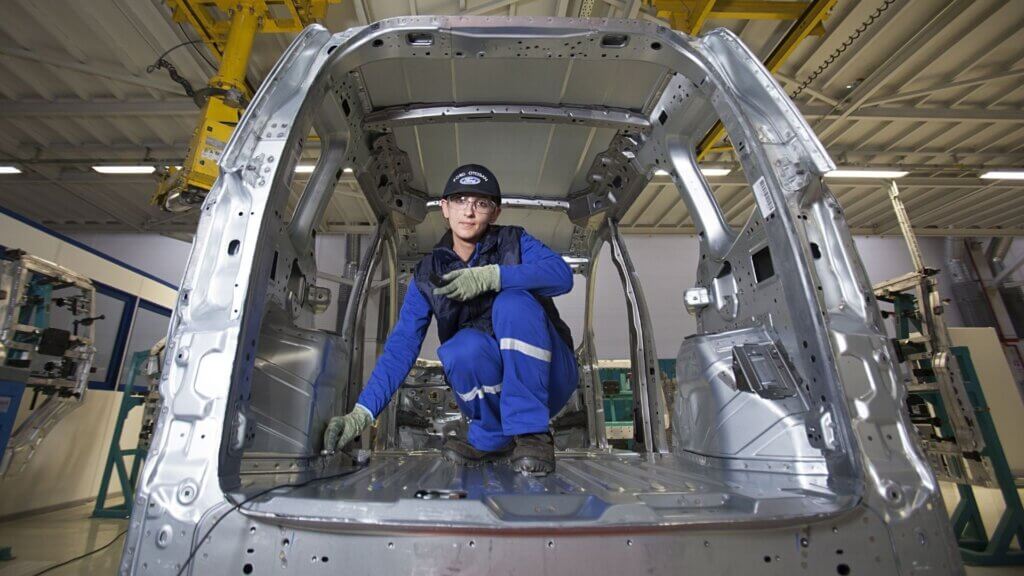
At the time of the podcast, Ford had roughly 5,000 open mechanic positions, each paying up to $120,000 a year. That’s nearly double the average U.S. salary of $66,622. Yet Farley says dealership bays sit idle — equipped with lifts, stocked with tools, and no one to fill them. The money is there. The workers, he says, are not.
It’s Not Just Ford
Farley was quick to say Ford is just one piece of a much larger picture. He estimated over a million unfilled openings in what he called “critical jobs,” among them emergency services, trucking, factory work, plumbing, and electrical trades. “It’s a very serious thing,” he said. The automotive sector is simply the most visible example of a nationwide pattern.
Years of Training Required
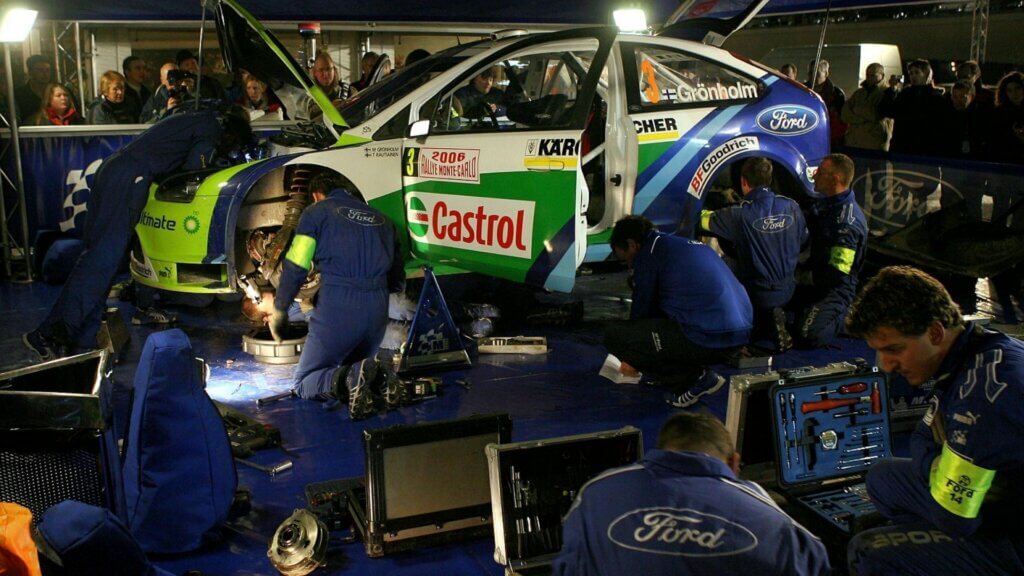
So why aren’t workers lining up? Part of the answer is time. Farley explained that becoming a skilled Ford mechanic typically takes around five years of hands-on training. Add to that a flat-rate pay system, where earnings depend on job volume, not hours, and early-career mechanics can spend years grinding before the big paychecks finally arrive.
One Mechanic’s $160,000 Road
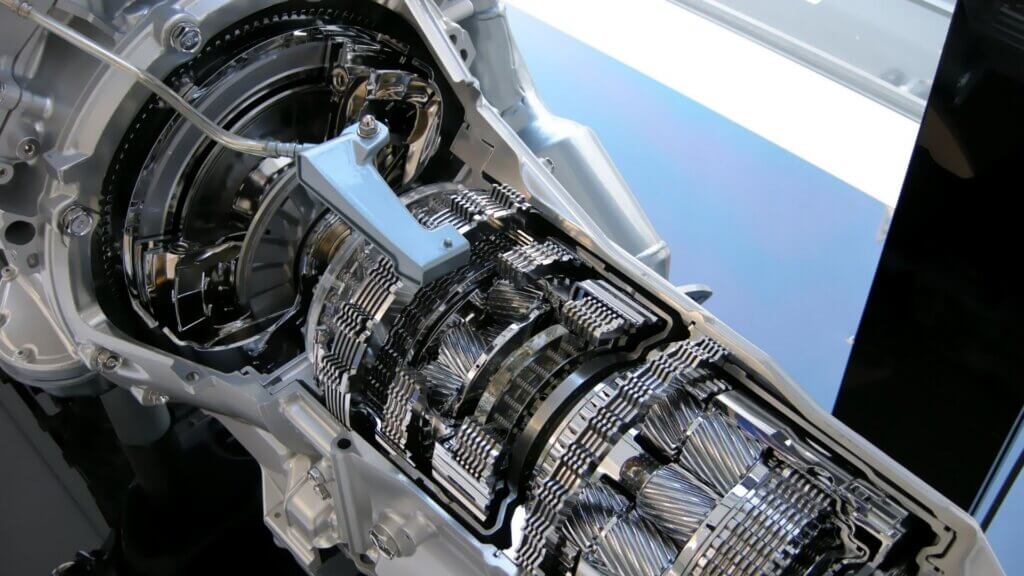
Ted Hummel’s career shows what persistence eventually looks like. The 39-year-old Ohio transmission specialist now earns around $160,000 a year. But it took a full decade before he broke the $100,000 mark. He joined Klaben Ford Lincoln in 2012 and only crossed that threshold in 2022. 10 years of hard, physical work before the salary matched the promise.
‘It Took a Long Time’

“They always advertised back then, you could make six figures,” Hummel told the Wall Street Journal. “As I was doing it, it was like: ‘This isn’t happening.'” His honesty captures why so many workers walk away before they ever see the reward. Today, his skills are in constant demand, but the decade in between wasn’t easy.
The Hidden Costs of the Trade

The financial reality goes beyond low early wages. Mechanics often must buy their own tools. Hummel owns a specialized torque wrench that costs $800, required by Ford. The work is also physically punishing. Injuries can knock a technician out of the bay for months with no income. These barriers quietly push many promising workers out of the trade before they ever reach their earning peak.
A Shortage Getting Worse by the Year

The numbers behind the trend are stark. Forbes estimates more than 345,000 new skilled trade jobs will open in the U.S. before 2028. For every five trained workers who retire, only two step in to replace them. And unlike white-collar roles, these trades are largely insulated from AI displacement. Robots can’t replace a transmission or rewire a breaker box.
A Question of National Security

Farley’s warning reaches beyond economics. “We are not investing in educating a next generation,” he said, invoking his grandfather — a man with nothing who built a middle-class life through trade. He even framed it as a defense issue: “God forbid we ever get into a real war. Google’s not going to be able to make the tanks and the planes.” For Farley, the skilled labor gap isn’t just an inconvenience. It’s a vulnerability.