


Products are selected by our editors, we may earn commission from links on this page.

When the government shutdown led to widespread furloughs across multiple federal agencies, including the IRS, 31-year-old tax attorney Isaac Stein suddenly found himself without a paycheck and with plenty of time on his hands. A few weeks later, he was back at work—just not behind a desk.
A Government Frozen in Place

The IRS furlough order sent home nearly half of its 74,000 employees amid the funding lapse. Confusion rippled across offices as staff learned, sometimes via recorded message, that they were furloughed indefinitely. With back pay uncertain, many workers faced mortgage stress and unpaid bills. Stein decided to face it differently: by turning policy paralysis into performance art.
The Birth of “Shysters Dogs”

What began as a “fun weekend project” quickly became a full-fledged business called Shysters Dogs. Stein had already secured health, fire, and vendor permits in September. Furloughed a month later, Stein donned his suit and rolled out a silver cart beneath a red umbrella, topped with a cheeky sign advertising “Correct Hot Dogs” and “Wrong Toppings—with penalty.”
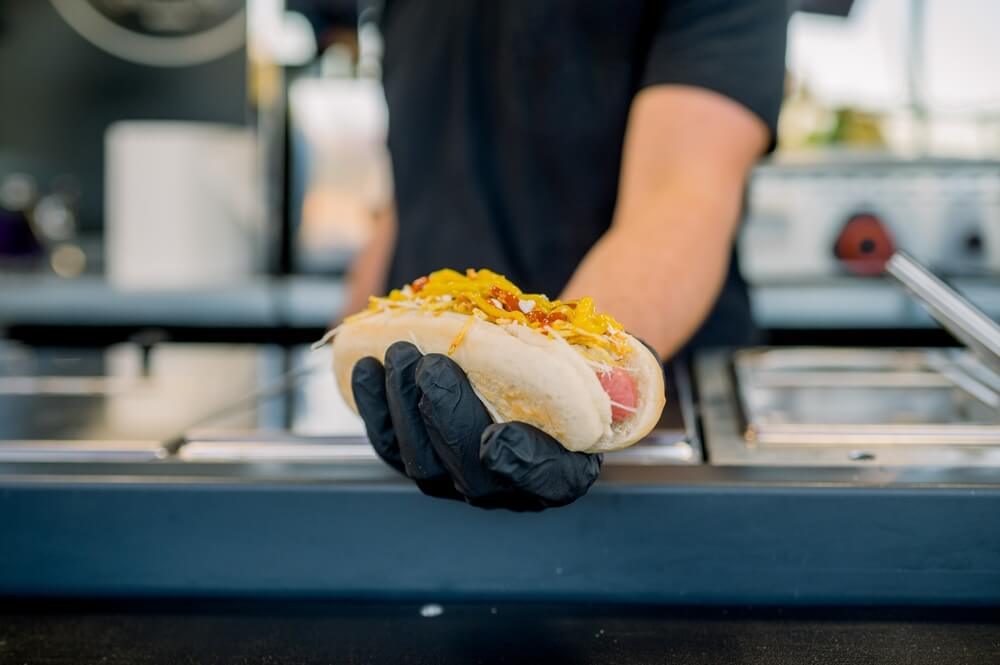
For $10, customers get a steamed frank, spicy brown mustard, and sauerkraut. For $17, they get two and chips—a lawyer’s nod to fairness with fine print.
A Legal Mind with a Vendor’s Heart
Stein’s inspiration dates back to age 12, when he manned a concession stand during a school basketball game. “All the other boys were interested in the game,” he told Reuters. “I had way more interest selling chips and soda.” Decades later, the dream returned—proof that even federal lawyers sometimes prefer mustard to memos.
The Menu, Served with a Wink

The cart’s humor doubles as its hook. The “Correct Hot Dog” comes with mustard and sauerkraut; any deviation adds a $1 “penalty.” Customers who recite the historical significance of MoonPies and RC Cola get five cents off. “It’s part culinary enterprise, part conceptual art,” Stein said.
The Reveal: The Joke’s on the System
As the government shutdown stretches on, Stein’s stand has become a local parable. His slogan, “The Only Honest Ripoff in D.C.”, borrowed from legal slang for unethical attorneys, has turned into quiet satire. “Everything about this stand was done by the book,” he joked to NPR. He read 150 pages of vending regulations himself—proof that red tape can fuel creativity as much as it frustrates it.
From Solitary Work to Street Connection
After years writing tax policy alone in a cubicle, Stein says the human contact is its own reward. “It’s like reading vignettes in a novel,” he told reporters. “You feel really connected.” His cart draws an eclectic mix of contractors, tech workers, and government staffers—many of them fellow furloughed employees trading gallows humor for grilled dogs.
Finding Meaning Between Paychecks

For Stein, the stand is more than a stopgap—it’s a rebuke of bureaucratic stagnation. In his words, it’s “joyous art” and a “community service,” a way to make something tangible amid political gridlock. Each sale, like his witty receipts, carries both warmth and irony: the only business thriving in a city that’s shut down.
A Return to Normal, With a Twist

Stein plans to return to the IRS as soon as the shutdown ends, but he won’t close shop. “This is going to be a weekend project for life,” he said. His story, part resilience, part satire, captures the spirit of Washington in crisis: when government grinds to a halt, one man’s furlough becomes another man’s lunch rush.