


Products are selected by our editors, we may earn commission from links on this page.

Most people have been chasing the wrong number for decades. Daniel Lieberman, an evolutionary biologist at Harvard, says the idea that humans are built to sleep eight hours a night has no evidence behind it at all. He’s not offering a gentle correction. He’s calling it something much blunter, and the reasoning behind it upends a rule most people have never questioned.
Lieberman Doesn’t Soften the Claim on Steven Bartlett’s Podcast

Speaking on The Diary of a CEO, Lieberman told host Steven Bartlett, according to Sleepopolis, “This idea that natural human beings sleep eight hours a night is just nonsense, it’s just not true.” He’s a paleoanthropologist known for research on human evolution and evolutionary medicine, and he built the case around one question nobody usually asks: what do people sleep when nothing artificial is keeping them awake?
Communities Without Electric Light Sleep Six to Seven Hours, Not Eight

A growing body of evidence and evolutionary research suggests the optimal nightly sleep for many healthy adults is closer to seven hours than eight. Lieberman points to field data from communities without modern electricity, where people typically sleep six to seven hours without napping, directly contradicting the eight-hour target most people treat as gospel. That data point alone reframes where the number actually came from.
The Eight-Hour Rule Traces Back to Factory Clocks, Not Human Biology
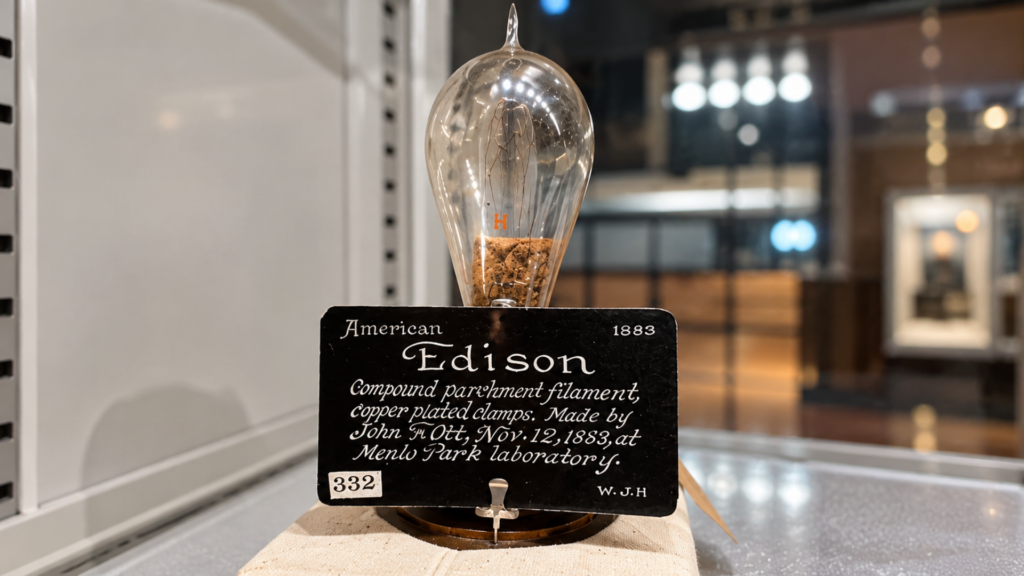
According to Fortune, Lieberman frames the modern eight-hour dogma as a legacy of the Industrial Revolution rather than a biological necessity. He’s pointed to Thomas Edison and artificial light as the culprits blamed for stealing sleep, when in his view the eight-hour standard itself was a byproduct of the same industrial era. Calling it “nonsense” is his way of separating the number from the science.
Large Studies Show Risk Rises on Both Sides of Seven Hours, Not Eight
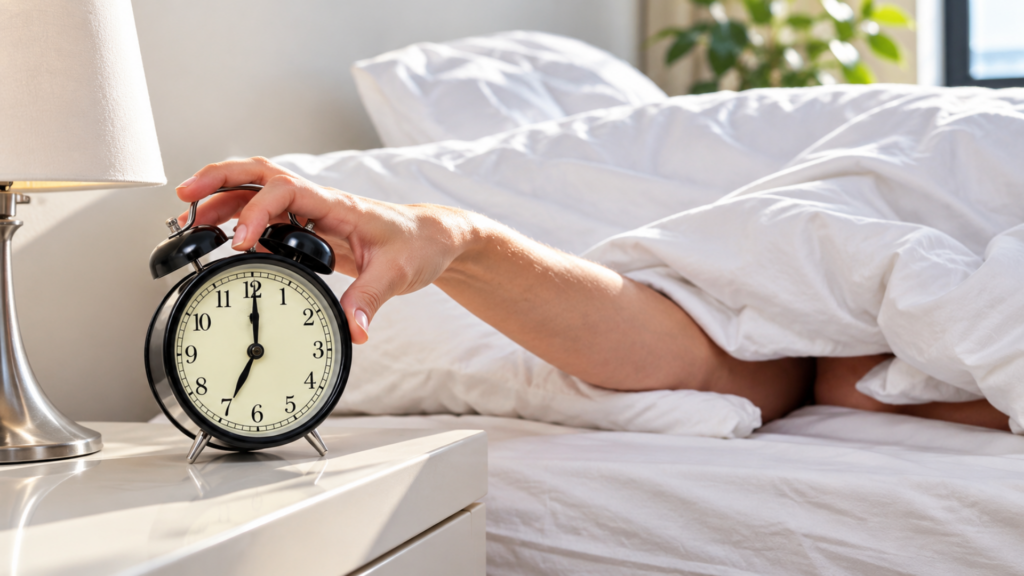
Epidemiologic curves show risk bottoms out around seven hours, producing a U-shaped pattern with higher risk from both short and long sleep. That shape matters. It means the danger isn’t just sleeping too little, it’s also sleeping too much, and the safest point sits a full hour below the number most people were raised to believe.
A UK Biobank Analysis of Nearly 500,000 People Backs the Pattern

One UK Biobank study tracking nearly half a million adults found short sleepers faced a 14% higher mortality risk from respiratory disease, while long sleepers faced a 35% higher risk, both measured against a seven-to-nine-hour midrange. Separate cohort data puts the lowest all-cause mortality risk at almost exactly seven hours a night.
Sleep Medicine’s Own Guidelines Say Seven, Not Eight

The American Academy of Sleep Medicine and Sleep Research Society’s official consensus recommends adults get seven or more hours a night, with no fixed ceiling attached. The American Academy of Sleep Medicine and Sleep Research Society recommend “seven or more hours per night” for adults, explicitly a range beginning at seven rather than an eight-hour mandate. The mainstream guidance never actually demanded eight.
More Than a Third of Americans Aren’t Even Hitting Seven

More than one-third of Americans miss the seven-hour minimum, according to Fortune’s reporting, which means the real problem isn’t people falling short of an unnecessary eight-hour target. It’s people falling short of a lower bar entirely. Sleep scientist Rebecca Robbins has argued the fixation on hitting a specific number distracts from a more useful question.
Robbins Says Consistency Matters More Than the Number on the Clock

Sleep scientist Rebecca Robbins addresses the eight-hour belief, explaining how the benchmark emerged and offering practical tactics to improve sleep quality rather than fixating on a single number. Regular bed and wake times, morning light, and a cool dark room do more for health than any specific hour count. The question Lieberman’s research raises next is what people should actually do with that information.
The Real Target Is Seven Hours of Consistent, Quality Sleep

Adults who wake up refreshed on seven hours have no biological reason to force an extra hour they don’t need. The evidence, from evolutionary field data to hundreds of thousands of medical records, lands in the same place: seven is the number backed by science, eight was never more than a cultural habit inherited from factory schedules, and treating it as a fixed minimum was the actual myth.