

Products are selected by our editors, we may earn commission from links on this page.
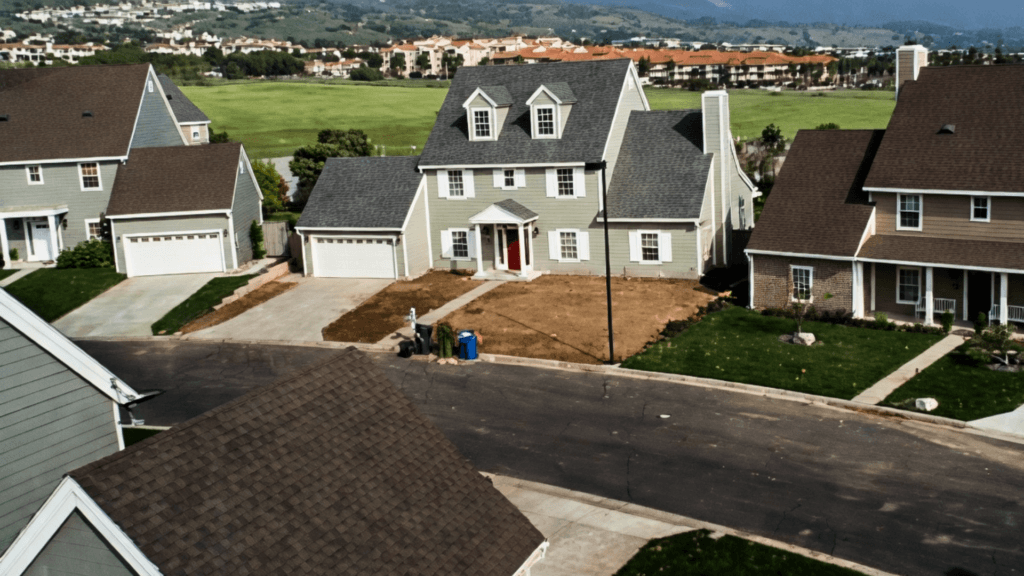
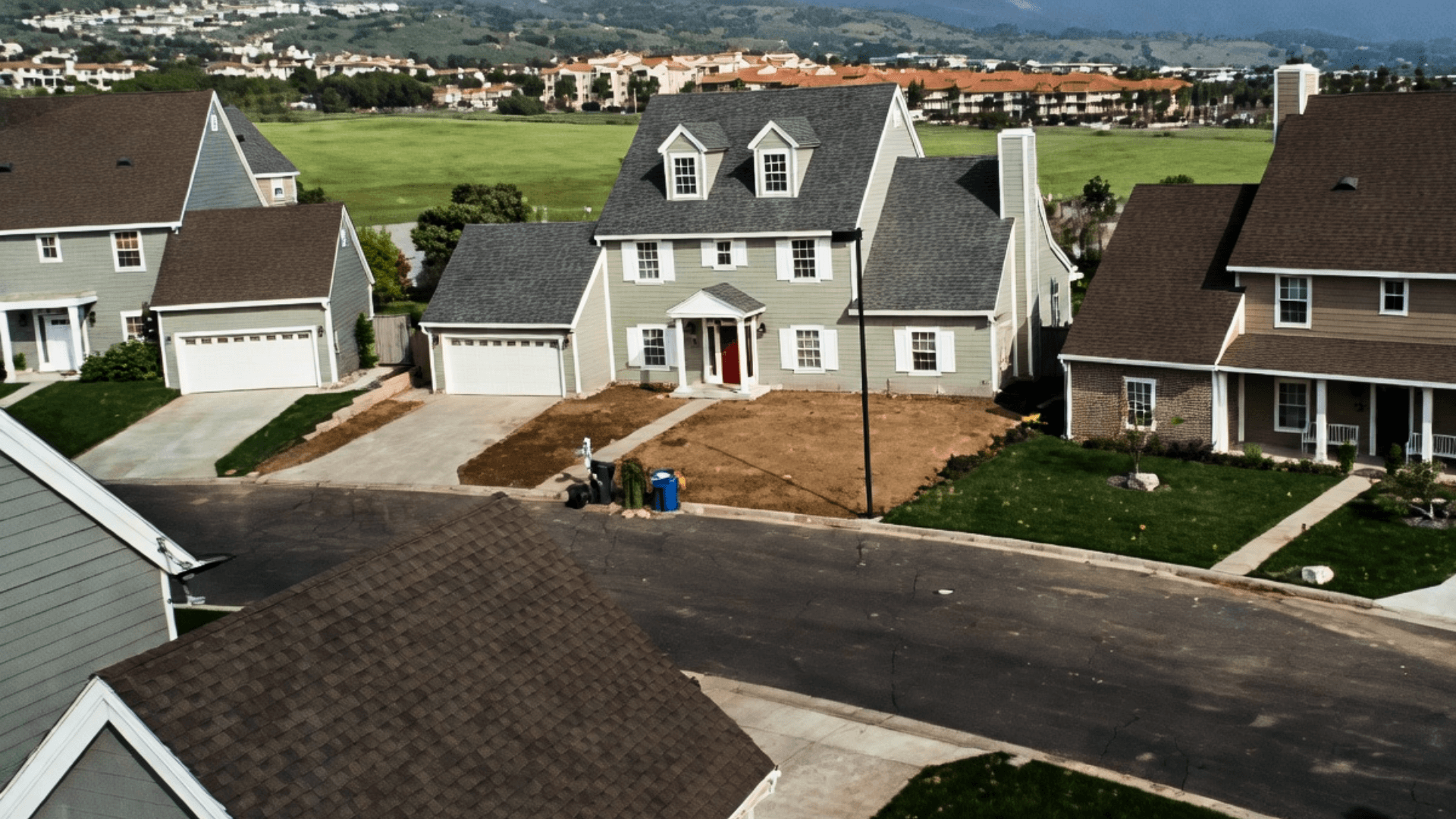
Someone posted a photo of their neighborhood on Reddit and typed just one line: “Something is so off about these homes.” They weren’t wrong. The image showed a row of large houses crammed together, each one identical to the last. Steep, towering roofs. No trees. A dirt patch where a lawn should be. Commenters stared at it and reached for the same word: uncanny valley. The term usually refers to humanoid robots that look almost real. Nobody expected it to apply to a suburb.
What Is the Uncanny Valley, and Why Did a Neighborhood Trigger It?
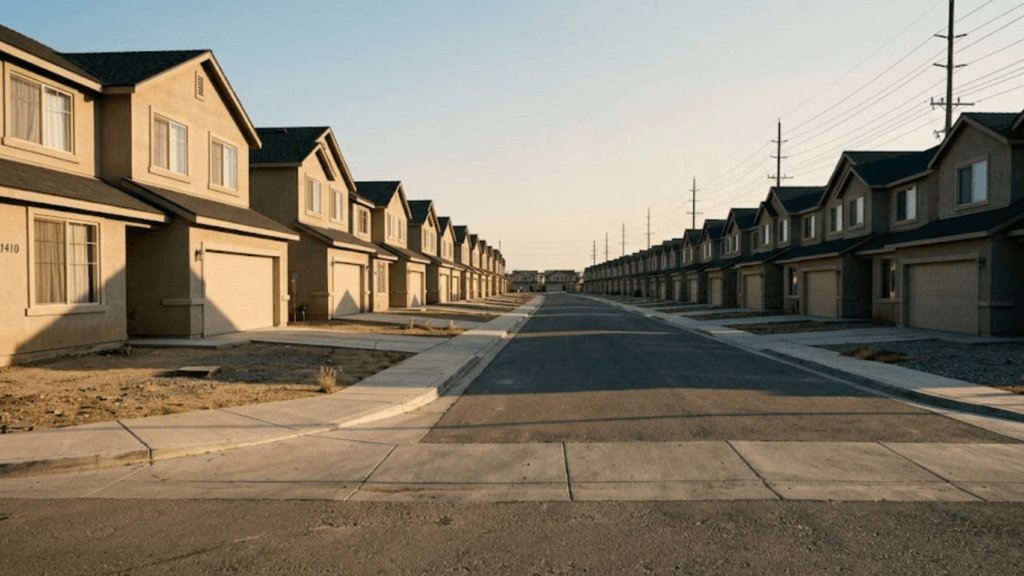
The uncanny valley is a psychological concept describing the unease people feel when something looks almost human but not quite right. Robots and CGI faces often land in it. But the same effect can apply to spaces. A neighborhood that resembles a home but lacks every quality that makes a place feel lived in; shade, variation, organic growth, creates a similar mental dissonance. Redditors described the houses in the photo as looking like a movie set. Another wrote simply: “No trees!” That missing greenery was doing more work than it seemed.
The Forum That Has Been Documenting This for Years

The photo landed in r/McMansionHell, a Reddit community built around critiquing large, mass-produced homes that prioritize size over quality. The forum has documented hundreds of examples: mismatched rooflines, faux balconies, garages that dominate the facade, homes that look grand from the front but hollow everywhere else. Architecture critic Kate Wagner, who founded the McMansion Hell blog, described these homes as testaments to bad craftsmanship designed to signal wealth rather than enable living. The neighborhood in the viral photo was a textbook case.
The Design Flaws Are Not Just Aesthetic
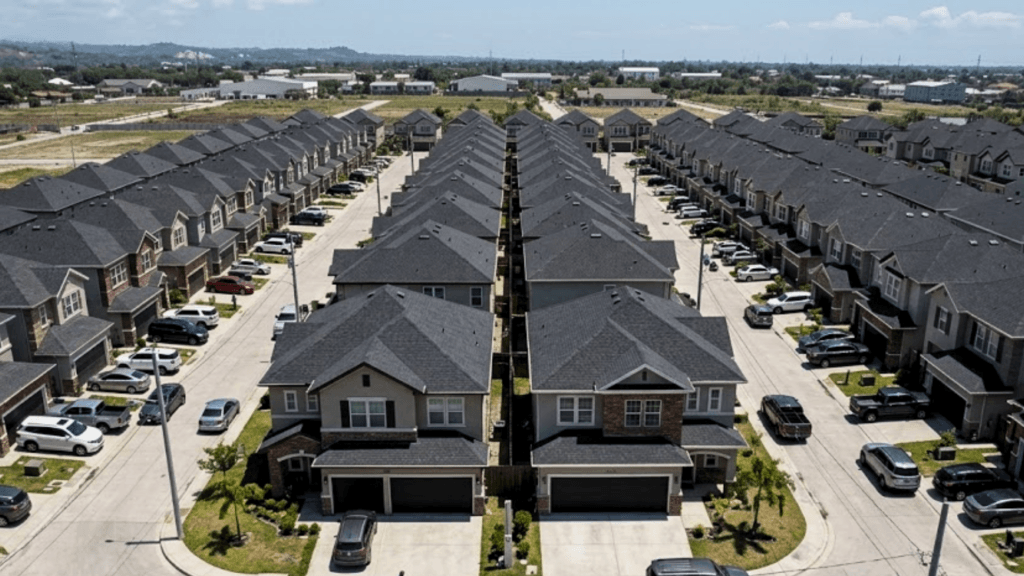
Look past the visual oddness and the structural problems emerge. The houses in the photo were packed tightly together, leaving little usable outdoor space despite their large footprint. Steep roofs and tall facades created dramatic silhouettes that wasted interior volume. No mature trees meant no natural shade, forcing residents to rely on air conditioning for months of the year. These aren’t minor quirks. According to the International Association of Certified Home Inspectors, features like high ceilings and oversized foyers make McMansions significantly harder and costlier to heat and cool.
What It Actually Costs to Live in One
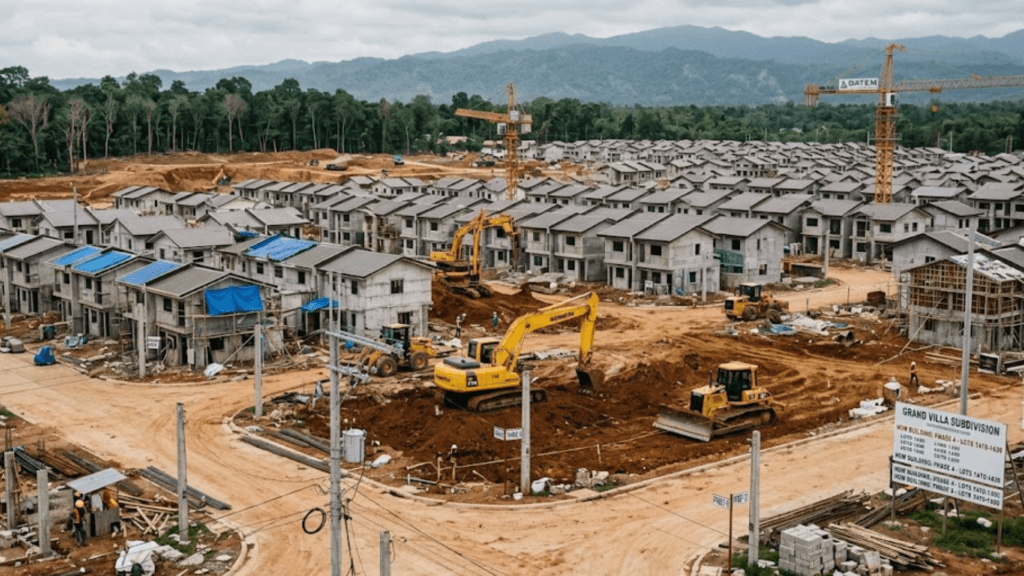
The sticker price is only the beginning. McMansions come with utility bills that reflect their scale. Building roughly 408 trees worth of timber goes into an 8,000-square-foot home, according to estimates from the Idaho Forest Products Commission. Concrete foundations, expansive square footage, and specialized rooms like indoor pools or exercise spaces all add to energy demands. For every ten large homes built, more than seven acres of forest may be cleared. The appeal of a large, impressive home comes with ongoing costs that most buyers don’t fully calculate before signing.
The Carbon Footprint Nobody Talks About at the Open House
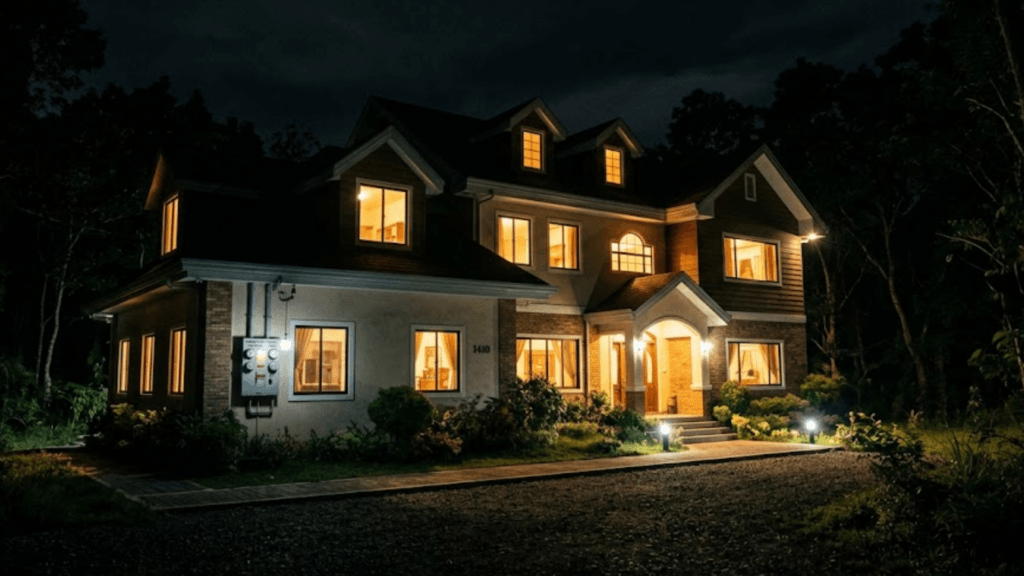
The environmental math behind McMansions is stark. The United Nations estimates that households consume 29 percent of global energy and account for 21 percent of CO2 emissions. Larger homes require more of everything: more materials to build, more land to site, more energy to run. New home construction in the US already generates over 50 million tons of embodied carbon annually, according to research published in housing policy literature. A McMansion at the top end of the market multiplies that figure considerably. And unlike a solar panel or a heat pump, no single retrofit can undo the scale of the structure itself.
Why This Is Happening During a Housing Shortage
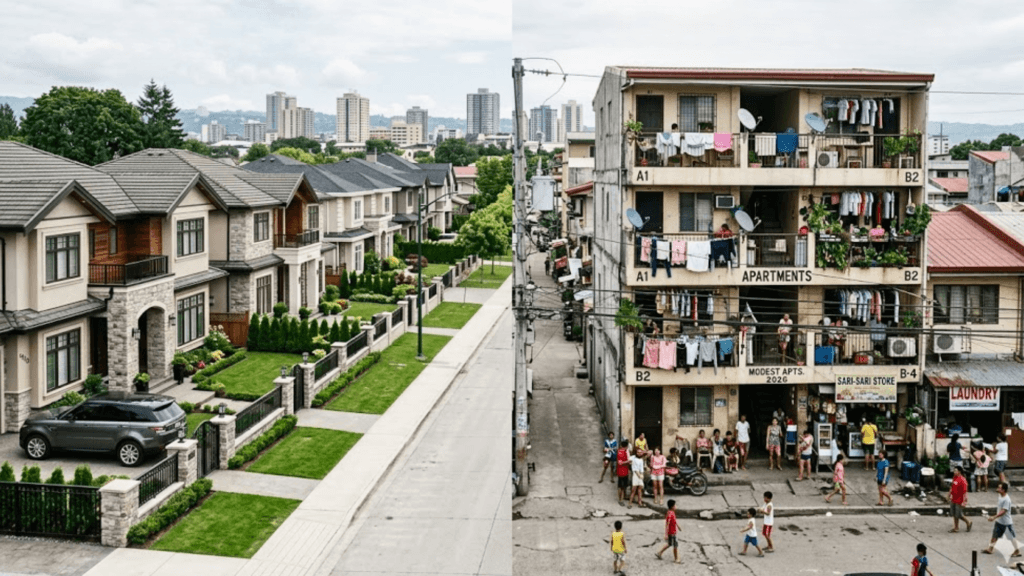
The bittersweet irony of the McMansion boom is that it coincides with one of the worst affordable housing shortages in decades. The National Low Income Housing Coalition has documented a shortfall of millions of affordable rental homes for low-income renters in the US. Experts at the Urban Institute and Housing Matters note that the solution involves denser, more efficient housing stock, not sprawling single-family developments on cleared land. Meanwhile, sales of homes over 4,000 square feet declined 11 percent in 2024, according to Redfin, suggesting the market is already beginning to shift on its own.
The Buyers Who Are Walking Away
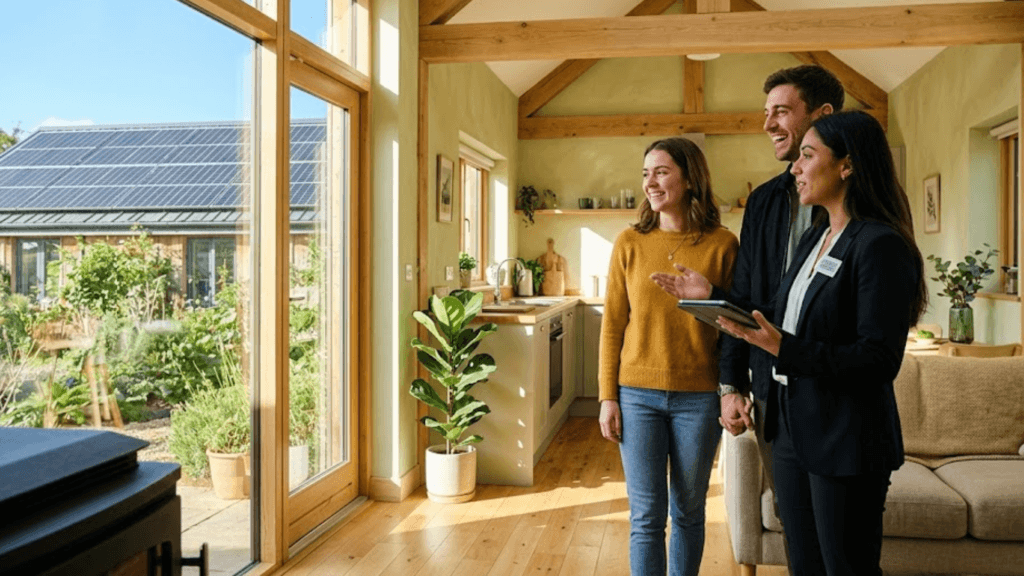
The generation inheriting the housing market wants something different. A Redfin survey from April 2025 found that 68 percent of homebuyers under 40 prefer smaller, more manageable homes. The National Association of Realtors found that 62 percent of buyers now consider energy efficiency extremely important when choosing a home. Demand for walkable, mixed-use neighborhoods has climbed nearly 20 percent since 2022, according to the Urban Land Institute. The uncanny valley suburb, with its treeless lots and identical facades, is exactly what younger buyers are actively trying to avoid.
What a Better Version of the Same Idea Looks Like
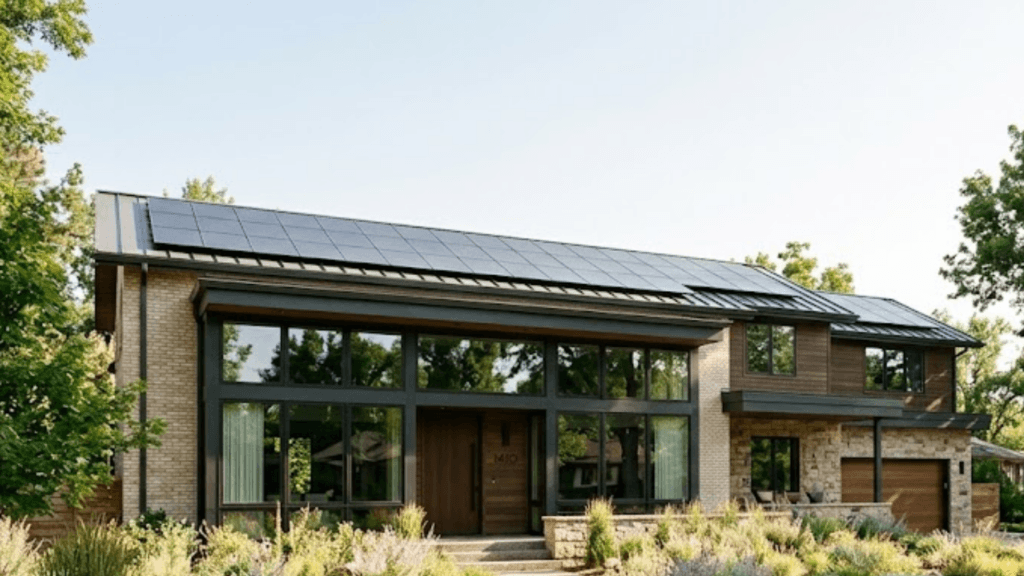
Size alone is not the problem. The problem is size without function or sustainability. Some municipalities have already started drawing that line. Marin County, California requires any home over 4,000 square feet to meet a green-building checklist. Pitkin County, Colorado mandates that homes over 5,000 square feet provide on-site renewable energy or pay into a clean energy fund. Sustainable large homes can incorporate LEDs, heat pumps, Energy Star appliances, and solar panels. Property values for energy-efficient homes are rising as buyers begin factoring in long-term running costs alongside the listing price.
The Photo That Caught Something We Already Knew
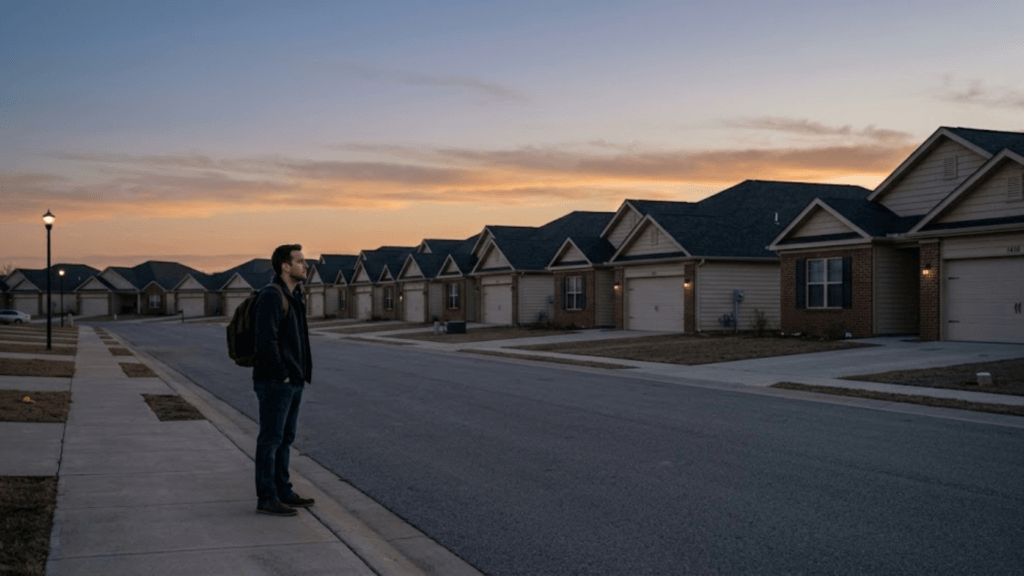
One Reddit photo didn’t reveal a new problem. It made a familiar one impossible to ignore. Neighborhoods that look like movie sets and feel just as hollow, have been expanding across American suburbs for decades. The reaction to the image wasn’t really about those specific houses. It was recognition. The uncanny valley feeling people described was the sensation of seeing something designed to look like a home that somehow failed to become one. As buyers, cities, and builders rethink what housing should look like, that distinction matters more than ever.