


Products are selected by our editors, we may earn commission from links on this page.

For years, researchers have linked Parkinson’s disease to genetics, age, and exposure to certain chemicals. Now a major new study adds an unexpected factor to that list: the everyday noise outside your home. Published in JAMA Neurology, the research followed millions of adults over nearly two decades and found a measurable connection between long-term traffic noise and the likelihood of developing Parkinson’s later in life. The increase in risk was small, but it appeared consistently across a massive dataset. It is a reminder that the environment surrounding your house, not just what happens inside it, may quietly shape long-term brain health.
This article was created with the assistance of AI and reviewed by our editorial team for accuracy and clarity.
The Scale of the Study Is Hard to Ignore

This was not a small or preliminary study. Researchers analyzed health records from more than 3.1 million adults in Denmark, tracking them for up to 18 years. That scope makes it one of the largest investigations ever conducted into environmental noise and neurological disease. Because Denmark keeps detailed national health registries, scientists could follow real-world outcomes rather than relying on surveys or self-reported data. The size of the study does not prove that noise causes Parkinson’s, but it does make the pattern researchers found difficult to dismiss as coincidence or statistical noise.
The Actual Numbers Behind the Headlines

So how much did noise matter? Researchers found that for every 11.5 decibel increase in road traffic noise on the most exposed side of a home, Parkinson’s risk rose by about 3 percent over the study period. To put that in perspective, an 11.5 decibel jump is roughly the difference between a quiet residential street and a busier road nearby. A 3 percent increase may sound modest, and it is, but across millions of people that small shift can translate into a meaningful number of additional cases over time.
Not Every Side of Your House Is Equally Exposed

One of the more practical findings involved something most homeowners never think about: which side of their house faces the noise. Researchers modeled sound levels separately for the loudest and quietest exterior walls of each residence. People whose homes offered access to a quieter side, such as a bedroom facing away from a busy street, appeared to have a somewhat lower association between traffic noise and Parkinson’s risk. That suggests exposure at the loudest point may matter more than an average noise level for the whole property.
Why Noise Might Affect the Brain at All

It might seem strange that sound could influence a movement disorder. But researchers have long studied how chronic noise exposure affects the body beyond hearing. Persistent traffic noise has been associated with elevated stress hormones, disrupted sleep, and higher blood pressure over time. Poor sleep and chronic stress are both known to affect brain inflammation and cellular repair processes. Scientists studying this new data suggest that similar pathways could plausibly link long-term noise exposure to the kind of neurological changes seen in Parkinson’s, though more research is needed to confirm exactly how.
Traffic Noise Joins a Growing List of Environmental Suspects

This study does not stand alone. Scientists have spent years examining how environmental exposures, separate from genetics, might raise Parkinson’s risk. Air pollution has repeatedly been studied for its potential effect on brain health, and certain pesticides have shown consistent associations in multiple populations. Traffic noise is a newer addition to this conversation, but it fits a broader pattern researchers have been building for decades. Together, these findings suggest that where and how people live may carry more weight in long-term neurological health than was once assumed.
Pesticide Exposure Has Its Own Home-Related Link

Interestingly, other recent research has looked at a very different kind of home exposure: living near golf courses. A study published in JAMA Network Open examined whether proximity to golf courses, which are often treated with pesticides, was associated with Parkinson’s risk in older adults. The researchers found a connection worth further investigation. While golf courses are not relevant to every household, the study illustrates a common thread running through this research. Repeated, low-level chemical or environmental exposure near where people live may add up over many years.
Even Your Water Source May Play a Role

Beyond noise and pesticides, scientists have also examined drinking water as a possible factor. Some research has pointed to differences in Parkinson’s risk depending on groundwater characteristics and certain water contaminants. Findings in this area are still developing, and results vary by region and water source. Still, the overall theme echoes what researchers found with traffic noise. Environmental exposures that seem minor day to day, such as the water from a tap or the hum of nearby traffic, may have a cumulative effect on the brain across a lifetime.
What This Study Does Not Prove

It is worth being clear about what this research does and does not show. The study found an association, not direct proof that noise causes Parkinson’s disease. Many factors influence individual risk, including genetics, age, and overall health. A 3 percent increase per 11.5 decibel jump is also a population-level statistic, not a personal prediction. Living near a busy road does not mean any one person will develop Parkinson’s. Researchers describe this as one contributing piece of a much larger and still developing picture of environmental risk factors.
The Practical Takeaway for Your Own Home
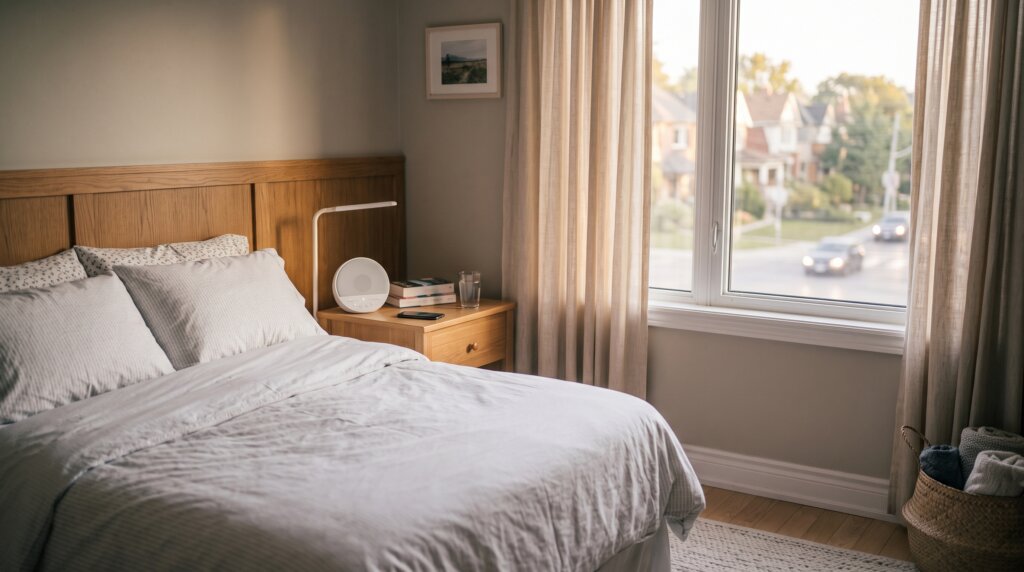
For most people, this study is not a reason for alarm, but it is useful information. If you have some flexibility in how your home is arranged, positioning a bedroom or living space away from the loudest street noise may offer modest benefits. Simple steps like sealing windows, adding thicker curtains, or using white noise at night can also reduce nighttime noise exposure. More broadly, this research reinforces a familiar message from brain health experts: managing stress, protecting sleep quality, and paying attention to your surroundings all contribute to long-term neurological well-being.