

Products are selected by our editors, we may earn commission from links on this page.
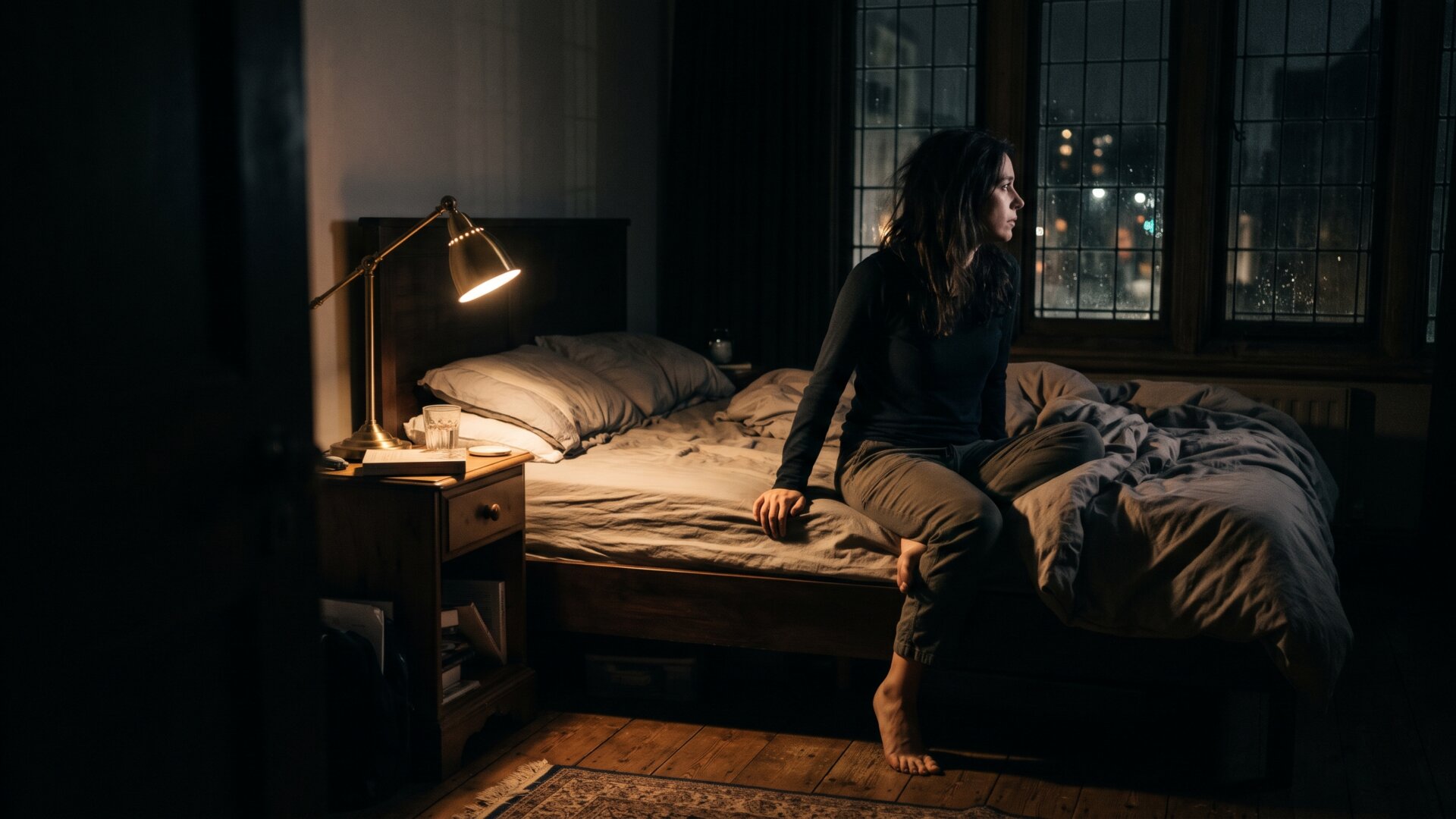
If you’ve ever been fine all day, then found your brain filing through every awkward thing you said the moment the light went off, you’re describing something sleep researchers measure. They call it pre-sleep cognitive arousal, and it predicts how long you lie there awake. In a study of 68 adults with insomnia and 36 good sleepers, the insomnia group scored significantly higher on emotional dysregulation, rumination and worry. Personality is part of why. The traits that make someone thoughtful at 2 p.m., including reflectiveness, high standards and a need to understand people, have nothing to push against at 2 a.m. Part of the reason is also the hour itself, which one 2022 review argues changes the brain doing the thinking.
This article was created with the assistance of AI and reviewed by our editorial team for accuracy and clarity.
Why the same worry feels worse after midnight
The Mind After Midnight hypothesis was set out by Andrew Tubbs, Fabian Fernandez and Elizabeth Klerman in Frontiers in Network Physiology in March 2022, a review of how mood, reward processing and executive function differ during nocturnal wakefulness. Their argument is that being awake during the biological night, roughly 2 to 3 a.m. for most people, is not neutral ground for a difficult thought. Attention tilts negative, positive affect is lower, and prefrontal inhibition is reduced, with excess rumination listed among the results. The authors are explicit that this is a hypothesis, proposing that circadian changes collide with sleep deprivation to disrupt emotion processing and impulse control. One trait turns up across this literature more than any other, and the measurements place it at the start of the night.
Replaying the day shows up first as rumination

Rumination is the clinical word for the replay loop: going back over a conversation, a decision, a look someone gave you. In a 2017 study in Sleep Medicine, insomnia-specific rumination correlated directly with trait-level arousal and with both the cognitive and somatic arousal people reported right before sleep. The timing is the useful part. Nocturnal rumination has been tied more robustly to difficulty falling asleep than to difficulty staying asleep, so the replay does most of its damage in the first stretch of the night. High nocturnal cognitive arousal has been linked to prolonged sleep latency, lower sleep efficiency and shorter total sleep time measured by polysomnography. In perfectionists, that replay takes a particular grammatical form.
Two perfectionism traits track most closely with insomnia

Perfectionism isn’t one thing in this research. The dimensions that keep surfacing are concern over mistakes and doubts about actions, meaning the worry that you got it wrong and the suspicion that you didn’t do it properly. A 2018 study in Frontiers in Psychology put questionnaires on perfectionism, counterfactual processing and insomnia severity to 180 university students. Both dimensions correlated with insomnia severity, and the frequency of counterfactual thoughts and emotions at bedtime, the if only version of events along with the regret, shame and guilt attached to it, mediated the effect. A longitudinal study in PLOS ONE put anxiety symptoms in a similar middle position. A week of wrist monitors on 63 poor sleepers complicated that picture.
A diary study found the trait alone is not enough
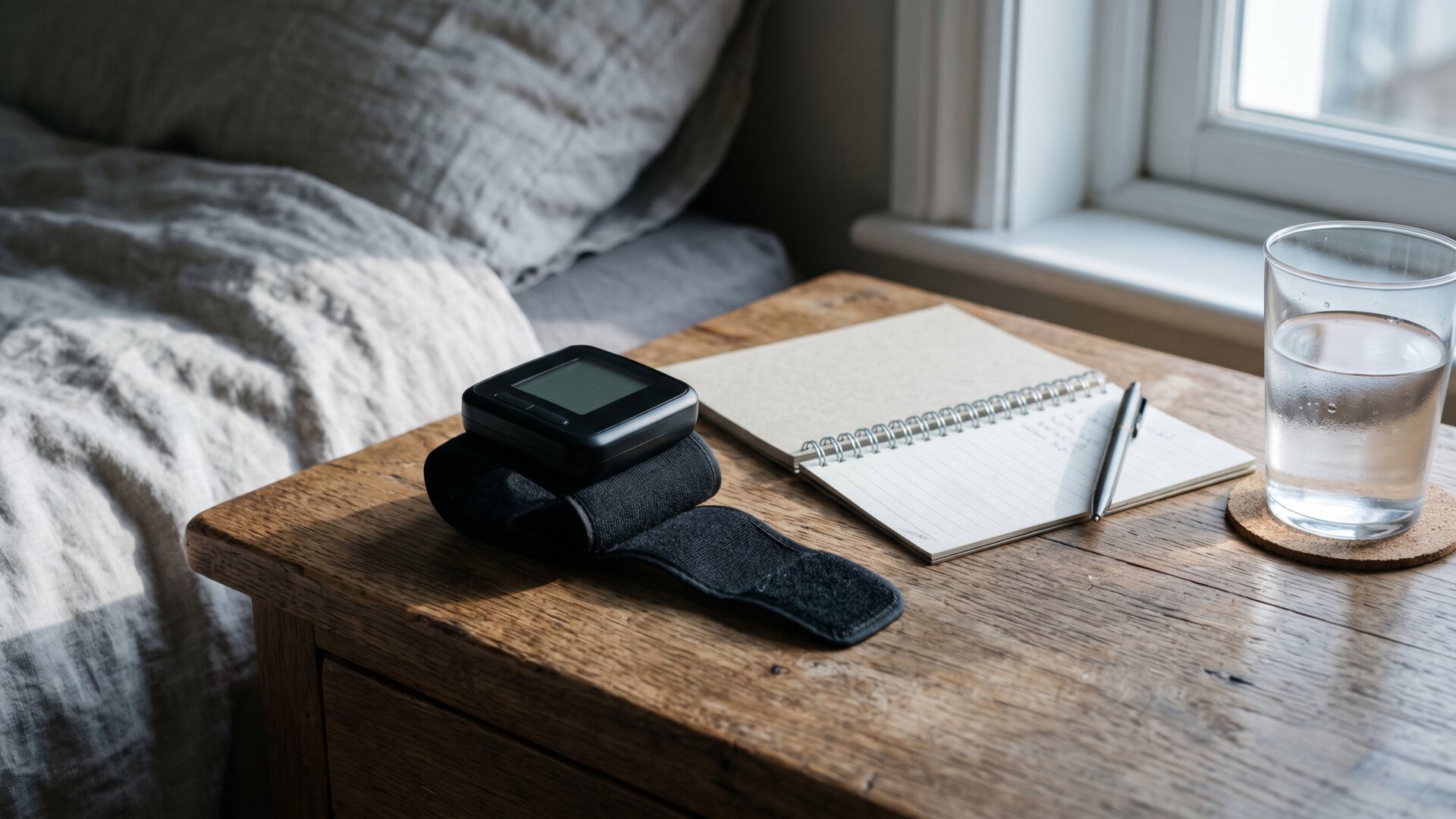
Researchers followed 63 people with insomnia across seven consecutive days, assessing sleep onset latency, total sleep time, wake after sleep onset and sleep efficiency with actigraphic watches and diaries rather than relying on memory. Perfectionism dimensions and daily stress levels did not predict self-reported or actigraphic sleep parameters. What mattered was the interaction. Concern over mistakes and doubts interacted with cognitive presleep arousal in predicting self-reported sleep, and the authors concluded the evidence points to arousal, not raised perfectionism levels, as the part perpetuating insomnia symptoms. That distinction explains why traits as different as closure-seeking, perfectionism and intellectualizing end up in the same place at 1 a.m.
The common thread is emotion regulation, not the topic

Wanting closure after an argument, hunting for meaning in a job, explaining a feeling until it makes logical sense: these look like separate habits. In the sleep research they converge, because each one is an attempt to settle an emotion by thinking at it. The 2017 Sleep Medicine study measured that directly with the Difficulties in Emotion Regulation Scale. People with insomnia scored significantly higher than controls on emotional dysregulation, rumination and worry, and insomnia rumination correlated with emotion dysregulation as well as with arousal. Under the hyperarousal model of insomnia, worrying and rumination count as cognitive arousal in their own right. What changes from one night to the next turns out to be the day behind it.
Daily stress predicts the arousal better than personality does

A study in the Journal of Sleep Research found that days with higher than usual perceived stress were associated with poorer sleep via increased pre-sleep cognitive arousal, a pattern that held within individuals regardless of group. The difference between people was sleep reactivity, meaning how readily someone’s sleep breaks down under pressure. High sleep reactivity significantly amplified the effect of pre-sleep cognitive arousal, producing more pronounced sleep disturbance than in low-reactive sleepers. A daily diary study of students in Stress and Health found the same thing from the other direction: perfectionistic concerns weren’t associated with pre-sleep arousal, while daily stress significantly predicted it. That stress doesn’t always stop at the bedroom door. For many people it arrives on a screen.
Bedtime phone use sits close to anxiety symptoms

A 2025 network analysis in BMC Psychiatry examined bedtime smartphone use and anxiety symptoms among Chinese residents. The association was stronger in women than in men, and the symptom with the strongest link to bedtime phone use was becoming easily annoyed or irritated. Network analysis maps which symptoms sit closest to one another rather than showing which causes which, so the direction stays open. For anyone who works in the room they sleep in, the practical problem is the same either way: the device holding tomorrow’s to-do list is also the last thing in your hands. None of this explains why some people are wired to be awake at that hour in the first place.
Being a night owl is partly biology, not habit

Chronotype is the individual propensity toward morningness or eveningness, and researchers measure it with instruments such as the Reduced Morningness-Eveningness Questionnaire. In a 2025 study in Translational Psychiatry, 428 participants aged 18 to 70 completed it alongside 11 validated scales of common psychiatric symptoms, and eveningness was associated with higher levels of eight of those 11. Age shaped the pattern. Emotional instability and emotion dysregulation were most pronounced in younger adults with eveningness, while social anxiety peaked in older adults with eveningness. A 2018 review described evening chronotype as a transdiagnostic risk factor rather than one tied to a single disorder. Which is why clinicians working on this don’t start with personality. They start with a questionnaire written in 1985.
What clinicians measure is the arousal, not the trait

The Pre-Sleep Arousal Scale came out of work by Nicassio, Mendlowitz, Fussell and Petras, published in Behaviour Research and Therapy in 1985. It asks people to rate how strongly they experienced states like a racing mind and an inability to shut off thoughts during the pre-sleep period, and it still appears in the studies above. A second measure is worth knowing: sleep effort, the deliberate work of trying to make sleep happen. Total perfectionism scores, doubts about action, concern over mistakes and personal standards were each significantly related to increased sleep effort, pre-sleep arousal and dysfunctional beliefs about sleep. Cognitive behavioral therapy for insomnia has been studied specifically for how it changes those cognitive processes.