

Products are selected by our editors, we may earn commission from links on this page.
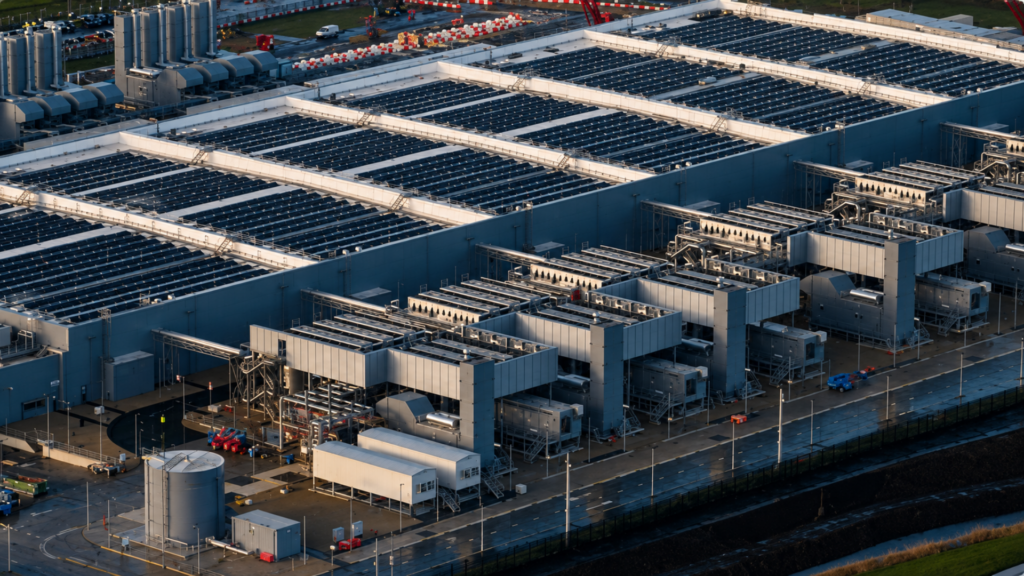
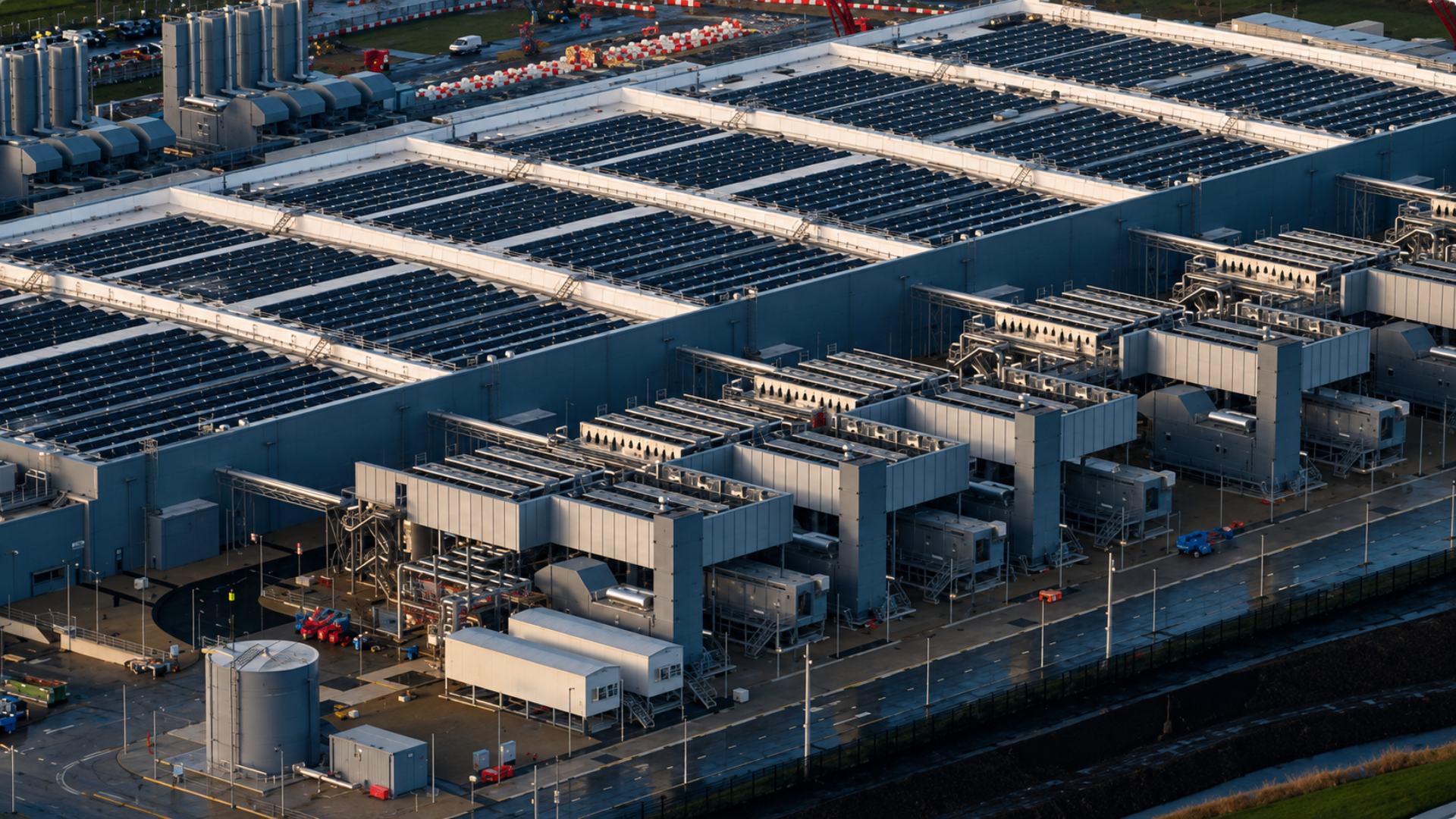
For the first time in U.S. history, private investment in data center construction has surpassed what the government spends on public transportation infrastructure, including airports, marine terminals, and mass transit combined. The number clearing that bar: more than $50 billion. It happened quietly, with no ribbon-cutting and no press conference. Most Americans have never set foot inside one of these facilities. That’s exactly the problem.
Data centers are the physical foundation of modern digital life: they keep streaming services running, store cloud data, and power the artificial intelligence tools now embedded in everything from search engines to hospital systems. From the outside, most look like oversized warehouses surrounded by security fencing. Inside, they are among the most energy-intensive buildings on Earth.
Artificial intelligence is the engine behind the surge. Every time a user runs a prompt, queries a model, or generates an image, that request travels to a physical server consuming real electricity in a real building. As AI use has scaled exponentially, so has the demand for the infrastructure behind it. ConstructConnect data shows data center construction spending grew by nearly 139% year-over-year through late 2025, with full-year totals widely expected to exceed $60 billion. The industry has doubled in size every year since 2021.
The Numbers Behind the Tipping Point
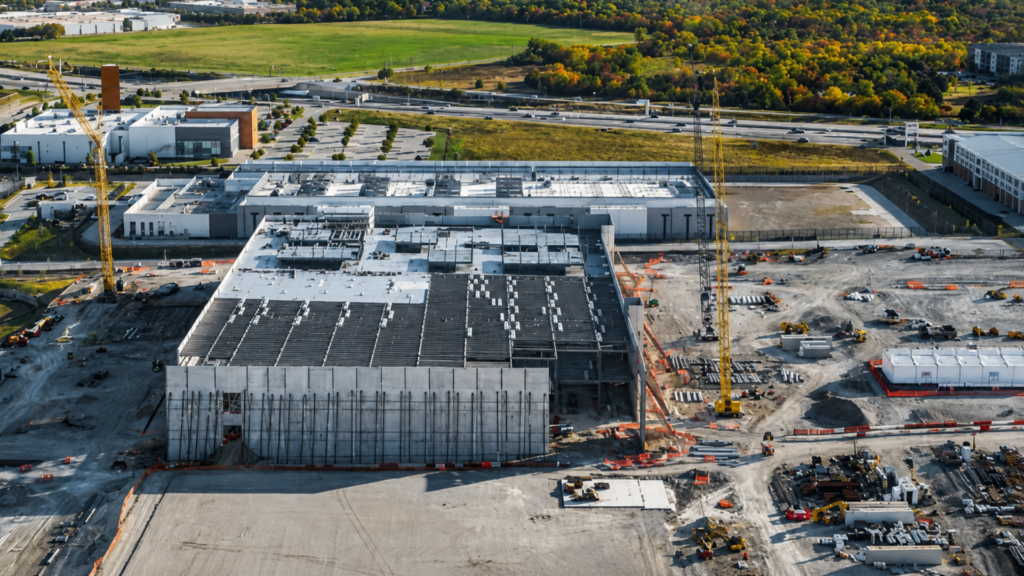
Data centers now account for 2.3% of all U.S. construction spending, according to Bloomberg’s analysis, which draws on federal figures unadjusted for inflation. That share is growing fast. January 2026 alone set a single-month record, with $25.4 billion in data center construction starts logged in one month. To put that in context: the federal government authorizes roughly $21 billion annually for the entire public transportation program under the Infrastructure Investment and Jobs Act. A single month of data center groundbreakings matched it.
The geographic concentration of this investment is striking. Through November 2025, five states captured nearly $40 billion in data center construction starts, representing more than 74% of total year-to-date spending. Louisiana led all states. Virginia, Texas, Mississippi, and Arizona followed. The pattern reflects where power capacity exists, since available electricity is now the primary driver of site selection. Communities with robust utility infrastructure are becoming magnets for capital. Those without it are being left out entirely.
Public transportation, meanwhile, is moving in the opposite direction. The surface transportation reauthorization Congress must write confronts a $124 billion reinvestment backlog in transit infrastructure, as estimated by the Department of Transportation in its 2024 Conditions and Performance report. Major systems in Philadelphia and Chicago have already warned of service cuts exceeding 40% without new funding. The gap between what transit needs and what it receives has been widening for years.
Power, Water, and the Hidden Costs of Scale
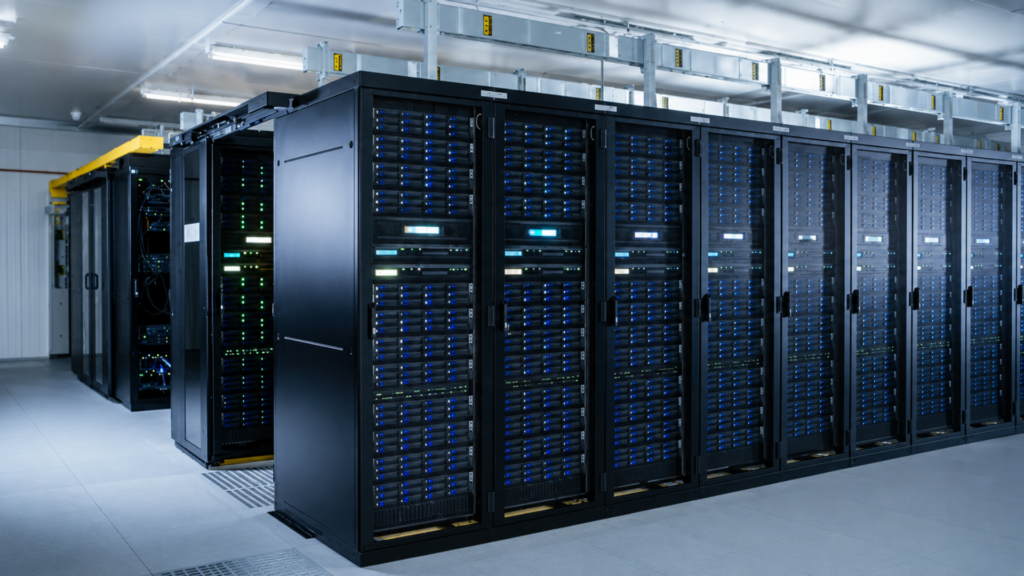
The infrastructure required to support a modern data center goes far beyond the building itself. A January 2026 report by Bloom Energy predicts that U.S. data centers’ total combined energy demand will nearly double between 2025 and 2028, jumping from 80 to 150 gigawatts, the equivalent of adding a country with the energy needs of Spain in just three years. Utilities are scrambling to respond, and the International Energy Agency projects global data center electricity demand will exceed 1,000 terawatt-hours by the end of 2026.
Water is the less visible pressure point. In 2025 alone, AI data centers consumed an estimated 264 billion gallons of water, primarily for cooling systems that keep servers from overheating. That figure is alarming in drought-prone regions across the American Southwest, where the same water is also needed for agriculture, municipal supply, and fire response. The industry is exploring alternatives like liquid cooling, which can reduce direct water use by up to 90%, but widespread adoption remains limited. The pace of construction is outrunning the pace of solutions.
Communities near data centers often discover the trade-offs only after construction has begun. These facilities generate a surge of skilled construction jobs during the build phase, but critics note that once operational, a typical facility employs relatively few permanent workers. Tax revenue flows to local governments, but so do higher electricity rates, as utilities pass on the cost of grid upgrades required to serve the new load. “The numbers underscore the extent to which investment in data centers is becoming increasingly central in the U.S. economy,” Bloomberg noted, but centrality and broad benefit are not the same thing.
Two Kinds of Infrastructure, One Set of Choices

The spending crossover is not an accident of market forces alone. Federal policy shapes where capital flows. The current administration has proposed eliminating the Highway Trust Fund’s mass transit account, which distributes roughly $15 billion annually to transit agencies. Analysts at the Urban Institute found this would slash transit agencies’ budgets by 15 to 20%, leading to reduced services, delayed repairs, and higher costs of living for millions of Americans. Meanwhile, data center developers operate under a framework with few comparable constraints on growth or resource consumption.
The argument that digital infrastructure is now as essential as physical transportation is not unreasonable. Both carry things people depend on. One moves data. The other moves people to jobs, hospitals, and schools. What the comparison reveals is that the U.S. has made a clear, if unstated, choice about which one it is willing to fund publicly and which one it is leaving to private capital to build on its own terms. That choice has real consequences for who benefits and who absorbs the costs.
About half of transit agencies and more than two-thirds of large agencies have said they expect severe budget problems through fiscal year 2028, according to the American Public Transportation Association. Those are not abstract projections. They translate into cut routes, reduced frequency, and working people losing reliable access to the economy. Data centers will keep getting built because the economics behind AI demand it. The harder question is whether the infrastructure that connects ordinary Americans to ordinary life will receive the same urgency. The spending data already suggests an answer.