

Products are selected by our editors, we may earn commission from links on this page.
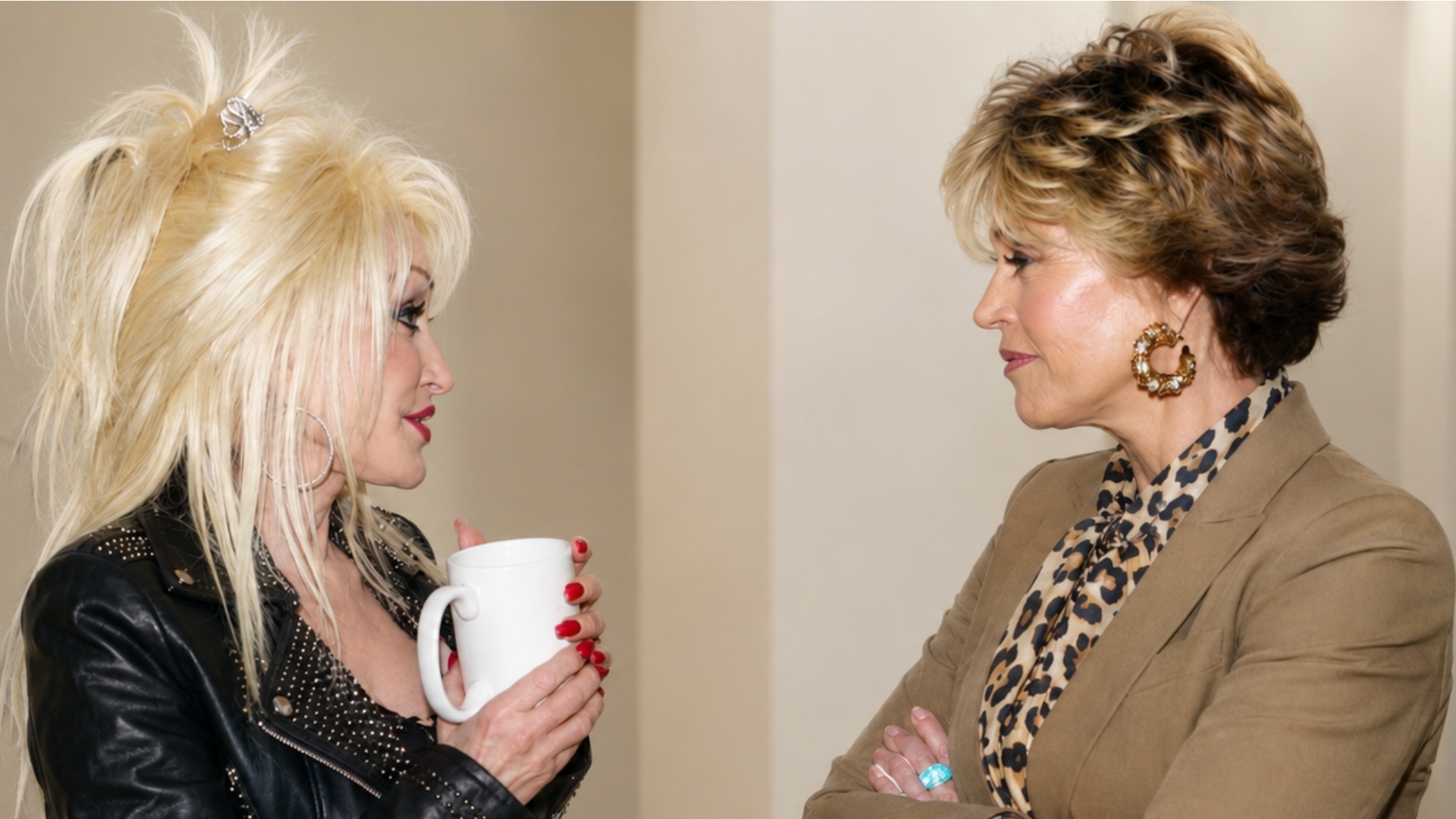
One week after Dolly Parton’s private funeral, Jane Fonda sat down with Democracy Now and grew emotional discussing her longtime friend and 9 to 5 co-star, focusing on a quieter memory: the times she tagged along while Parton visited families living without electricity or running water deep in the hollows of Tennessee and Arkansas, and what she took away from watching her there.
Fonda recalled those families welcoming her simply because Parton vouched for her presence, even though Parton always arrived in full hair, makeup, and rhinestones, never dressed down for the setting. The devotion wasn’t one-sided theater either. Fonda said it was clear Parton genuinely respected the people she visited, and that mutual respect is what made the love between them feel so real.
That pattern repeated in every hollow they visited together, and Fonda eventually named it as the lesson she carries forward. Parton, she said, taught her “the importance of acknowledging and respecting fans.” Fonda added that Parton never toned herself down to blend in or seem more relatable, choosing instead to show up fully as herself, every single time, out of respect for the people watching.
This article was created with the assistance of AI and reviewed by our editorial team for accuracy and clarity.
Jane Fonda’s Instagram Tribute Painted A Fuller Picture Of Who Dolly Parton Was
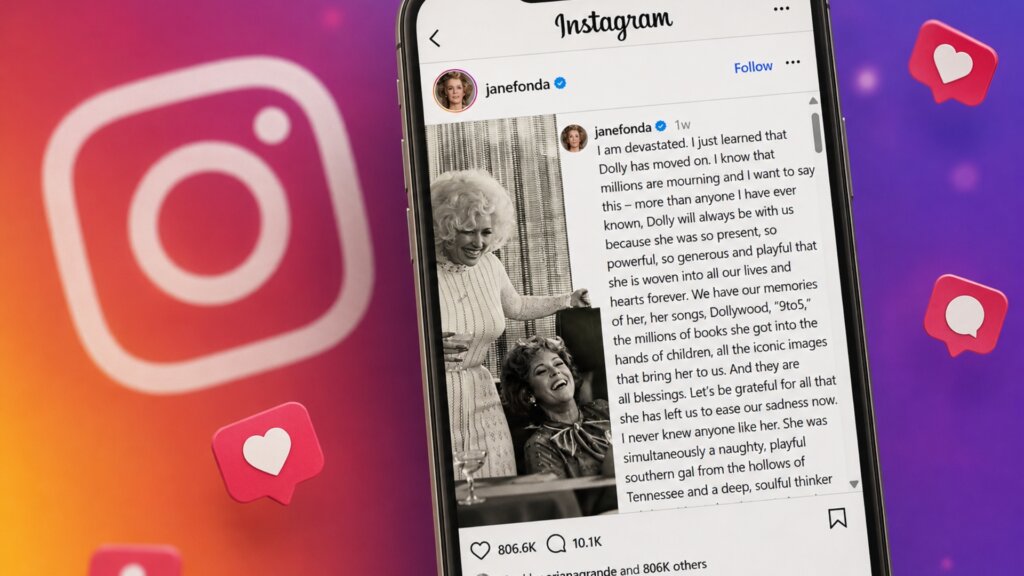
Fonda’s first public reaction came days earlier on Instagram, posted right after news of Parton’s death broke. She wrote that Parton was simultaneously a playful southern woman from the hollows of Tennessee and a deep thinker who could see straight through people to their true selves. The post read like Fonda working through the loss in real time, raw rather than rehearsed.
In that same post, Fonda tried to capture the full range of who Parton had been to her: a lyricist, songstress, multi-instrumentalist, writer, prankster, and visionary, but also simply a loyal friend. She added a specific memory to prove the point, recalling nights that never ended until she and her friends had laughed so hard they had to cross their legs, a detail more personal than promotional.
Fonda closed her tribute by describing Parton’s instinct for knowing exactly what to say or do to make a moment right, then immediately undercutting the sentiment with a memory of Parton mooning Kenny Rogers’ house from a moving car. She called Parton “the voluptuous embodiment of empathy” and said it’s the trait she’d most want people to carry forward in her name.
Dolly Parton Died August 25 After A Brief Cancer Battle, Sparking A Wave Of Tributes
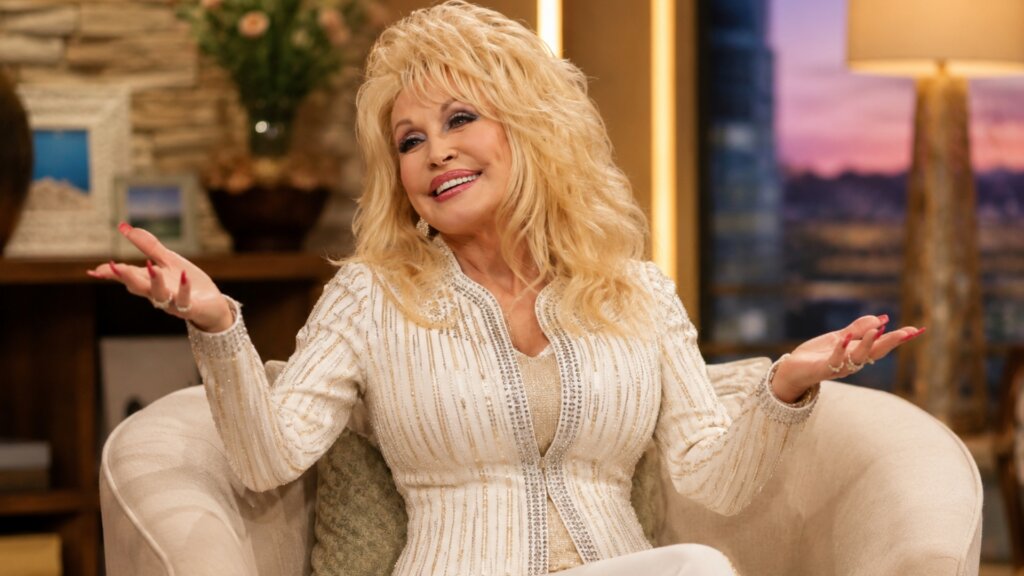
Parton died on August 25, 2026, in Nashville, Tennessee, at age 80. Her family described it as a brief battle with an undisclosed form of cancer. A private funeral followed before any public tributes were shared, part of why Fonda’s remarks, delivered a full week later, carried the weight of someone who had already had time to sit with the loss.
The tributes that followed stretched far beyond Hollywood and Nashville. Paul McCartney and Beyoncé both paid their respects, as did goddaughter Miley Cyrus. Vin Diesel posted an emotional rendition of Parton’s signature song, “I Will Always Love You.” The range of voices, spanning music, film, and multiple generations, reflected how far Parton’s reach extended.
Parton was widely considered the wealthiest woman in country music, with an estimated net worth near $500 million, and she put a meaningful share of it toward causes outside music. Her Imagination Library pushed literacy programs worldwide, and she also directed funding toward HIV and AIDS research, the American Red Cross, and early development of a Covid-19 vaccine.
Julia Roberts Once Received Nearly Identical Advice From Dolly Parton On A Louisiana Film Set
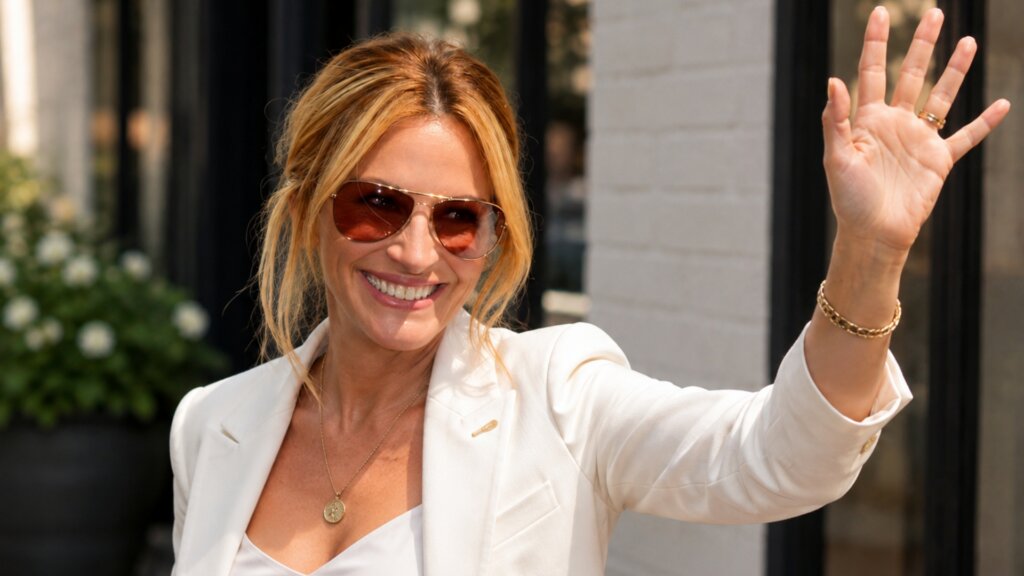
Fonda wasn’t the only actor to resurface a personal memory of Parton this week. A clip of Julia Roberts describing a moment from filming Steel Magnolias in the Louisiana summer heat began circulating again. Roberts remembered Parton working an entire sweltering day dressed in a heavy wool costume and wig without a single complaint, while everyone else on set was visibly struggling.
Curious how Parton stayed so unbothered, Roberts eventually asked her directly. Parton’s answer traced back to her childhood ambitions rather than the heat itself, framing her success as something she’d once only dreamed about as a poor kid in Tennessee. She told Roberts, “Now I’m both those things. I’m not going to complain about it.”
Told side by side, Fonda’s and Roberts’ stories describe the same person from two different decades and two different film sets. Parton showed up fully, treated the people around her with real respect, and refused to complain about a life she’d once only imagined. That consistency, more than any single song or role, is what her closest collaborators keep returning to now that she’s gone.