

Products are selected by our editors, we may earn commission from links on this page.
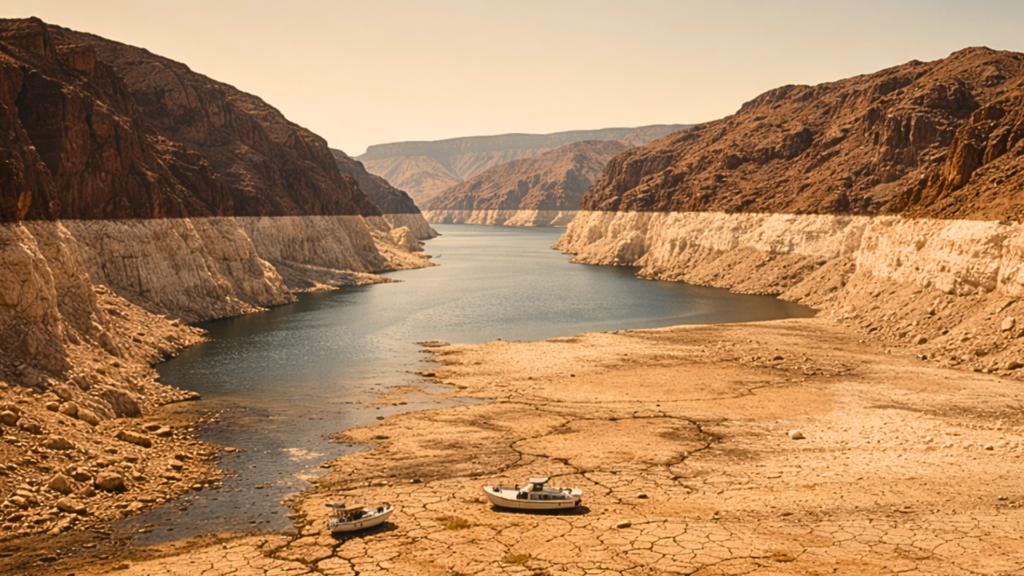
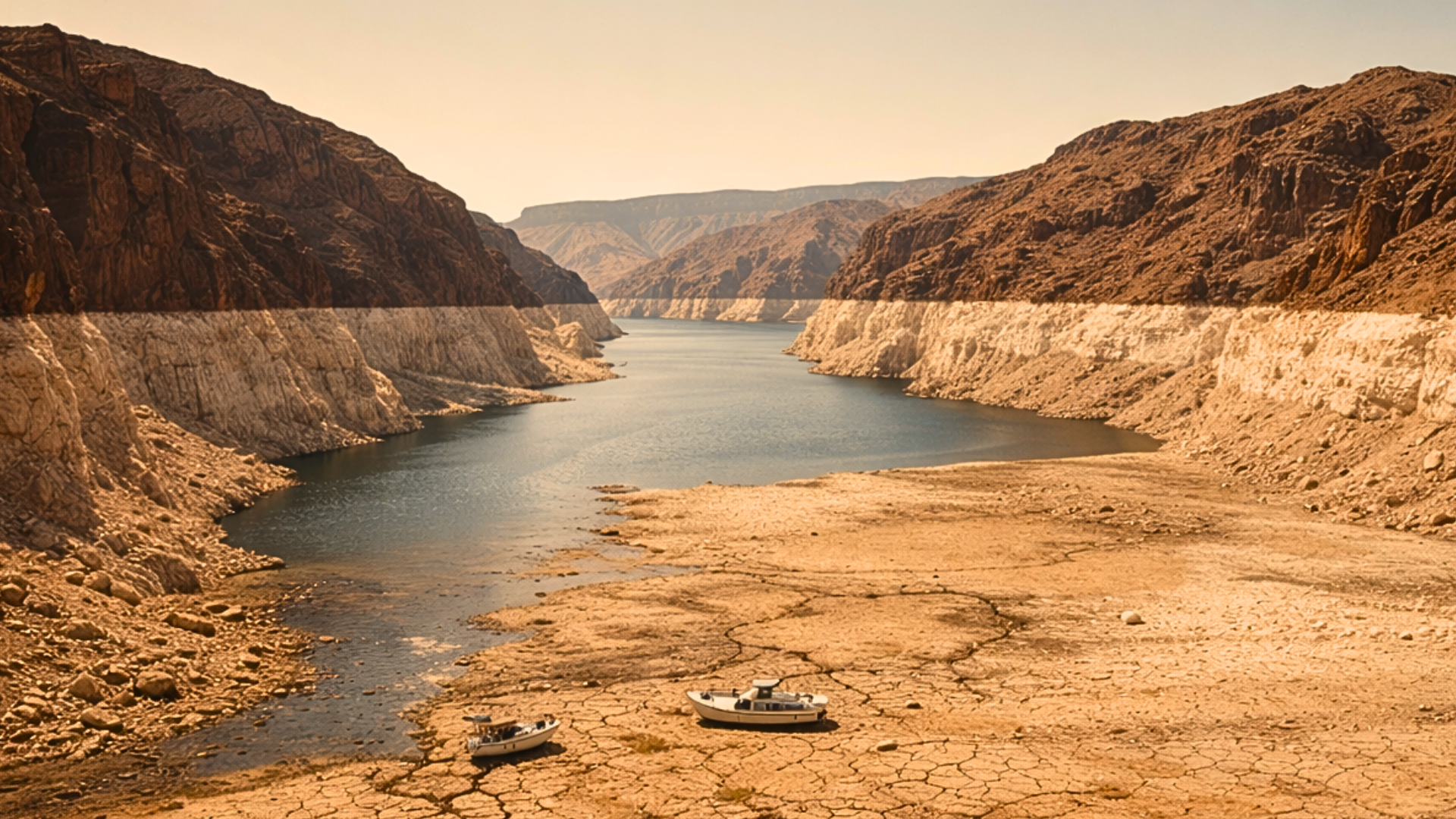
America’s largest reservoir lost six feet of water in March alone. Lake Mead, which straddles the Nevada-Arizona border and supplies water to tens of millions of people across the American Southwest, now sits at roughly 35 percent capacity, just 20 feet above the all-time low it nearly hit in 2022. A boater named Ron Klug, who recently visited the lake, told FOX 5 Vegas he was “shocked” by how low the water had fallen. What he saw on the surface reflects a crisis that runs considerably deeper.
Most of Lake Mead’s water comes from snowpack in the mountains upstream. This past winter delivered very little of it. Bronson Mack, an outreach manager for the Southern Nevada Water Authority, pointed to “very low snowpack” as a primary driver of the current decline. Federal projections released last month suggest the reservoir could drop another 16 feet by 2027, potentially reaching a record low of approximately 1,032 feet, eight feet below the previous record set just three years ago. That trajectory is not a worst-case scenario. It is the current working forecast.
The six-foot drop in a single month is striking on its own. But the deeper concern among water managers is not what is visible from a boat on the surface. It is what a continued decline would mean for the infrastructure, the treatment systems, and the millions of households that depend on this single body of water for their daily supply. To understand the full risk, it helps to look at exactly what Lake Mead powers, and what begins to fail as the water level keeps falling.
Warmer Water, Struggling Turbines, and a Treatment System Built for Cold
Lake Mead was engineered for a different climate. The water treatment systems serving Southern Nevada were designed around consistently cold water drawn from deep within the reservoir. As drought conditions intensify and the lake’s overall volume shrinks, those deep-water temperatures are rising. Todd Tietjen, the regional water quality manager for the Southern Nevada Water Authority, told the Nevada Current plainly: “We really rely on the cold water being present for our treatment process. Our treatment process was designed around cooler, colder waters. Our buildings on site are cooled by this water.”
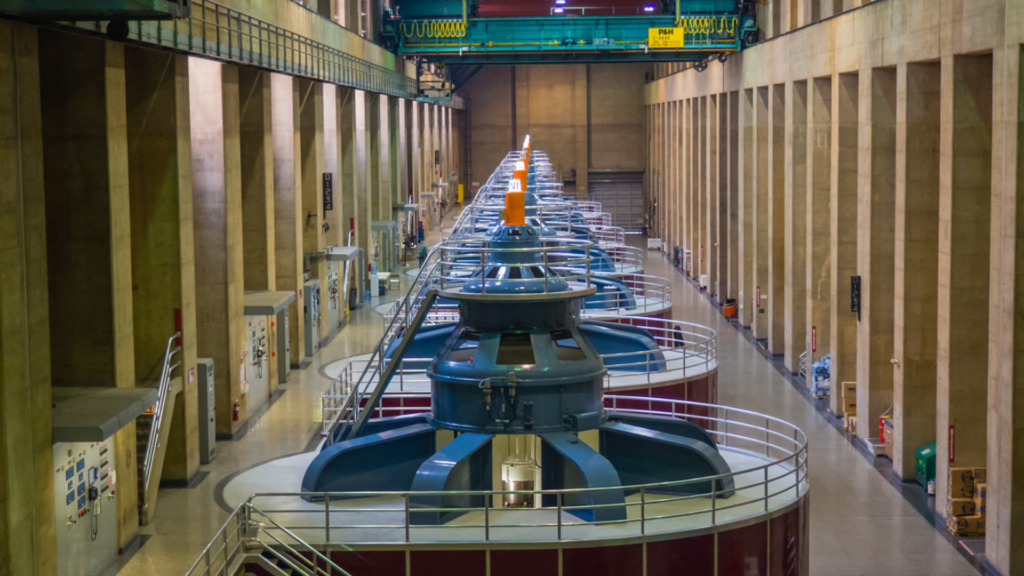
The temperature problem extends beyond water treatment. The Hoover Dam, one of the most critical pieces of power infrastructure in the American West, relies on Lake Mead water to cool most of its turbines. Warmer water flowing through those systems creates operational stress. “If we lose power at Glen Canyon and Hoover Dam, that’s a big problem for the West,” Tietjen said. The dam does not just generate electricity for Nevada, it powers a grid that stretches across multiple states. A sustained rise in lake temperatures puts that entire system under pressure it was not built to handle.
For now, Southern Nevada’s water supply remains functional. Mack confirmed that the Authority’s pumping stations can reach the deepest elevations of the lake, drawing from the coldest and most protected water still available. That capacity provides a meaningful buffer but it is a buffer with limits. The deeper the lake drops, the narrower that margin becomes, and the harder it is for treatment systems to maintain the performance standards they were built around. The infrastructure is coping. The question is for how much longer.
Algal Blooms, Safety Warnings, and the Hidden Risks Multiplying on the Surface
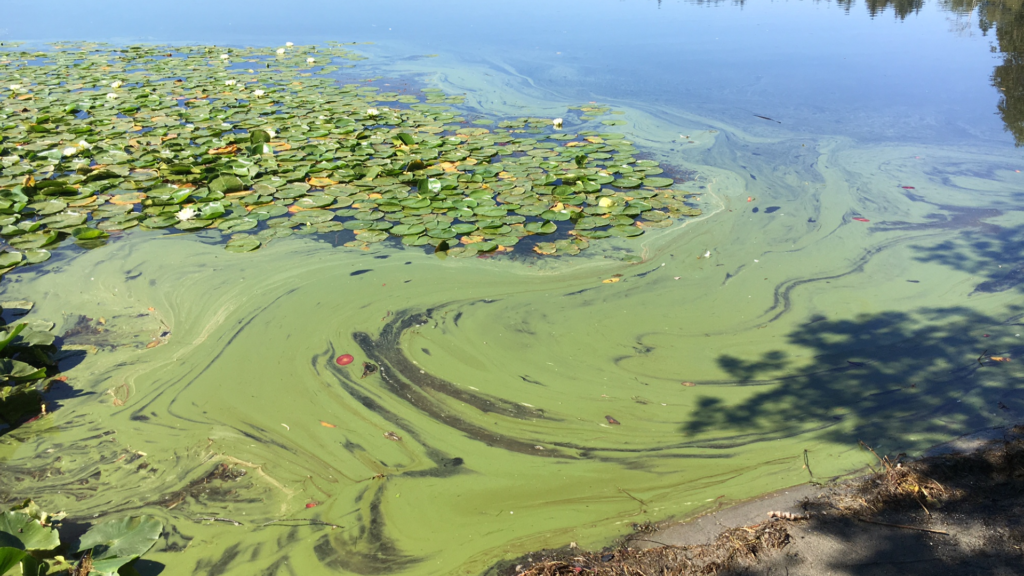
While engineers manage the pressure building inside treatment plants and power stations, a more visible hazard has appeared on Lake Mead’s surface. Last month, the National Park Service issued a public warning after a harmful algal bloom was detected in Government Wash, a section of the Lake Mead National Recreation Area. The bloom, officials said, “may contain toxins and is unsafe for swimming or contact.” The warning was particularly pointed about children and pets, both of whom face elevated risk if they swallow contaminated water.
Algal blooms thrive in warm, shallow water with reduced flow, conditions that worsening drought creates with increasing reliability. As lake levels drop and temperatures rise, the environmental conditions that produce toxic blooms become easier to meet and harder to reverse. The March 13 warning from the National Park Service instructed visitors to keep pets leashed and away from the water entirely, and to seek medical or veterinary care immediately if symptoms appeared after any exposure. It was not a precautionary nudge. It was a direct public health instruction at one of the country’s most visited recreation areas.
The algal bloom adds a layer of risk that sits on top of the supply and infrastructure concerns but is felt differently by families planning a weekend at the lake, by dog owners who let their pets run near the water, and by the communities downstream that draw from the same source. Water scarcity and water quality are usually discussed as separate problems. At Lake Mead right now, they are converging in the same body of water, at the same time, driven by the same underlying cause. That convergence is what makes the current situation more complicated than a simple headline about falling water levels.
Record Lows by 2027 and a System That Was Never Built for This
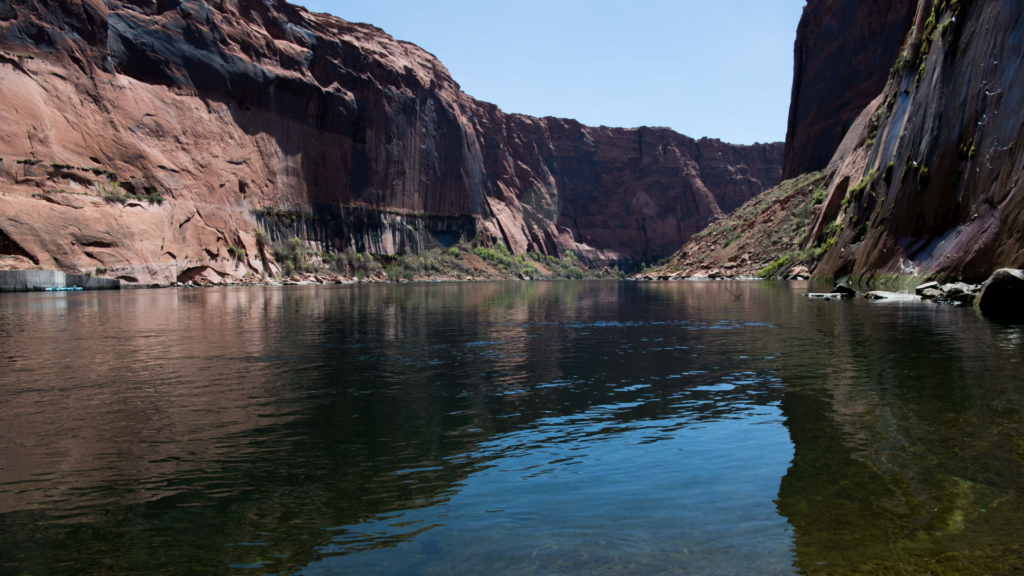
Federal projections pointing toward a record low by November 2027 carry a specific kind of weight. They are not activist warnings or worst-case modeling exercises. They are the working forecasts of the agencies responsible for managing the Colorado River system, published last month as part of routine planning. When those agencies project a record low, they are also signaling to the states, utilities, and water districts that depend on Lake Mead that the margin for error is shrinking and that decisions made now will matter by the time that number arrives.
Lake Mead serves as the primary water source for Nevada, Arizona, and parts of California, collectively home to tens of millions of residents. The Colorado River that feeds it is already allocated beyond its actual average flow, a structural imbalance that has been building for decades and that drought conditions are now forcing into the open. Low snowpack winters accelerate a timeline that was already moving in one direction. The six-foot drop in March did not create that timeline, but it made it more visible and harder to dismiss.
Bronson Mack’s reassurance that Southern Nevada’s water supply remains safe is accurate for now, and it is important. But accuracy in the present does not resolve the trajectory. A reservoir at 35 percent capacity, dropping toward a record low, running warmer than its treatment systems were designed for, and generating toxic algal blooms at its recreation areas is a system under cumulative stress, not a system that has stabilized. What Lake Mead looks like by the end of 2027 will depend heavily on the winters between now and then. The last one did not help.