

Products are selected by our editors, we may earn commission from links on this page.
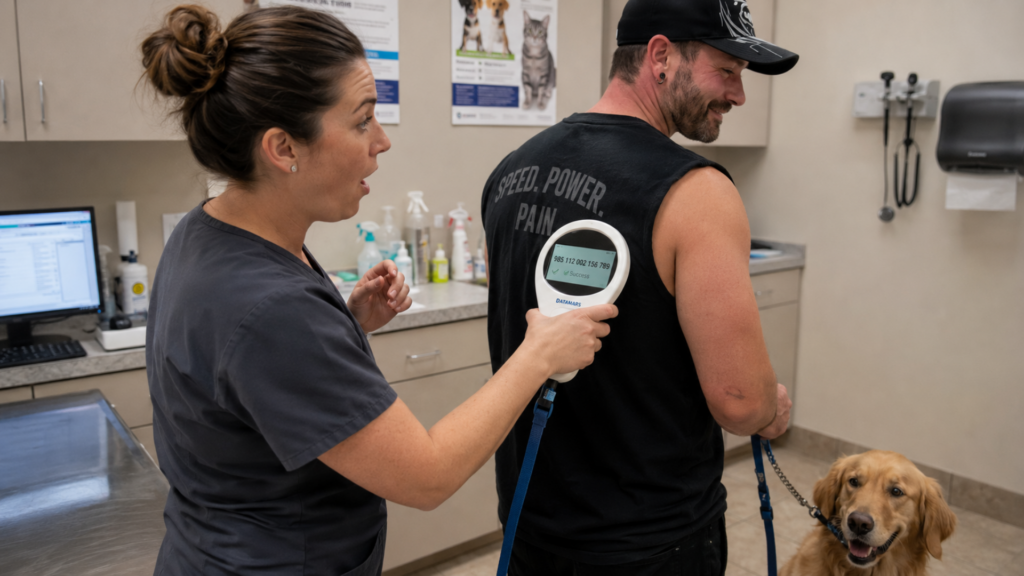
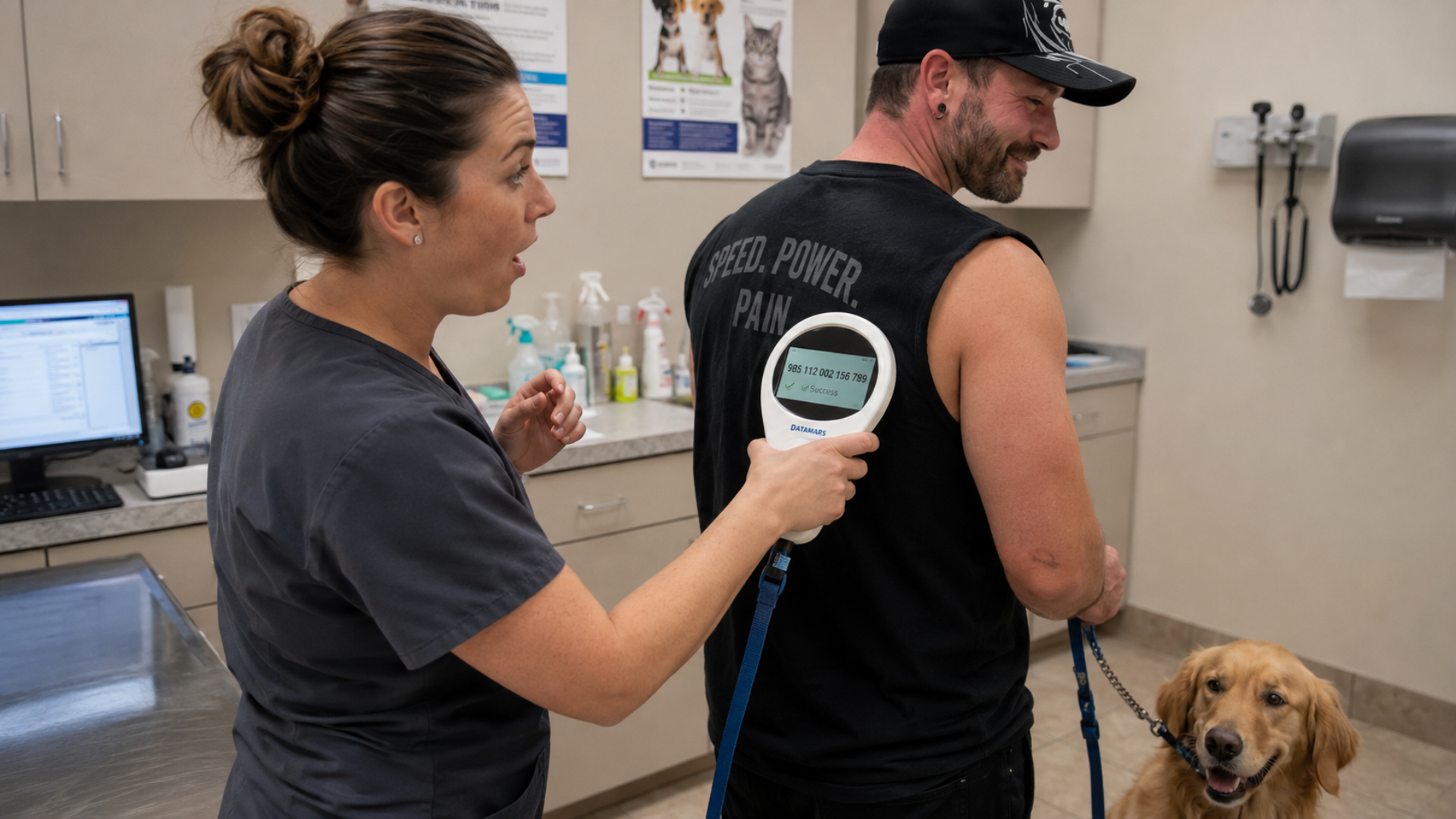
A vet’s scanner beeped in the exact spot nobody expected: a grown man’s back. Ten years earlier, a TikTok user known as @shrunky.dunks had implanted himself with a pet microchip, the same tiny device used to track lost dogs and cats. He never had it removed. He barely thought about it again. Then a routine vet visit turned into a live test of whether that decade-old chip still worked at all.
This article was created with the assistance of AI and reviewed by our editorial team for accuracy and clarity.
He Didn’t Just Chip Puppies. He Chipped Himself.

Curiosity, not a dare, started this whole story. @shrunky.dunks says his first real job involved microchipping puppies, sliding a tiny device under their skin to help shelters reunite lost pets with owners. He wanted to know what that moment actually felt like for the animals. Instead of guessing, he had himself chipped the same way. Few people test their job’s routine procedure on their own body.
A Grain of Rice Can Bring a Lost Pet Home
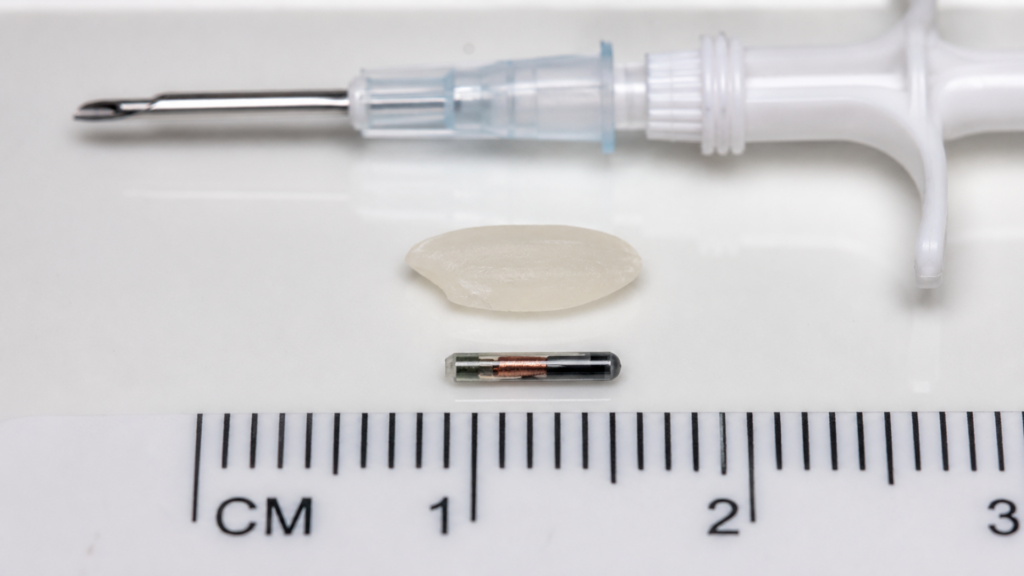
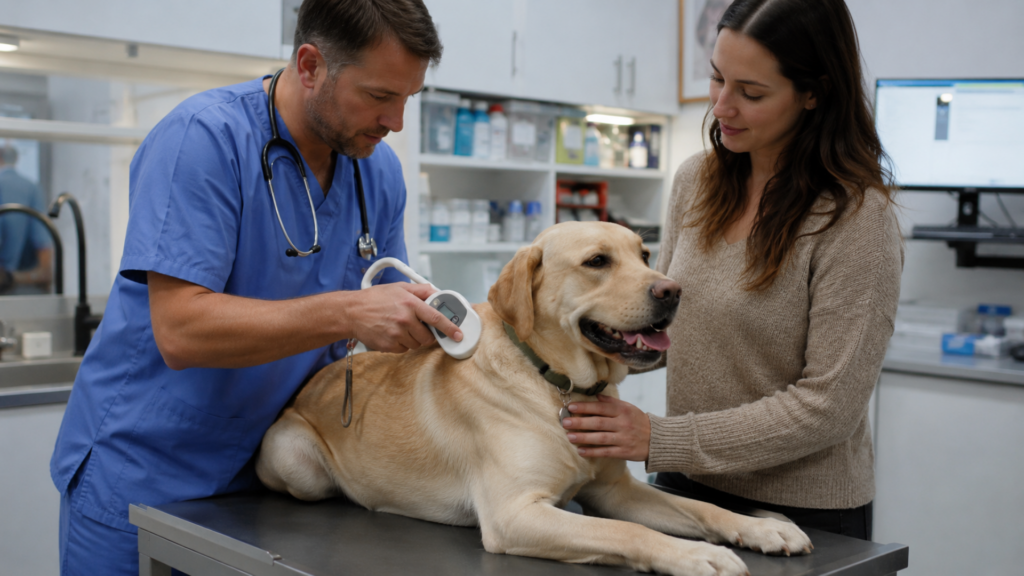
A pet microchip is smaller than most people imagine. About the size of a grain of rice, it gets inserted beneath the skin between an animal’s shoulder blades using a special needle. Once in place, the chip stores a unique ID number. Vets and shelters can scan that number to pull up an owner’s contact information. That simple system is what reunites countless lost pets with their families every year.
A Vet Visit Turned Into a Live Experiment
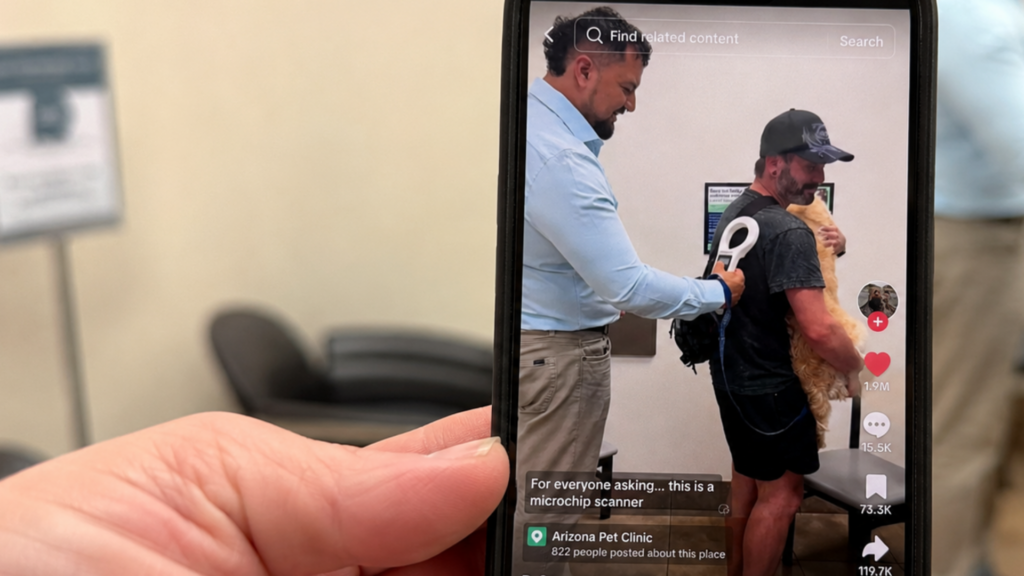
A TikTok video turned a decade-old decision into a public experiment. Posted on April 16, the clip has been watched more than 3.2 million times. In it, @shrunky.dunks stands in a vet’s office holding a dog during what looks like an ordinary appointment. A staff member decides to test his claim, running a microchip scanner across his back. The room waits to see what the device will find.
Ten Years Later, the Chip Hadn’t Moved an Inch
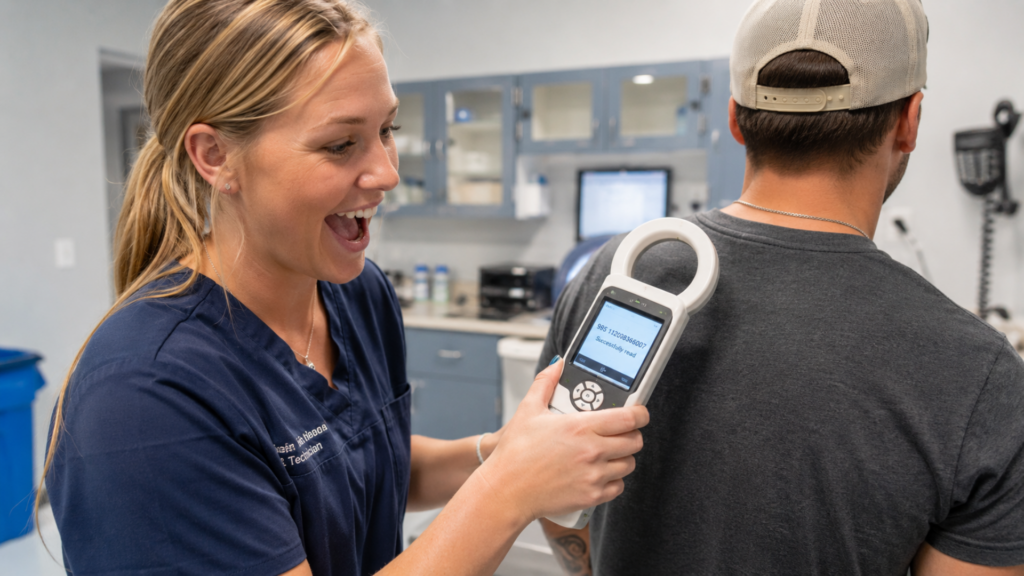
The scanner did not stay quiet for long. Moments after the staff member ran it across his back, the device picked up a clear signal. That meant the microchip implanted a decade earlier was still sitting under his skin, still fully readable. No malfunction, no missing chip, no surprise failure. Ten years of daily life had not budged it an inch.
Even the Vet Tech Couldn’t Hide Her Surprise
Even the person doing the scanning seemed caught off guard. According to the veterinary worker in the video, “Yeah, there it is.” She said it while holding the scanner up to the camera, letting viewers see the confirmation for themselves. Her reaction, somewhere between amused and impressed, matched what most viewers were probably thinking too. A decade-old bet had just paid off on camera.
His Explanation for the Decision Was Refreshingly Honest

Not every big decision comes from a place of careful planning. When TikTok viewers pressed him about why he ever agreed to get chipped, @shrunky.dunks admitted he “might have had some liquid courage prior to the injection.” Beyond that admission, he said the procedure itself did not feel especially painful. Sometimes the story behind a wild decision is simpler than people expect.
His Back Just Proved the Technology Actually Works
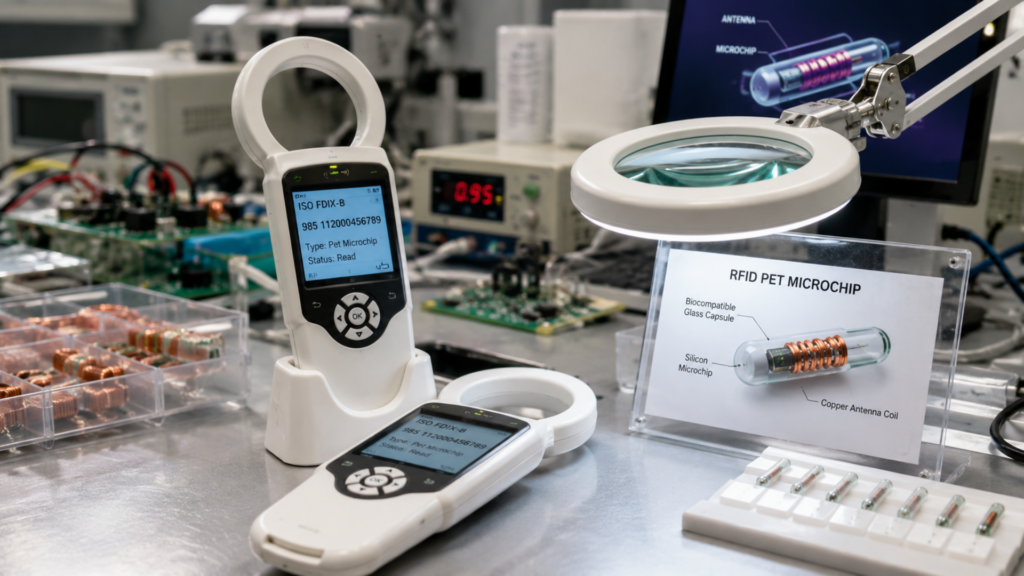
A microchip is built to outlast most of what happens to it. According to Slaton Veterinary Hospital, pet microchips typically last at least 25 years, long enough to cover a pet’s entire lifetime without needing replacement. That means @shrunky.dunks’ decade-old chip is still barely halfway through its expected lifespan. His back, in a strange way, just became proof that the technology works exactly as designed.
A Working Chip Still Needs an Owner Who Keeps Up

A microchip only works as well as the information behind it. Human Animal Support Services reports that pets with microchips are three times more likely to be reunited with their owners than pets without one. That number depends entirely on owners keeping their contact details updated in the registration database. The chip itself stores only an ID number, nothing personal. Without updated records, even a working chip can lead nowhere.
A Decade-Old Bet Just Became a Real Lesson

That scanner beep did more than confirm a bet from a decade ago. It quietly proved that the tiny device meant to bring lost pets home can keep working long after anyone stops paying attention to it. @shrunky.dunks got his answer about what puppies experience, and viewers got an unexpected lesson in microchip durability. Sometimes the strangest experiments end up teaching the most useful lessons.