

Products are selected by our editors, we may earn commission from links on this page.
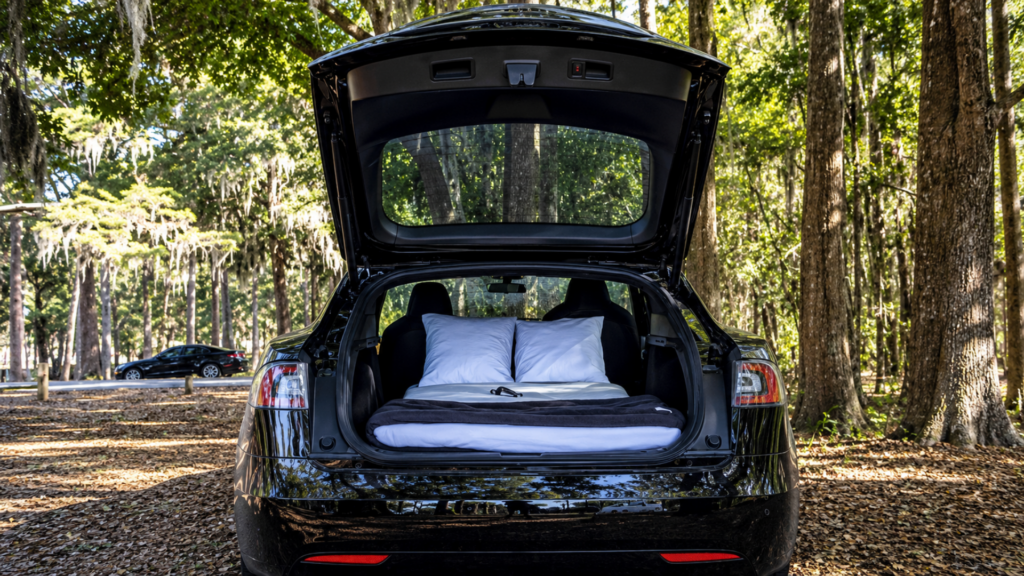
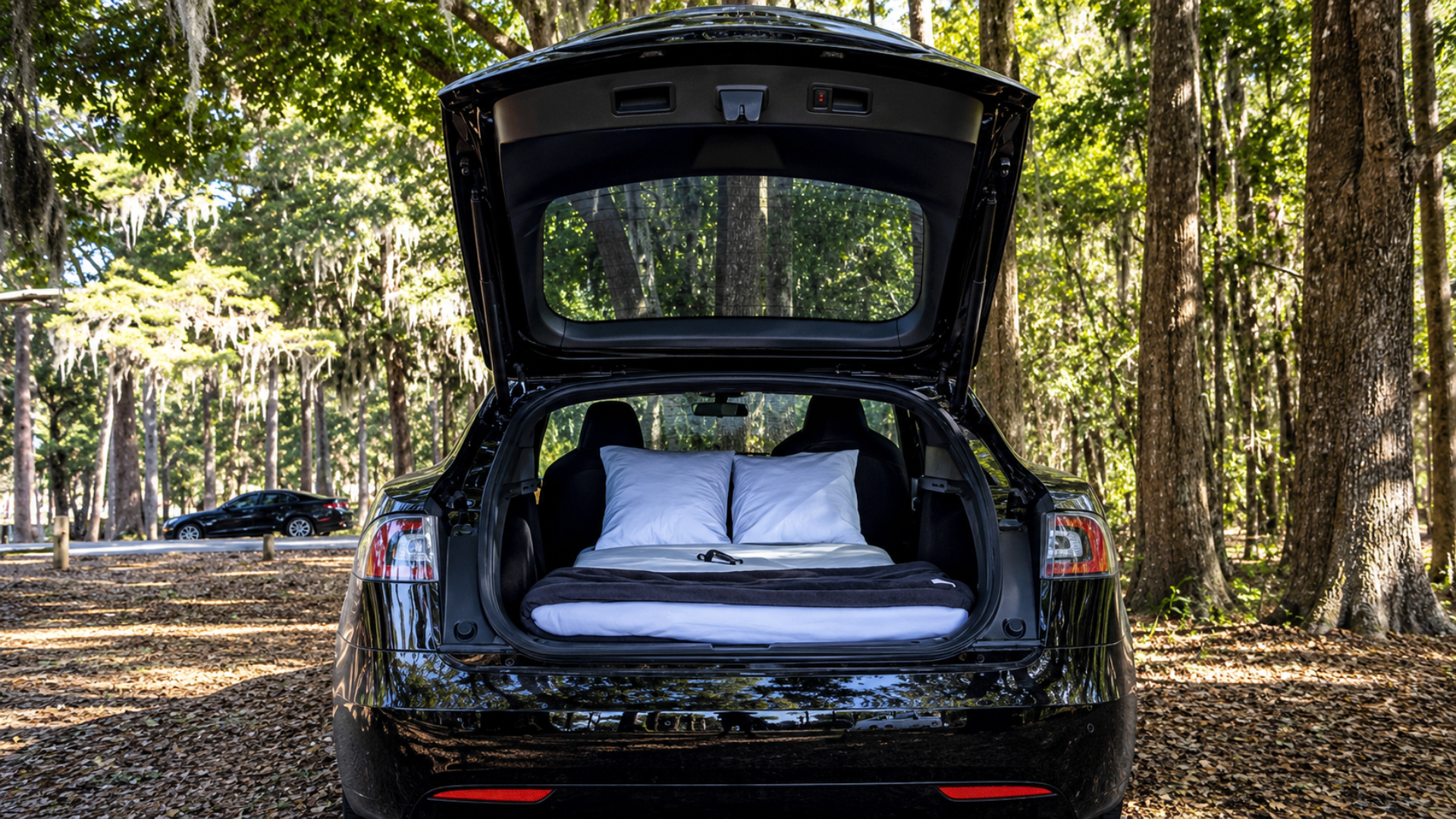
Sleeping in a parked car during a 104-degree heat wave sounds like a bad idea by any normal standard. One Tesla owner in Austria did it on purpose. Rather than simply enduring the discomfort, he treated the whole night as a deliberate experiment, tracking exactly how much energy his Model X Plaid would burn just keeping him cool until morning. The results surprised him for two different reasons.
The man behind the experiment runs a YouTube channel called Tesla Camper, where he documents living out of his car in different conditions. This time, the conditions were extreme: a 40°C (104°F) heat wave gripping Austria. He set his Model X Plaid to Camp Mode overnight, a setting designed to keep the cabin climate-controlled and the battery protected while the car sits parked with no one driving it.
What made this particular night newsworthy was mostly timing. Europe has been suffering through repeated heat waves this summer, and a viral online debate about air conditioning had already been building for weeks before he ever pressed record on his phone. His overnight test landed right in the middle of that argument, with actual numbers attached to back it up.
Europe’s Low Air Conditioning Rate Turned Into an Unexpected EV Argument

The backstory starts with a fairly simple observation. As heat waves hit countries like Austria, plenty of people outside Europe asked an obvious question online: why not just turn on the air conditioning? That question accidentally exposed something many outsiders did not realize, that home air conditioning adoption across much of Europe is surprisingly low. The resulting online reaction quickly spiraled into memes, and then into much bigger arguments about energy grids and climate policy.
Buried inside that broader debate was a narrower argument. Electric vehicle owners have been making it for years. They claim EVs regulate cabin temperature more efficiently than gas-powered cars, especially while parked. Running air conditioning or heat in a parked gas car requires the engine to idle continuously, burning roughly 0.2 to 0.5 gallons of fuel per hour to keep the cabin comfortable. An EV, by contrast, only needs to run a small electric compressor directly off its battery pack.
It is genuinely difficult to run a perfect apples-to-apples comparison between an EV and a gas car parked side by side in identical conditions. Too many variables get in the way. Even so, that basic difference in stationary efficiency gave EV owners a real point to make for years. One Tesla owner’s heat wave test finally handed them an actual, specific number to point to.
His Tesla Cut the Cabin Temperature in Half and Held It There for 8 Hours
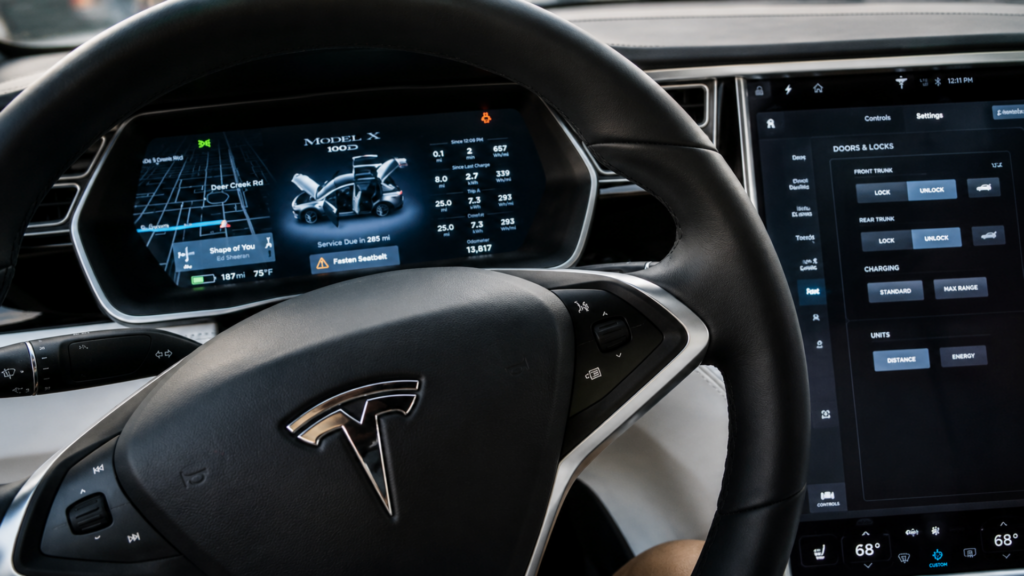
The task facing his Model X Plaid that night was not small. Outside, the temperature sat at roughly 40°C, or 104°F. Camp Mode had to keep the car powered on, protect the battery pack itself from overheating, and simultaneously cool the entire cabin down to a livable 20°C, essentially cutting the temperature in half. It then had to hold that cooler temperature steady for eight straight hours while he slept.
By morning, the car had used 55 kilometers, or about 34 miles, of range, roughly 12% of its total battery capacity. Tesla’s estimate for Camp Mode is closer to 1% of battery per hour, or about 8% across a full night, and other owners report typical overnight use somewhere between 5% and 15% depending on outside temperature. His result landed on the higher end of that range, and slightly above his typical winter heating numbers, but not dramatically so.
Twelve percent of a battery might sound like a lot at first glance. Context changes that impression quickly. That is a single night’s cooling, in extreme heat, inside a vehicle that can simply recharge the next day like normal. It is a very different kind of cost than a gas engine burning fuel just to sit still and idle. The real comparison worth making is not to winter, but to the alternative he skipped entirely.
The Real Comparison Isn’t to Winter. It’s to Running an Air Conditioner All Night.
The alternative he skipped was simple: running a window air conditioner or a house unit through an entire hot night. That comparison is where the numbers actually land in his favor. His own video and the outlet covering it both concluded the same thing: even on the higher end of normal Camp Mode usage, cooling a car overnight still worked out cheaper than cooling a home the same way.
The online reaction, half-joking, was to suggest that anyone without home air conditioning should just buy a Tesla instead. That is obviously not a serious housing solution, and a car cabin is a much smaller space to cool than an actual home. Still, the joke carried a real kernel of truth: for one very hot night, a parked EV with climate control turned out to be a surprisingly efficient way to stay cool.
What started as one man’s slightly uncomfortable night ended up doing something arguments rarely manage online: it turned an abstract efficiency claim into a number people could actually picture. EV owners had made this argument for years. They rarely had much to point to beyond intuition. A heat wave, a YouTube channel, and one very specific battery percentage finally gave that argument something concrete to stand on.