


Products are selected by our editors, we may earn commission from links on this page.
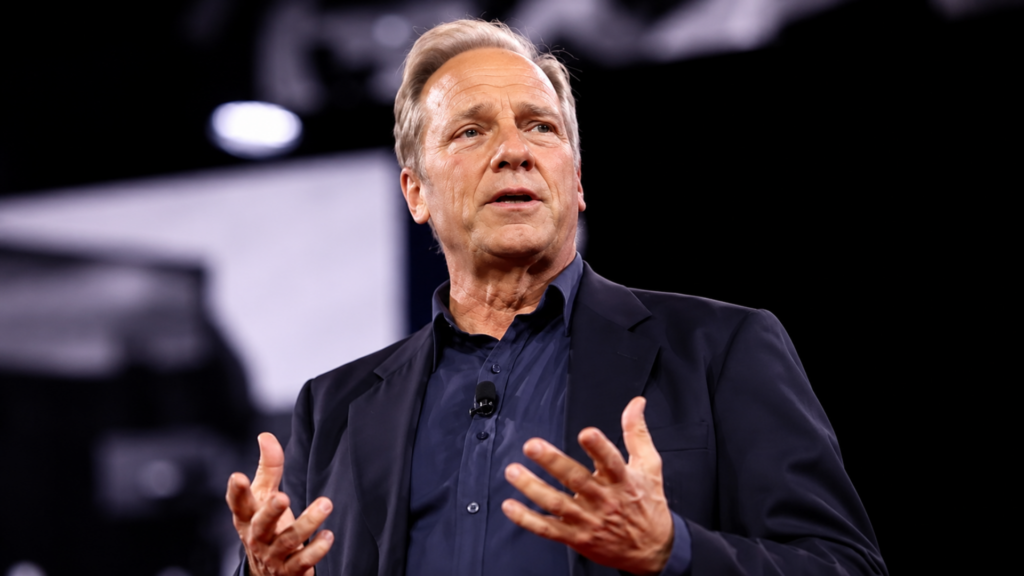
Mike Rowe just told thousands of hopeful trade workers that no free pass is coming, even as America begs for more electricians and welders. On July 5, the Dirty Jobs host and founder of the mikeroweWORKS Foundation announced the first round of winners for his 2026 Work Ethic Scholarship. Then came the catch. Despite a national shortage of skilled labor, Rowe made clear his foundation would rather sit on unspent millions than hand them to people who don’t meet his bar.
The numbers tell part of the story. His foundation awarded 322 scholarships across 45 states in the first of four funding rounds this year, totaling $3 million. Individual awards ranged from $500 to $34,000, averaging about $9,000 per recipient. Rowe hopes to distribute $10 million total in 2026, funded by sponsors including BlackRock, Google, Wells Fargo, and Build Freedom, a federal initiative launched to grow the defense sector’s skilled workforce. Reaching that figure depends entirely on applicants meeting his standards.
“Our program is still rooted in work ethic, and we don’t grade on a curve,” Rowe wrote in his announcement. He went further, addressing anyone expecting flexibility given the shortage. “We could lower our standards and give the money away a lot faster, but that’s not how it works here,” he said. The line quickly drew reactions online, with some questioning why urgency shouldn’t soften the criteria. That tension sits at the center of what Rowe is building.
What It Actually Takes to Qualify

Getting funded starts with proving eligibility. Applicants must be U.S. citizens and high school graduates enrolled in an accredited trade program lasting two years or less. Options span welding, commercial driving, HVAC, plumbing, electrical work, and dozens of other fields listed on the foundation’s application page. Once enrolled, hopefuls submit a tuition bill and a recent transcript. The paperwork is straightforward. The character test that follows is where Rowe’s real filter kicks in.
Every applicant signs the S.W.E.A.T. pledge, a list of 12 statements built around personal responsibility. One line reads plainly: “I believe that all people are created equal. I also believe all people make choices. Some choose to be lazy. Some choose to sleep in. I choose to work my butt off.” It functions less like a formality and more like a philosophy check, and Rowe has said repeatedly he won’t soften it for volume’s sake.
Beyond the pledge, applicants record a short video explaining their work ethic and submit two references who can vouch for it. There’s no essay contest disguised as an interview here. Rowe’s team wants proof of character from people who know the applicant, not just polished writing. Two application windows remain this year, closing Aug. 30 and Oct. 31, with winners announced in October and December. The clock is already running for the next round of hopefuls.
Why Rowe Is Betting on Scarcity, Not Charity

Rowe is not new to this fight. His foundation has awarded more than 2,600 scholarships over 18 years, all aimed at steering people toward in-demand trade work instead of four-year degrees. The mission statement is direct: help Americans learn skills the country needs while avoiding the debt that often comes with traditional college. That debt problem isn’t small. Americans currently owe $1.87 trillion in student loans, a burden Rowe has built his entire program around avoiding.
The skilled labor shortage he keeps referencing is real and growing, with electricians, plumbers, and HVAC technicians aging out of the workforce faster than new workers are entering it. That backdrop is exactly why his refusal to loosen standards struck a nerve. Critics argue that when demand is this urgent, gatekeeping talent behind a pledge and a video feels like an unnecessary hurdle standing between workers and paychecks the country badly needs filled.
Rowe’s defenders see it differently. They argue that flooding the trades with underqualified or unmotivated workers wouldn’t fix the shortage. It would just create a different problem down the line, one measured in shoddy wiring and abandoned apprenticeships. For Rowe, the standards aren’t an obstacle to solving the crisis. He considers them the entire point of solving it correctly the first time around.
The Real Argument Rowe Is Making

On the foundation’s website, Rowe’s team spells out the belief driving all of this. “Pop culture has glorified the corner office job while unintentionally belittling the jobs that helped build the corner office,” the site reads. “As a result, our society has devalued any other path to success and happiness.” That framing reveals what the scholarship is actually about. Money is the mechanism. Respect for the work itself is the real goal.
Whether Rowe’s approach helps or hurts the shortage he’s trying to solve remains genuinely contested. Supporters call it discipline. Detractors call it stubbornness dressed up as principle. Both sides agree on one thing: he has no plans to change course, backlash or not.
Rowe has spent nearly two decades betting that character, not urgency, produces the workers America actually needs. That bet just got more expensive, and more scrutinized, as the shortage deepens and the applications keep coming. His answer to the pressure hasn’t moved an inch. The standard stays. The money waits for whoever proves they’re willing to earn it.